
inflammation tagged posts

Why is Visceral Fat Worse than Subcutaneous Fat?

Model for the regulation of visceral fat ER stress in obesity.

Model for the regulation of visceral fat ER stress in obesity. Induction of TRIP-Br2 and GATA3 during obesity via ER stress is critical for the visceral fat proinflammatory responses.

Researchers have long-known that visceral fat (which wraps around the internal organs) is more dangerous than subcutaneous fat (under the skin). But how visceral fat contributes to insulin resistance and inflammation has remained unknown. A study points blame at a regulatory molecule in cells called TRIP-Br2 that is produced in response to overeating’s stress on the machinery cells use to produce proteins.

In previous studies, in obese humans TRIP-Br2 was turned-up in visceral fat but not in subcutaneous fat...

Read More
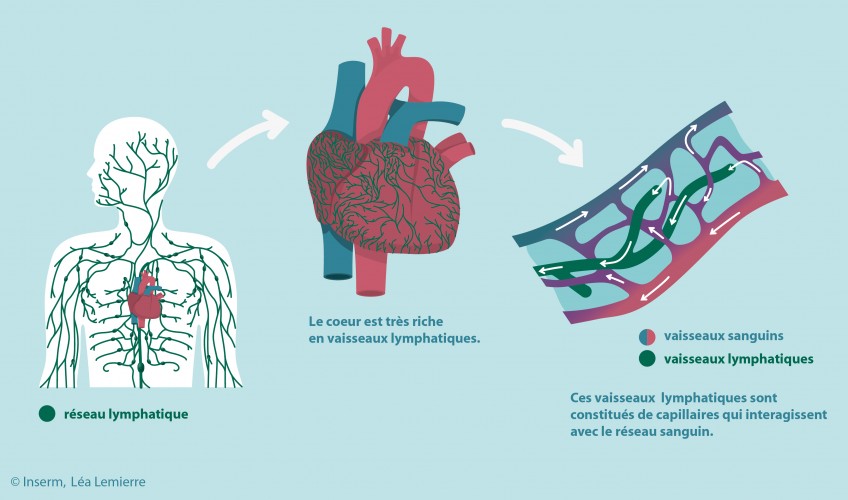
An Invisible System to Rescue the Heart

The human lymphatic system © Inserm, Léa Lemierre

The human lymphatic system © Inserm, Léa Lemierre

In a new heart failure study, the blood system is being explored for the purpose of improving heart function. The study has revealed the potential of a secondary system that had previously received scant attention.

The researchers analysed the heart lymphatic system in an animal model which was highly impaired following a myocardial infarction. Using a biotherapy based on the injection of innovative microparticles, they succeeded in regenerating lymphatic vessels in a targeted manner. This treatment promotes lymphatic drainage, thus limiting post-infarct oedema and inflammation. Heart function is thereby improved.

 Lymphatic vessels in the rat heart visible in red by immunofluorescence © Inserm, Ebba Brakenhielm

Lymphatic vessels in the rat heart visible in red by immunofluorescence © Inserm, Ebba Brakenhielm

When the heart is no longe...

Read More

Saturated Fats ‘Jet Lag’ Body Clocks, Triggering Metabolic disorders, study shows

best time to eat fatty foods

Chronic, low-grade inflammation caused by high fat diets contributes to obesity and type 2 diabetes and other inflammation-related disorders like cardiovascular disease, stroke and rheumatoid arthritis. Prof David Earnest, Ph.D. and his team have shown that consumption of saturated fats at certain times may “jet lag” internal clocks, as well as the resulting inflammation.

Earnest’s previous work suggested that a high-fat diet alters how our body clocks keep time, particularly in immune cells that mediate inflammation. Earlier findings show that a high fat diet slows down the clocks in immune cells such that they no longer “tell” accurate time. Now, he and his team, including Robert S. Chapkin, Ph.D...

Read More

Fiber-rich Diet may Reduce Lung Disease

Variety of fiber-rich foods. Credit: ATS

Variety of fiber-rich foods. Credit: ATS

A diet rich in fiber may not only protect against diabetes and heart disease, it may reduce the risk of developing lung disease, according to new research. Analyzing data from the National Health and Nutrition Examination Surveys, researchers report in “The Relationship between Dietary Fiber Intake and Lung Function in NHANES,” that among adults in the top quartile of fiber intake:
• 68.3% had normal lung function, vs 50.1% in the bottom quartile
• 14.8% had airway restriction, vs 29.8% in the bottom quartile.

In 2 important breathing tests, those in the top quartile had a greater lung capacity (FVC) and could exhale more air in one second (FEV1)r.

“Lung disease is an important public health problem, so it’s important to identify modifiable risk...

Read More
