
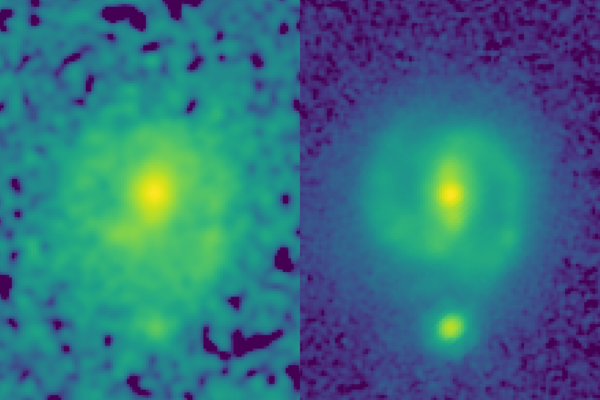
New images from NASA’s James Webb Space Telescope (JWST) reveal for the first time galaxies with stellar bars — elongated features of stars stre...
Read More


January 10, 2023,
 Astronomy/Space
New images from NASA’s James Webb Space Telescope (JWST) reveal for the first time galaxies with stellar bars — elongated features of stars stre...
Read More
November 23, 2022,
Astronomy/Space

The JWST just scored another first: a detailed molecular and chemical portrait of a distant world’s skies. New observations of WASP-39 b reveal a never-before-seen molecule in the atmosphere of a planet – sulfur dioxide – among other details.
The telescope’s array of highly sensitive instruments was trained on the atmosphere of a “hot Saturn” – a planet about as massive as Saturn orbiting a star some 700 light-years away – known as WASP-39 b. While JWST and other space telescopes, including Hubble and Spitzer, previously have revealed isolated ingredients of this broiling planet’s atmosphere, the new readings provide a full menu of atoms, molecules, and even signs of active chemistry and clouds.
“The clarity of...
Read More
September 10, 2022,
Astronomy/Space

Analysis finds evidence for many exoplanets made of water and rock around small stars. A new study suggests that many more planets may have large amounts of water than previously thought–as much as half water and half rock. The catch? All that water is probably embedded in the rock, rather than flowing as oceans or rivers on the surface.
Water is the one thing all life on Earth needs, and the cycle of rain to river to ocean to rain is an essential part of what keeps our planet’s climate stabl...
Read More
August 4, 2022,
Astronomy/Space
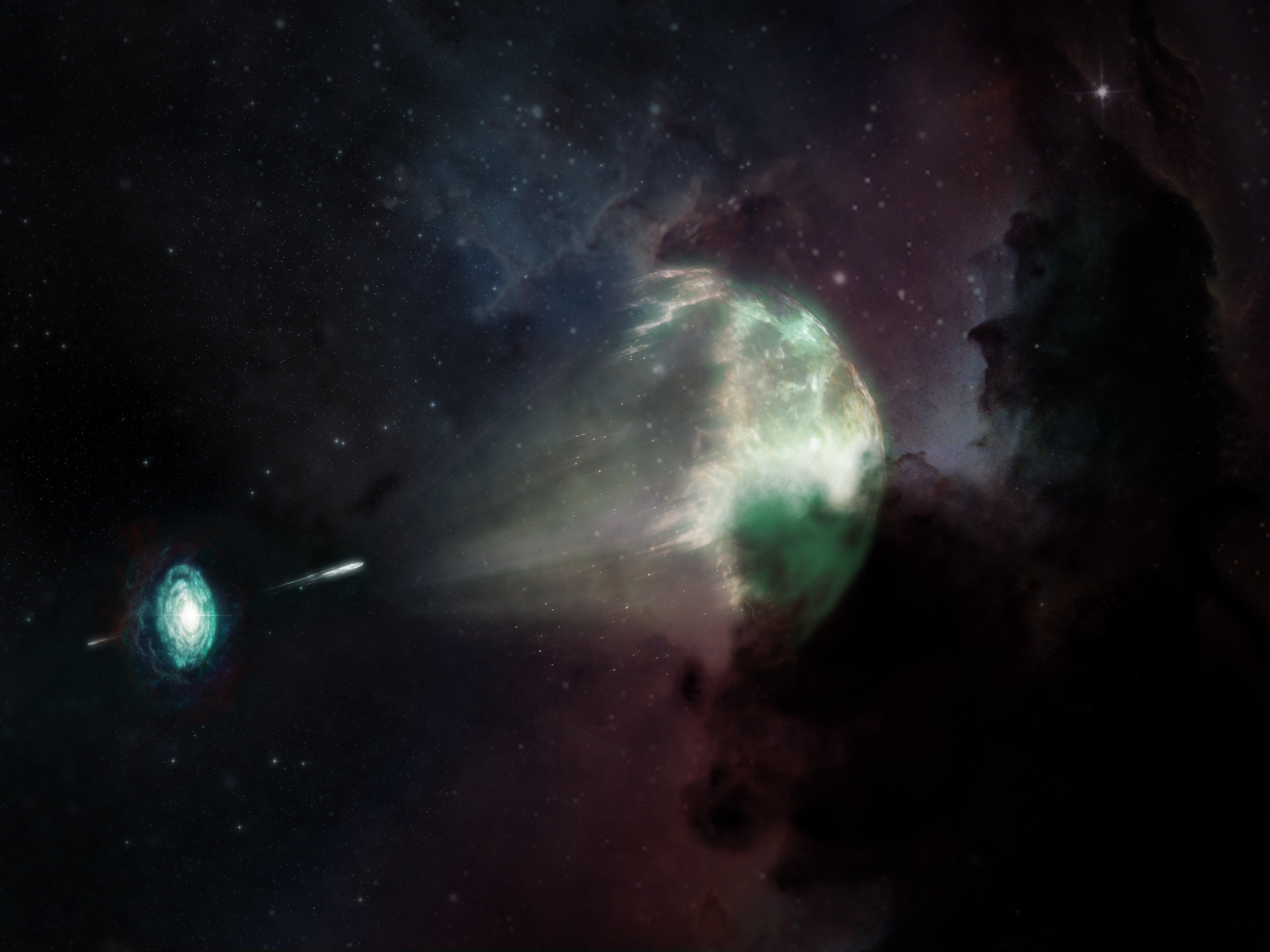
Scientists using the Atacama Large Millimeter/submillimeter Array (ALMA) — an international observatory co-operated by the US National Science Foundation’s National Radio Astronomy Observatory (NRAO) — have for the first time recorded millimeter-wavelength light from a fiery explosion caused by the merger of a neutron star with another star. The team also confirmed this flash of light to be one of the most energetic short-duration gamma-ray bursts ever observed, leaving behind one of the most luminous afterglows on record. The results of the research will be published in an upcoming edition of The Astrophysical Journal Letters.
Gamma-ray bursts (GRBs) are the brightest and most energetic explosions in the Universe, capable of emi...
Read More

Recent Comments