Kuiper Belt Objects tagged posts

The solar system’s greatest mystery may finally be solved

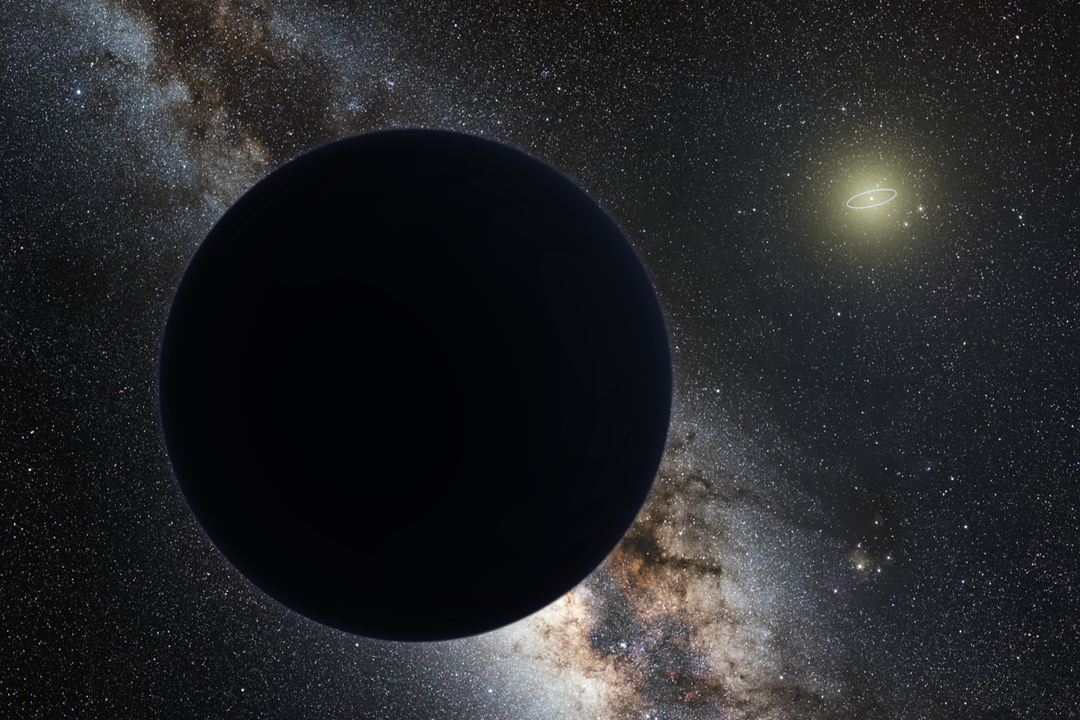
Artist's impression of Planet Nine as an ice giant eclipsing the central Milky Way, with a star-like Sun in the distance. Neptune's orbit is shown as a small ellipse around the Sun. (Credit : Nagual Design)
Artist’s impression of Planet Nine as an ice giant eclipsing the central Milky Way, with a star-like Sun in the distance. Neptune’s orbit is shown as a small ellipse around the Sun. (Credit : Nagual Design)

For years, astronomers have been searching for a mysterious ninth planet lurking in the dark outer reaches of our solar system. Now, a team of researchers have taken a completely different approach to this cosmic detective story—instead of looking for reflected sunlight, they’re hunting for the planet’s own heat signature.

The story begins with a puzzle in the outer solar system. Scientists noticed that small icy bodies called Kuiper Belt Objects, which orbit far beyond Neptune, seem to be clustered together in unusual ways...

Read More

Using Cassini spacecraft, possible Positions of a Ninth planet in the Solar System have been specified

Location of a possible ninth planet. Analysis of radio data from the Cassini spacecraft defines forbidden areas (in red) where the perturbations created by the planet are inconsistent with observations, and a likely area (green) where the addition of the planet improves the model prediction, reducing the differences between the calculations and Cassini data. The position of minimum residues is the most likely location for a planet at P9. Scales are in astronomical units (AU). Credit: Image courtesy of CNRS

Location of a possible ninth planet. Analysis of radio data from the Cassini spacecraft defines forbidden areas (in red) where the perturbations created by the planet are inconsistent with observations, and a likely area (green) where the addition of the planet improves the model prediction, reducing the differences between the calculations and Cassini data. The position of minimum residues is the most likely location for a planet at P9. Scales are in astronomical units (AU). Credit: Image courtesy of CNRS

The Kuiper Belt Objects, small bodies similar to Pluto beyond Neptune, have a particular distribution that is difficult to explain by pure chance...

Read More