Long COVID tagged posts

Long COVID is associated with increased risk of cardiovascular disease

Photo: Getty Images
Photo: Getty Images

People with long COVID are at increased risk of developing cardiovascular disease, according to a new study from Karolinska Institutet published in eClinicalMedicine. The results show that the risk of conditions such as cardiac arrhythmias and coronary artery disease is higher even among those who were not hospitalized during the acute infection.

Long COVID has become an increasingly significant health problem worldwide, and a growing number of studies suggest that the condition can lead to secondary cardiovascular diseases. To date, research has mainly focused on people who were hospitalized, while the risks for those who stayed at home or were treated at a GP are less well known...

Read More

Multiple studies show that children face elevated health risks after COVID infection

child in mask
Credit: Pixabay/CC0 Public Domain

Long COVID can result in increased risk for a variety of serious health problems for young people, including those affecting the kidney, gut, and cardiovascular system, according to a group of new studies led by investigators at the Perelman School of Medicine at the University of Pennsylvania.

“While most public attention has focused on the acute phase of COVID-19, our findings reveal children face significant long-term health risks that clinicians need to monitor,” said senior author Yong Chen, Ph.D., a professor in the Department of Biostatistics and Epidemiology. The studies were conducted under the Researching COVID to Enhance Recovery (RECOVER) Initiative, a special project including more than two dozen health care institutions.

These medic...

Read More

Long COVID: SARS-CoV-2 Spike Protein Accumulation Linked to Long-lasting Brain Effects

Researchers from Helmholtz Munich and Ludwig-Maximilians-Universität (LMU) have identified a mechanism that may explain the neurological symptoms of long COVID.

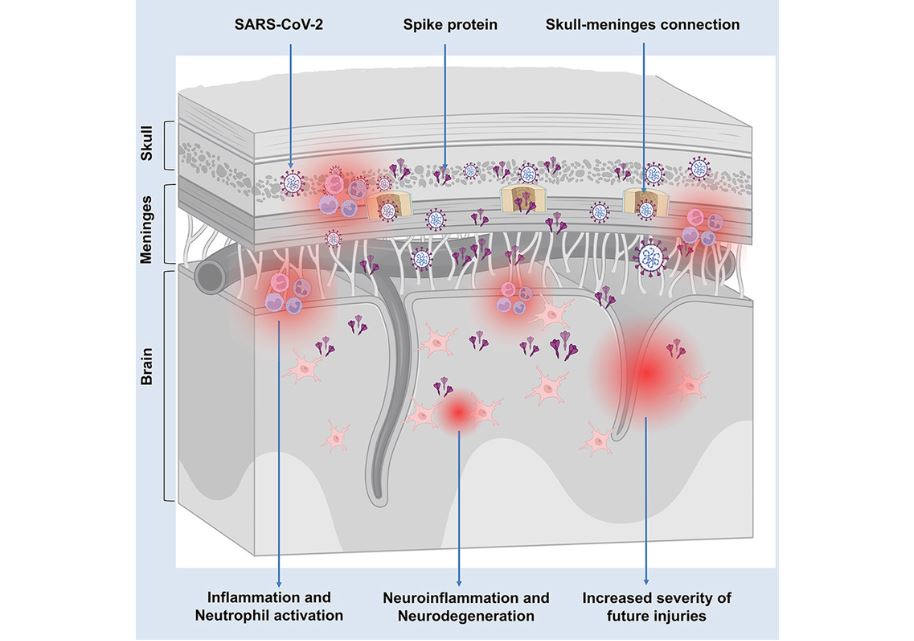
The study shows that the SARS-CoV-2 spike protein remains in the brain’s protective layers, the meninges, and the skull’s bone marrow for up to four years after infection. This persistent presence of the spike protein could trigger chronic inflammation in affected individuals and increase the risk of neurodegenerative diseases.

The team, led by Prof. Ali Ertürk, Director at the Institute for Intelligent Biotechnologies at Helmholtz Munich, also found that mRNA COVID-19 vaccines significantly reduce the accumulation of the spike protein in the brain...

Read More

Spike Mutations that Help SARS-CoV-2 Infect the Brain Discovered

SARS-CoV-2 , COVID-19
Transmission electron micrograph of SARS-CoV-2 virus particles, isolated from a patient. Image captured and color-enhanced at the NIAID Integrated Research Facility (IRF) in Fort Detrick, Maryland. Credit: NIAID

Scientists have discovered a mutation in SARS-CoV-2, the virus that causes COVID-19, that plays a key role in its ability to infect the central nervous system. The findings may help scientists understand its neurological symptoms and the mystery of “long COVID,” and they could one day even lead to specific treatments to protect and clear the virus from the brain.

The new collaborative study between scientists at Northwestern University and the University of Illinois-Chicago uncovered a series of mutations in the SARS-CoV-2 spike protein (the outer part of the virus that help...

Read More