Kailin Yin (left), a postdoctoral fellow in the Roan Lab and co-first author of the study, collaborates with Gladstone Senior Investigator Nadia Roan. Their study revealed unusual activity among certain immune cells in people with long COVID.
People with long COVID have dysfunctional immune cells that show signs of chronic inflammation and faulty movement into organs, among other unusual activity, according to a new study by scientists at Gladstone Institutes and UC San Francisco (UCSF).
The team analyzed immune cells and hundreds of different immune molecules in the blood of 43 people with and without long COVID...
Fatigue is the symptom that most significantly impacts the daily lives of long COVID patients, and can affect quality of life more than some cancers, finds a new study led by researchers at UCL and the University of Exeter.
The research, published in BMJ Open , examines the impact of long COVID on the lives of over 3,750 patients who were referred to a long COVID clinic and used a digital app as part of their NHS treatment for the condition.
Patients were asked to complete questionnaires on the app about how long COVID was affecting them—considering the impact of long COVID on their day-to-day activities, levels of fatigue, depression, anxiety, breathlessness, brain fog, and their quality of life.
COVID-19, the disease resulting from SARS-CoV-2 infection, is associated with highly variable clinical outcomes that range from asymptomatic disease to death. For those with milder infections, COVID-19 can produce respiratory infection symptoms (cough, congestion, fever) and sensory phenotypes such as headache and loss of sense of smell.
In more severe cases, SARS-CoV-2 infection can affect nearly every organ and result in strokes from vascular occlusion, cardiovascular damage and acute renal failure. A substantial number of actively infected patients suffering from both mild and severe infections experience sensory-related symptoms, such as headache, visceral pain, Guillain-Barre syndrome, nerve pain and inflammation...
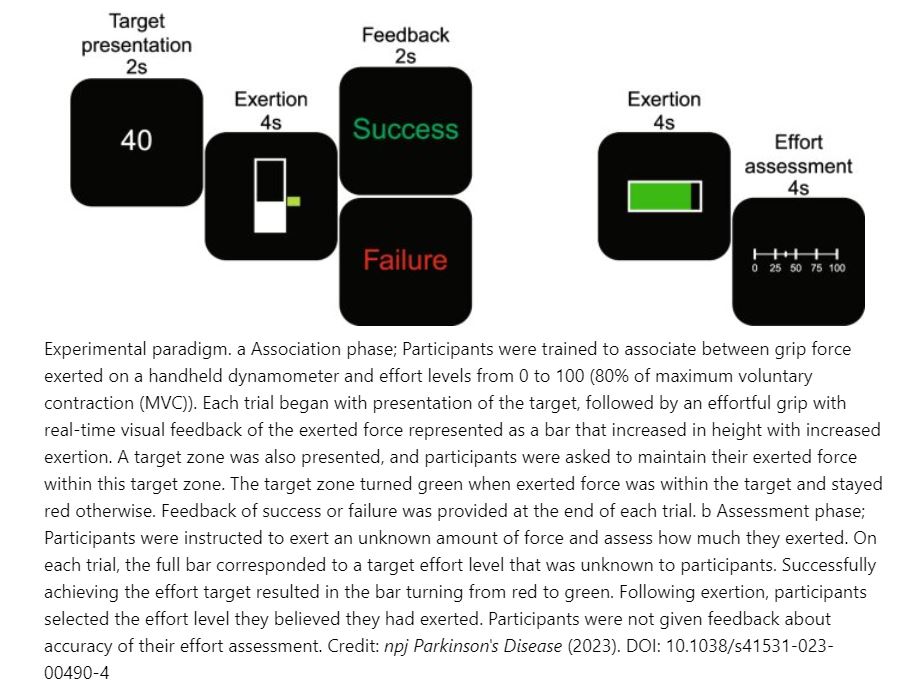
Experimental paradigm. a Association phase; Participants were trained to associate between grip force exerted on a handheld dynamometer and effort levels from 0 to 100 (80% of maximum voluntary contraction (MVC)). Each trial began with presentation of the target, followed by an effortful grip with real-time visual feedback of the exerted force represented as a bar that increased in height with increased exertion. A target zone was also presented, and participants were asked to maintain their exerted force within this target zone. The target zone turned green when exerted force was within the target and stayed red otherwise. Feedback of success or failure was provided at the end of each trial...Read More







Recent Comments