Lupus tagged posts

Certain immune cell subtypes drive lupus, study finds

New immune cell suspects in lupus
scRNA-seq reveals altered cellular composition of CD4+ T cells in SLE. Credit: Nature Immunology (2025). DOI: 10.1038/s41590-025-02297-2

Detailed mapping of CD4⁺ T cells from children with systemic lupus erythematosus (SLE) has revealed distinct immune cell subsets with likely roles in disease pathogenesis, according to a study led by Weill Cornell Medicine investigators. The findings are poised to redirect lupus research and open the door to more precise therapies that avoid broad immune suppression.

Published in Nature Immunology, the study used single-cell RNA sequencing to profile CD4⁺ T-cell subtypes from children with SLE and healthy controls...

Read More

Scientists Reveal How our Cells’ Leaky Batteries are making us Sick

X ray of painful hands
Rheumatoid arthritis is a chronic inflammatory condition that can damage joints.

The new findings could lead to better treatments for rheumatoid arthritis, lupus and other inflammatory diseases – and may even help us slow aging.

Researchers have discovered how “leaky” mitochondria can drive harmful inflammation responsible for diseases such as lupus and rheumatoid arthritis. Scientists may be able to leverage the findings to develop better treatments for those diseases, improve our ability to fight off viruses and even slow aging.

The new discovery reveals how genetic material can escape from our cellular batteries, known as mitochondria, and prompt the body to launch a damaging immune response...

Read More

Potential New Therapeutic Target for Inflammatory Diseases such as Lupus and Sepsis

Trinity and Cambridge scientists unearth potential new therapeutic target for inflammatory diseases

Scientists working in the School of Biochemistry and Immunology in the Trinity Biomedical Sciences Institute at Trinity College Dublin have made an important breakthrough in understanding what goes wrong in our bodies during the progression of inflammatory diseases and – in doing so – unearthed a potential new therapeutic target.

The scientists have found that an enzyme called Fumarate Hydratase is repressed in macrophages, a frontline inflammatory cell type implicated in a range of diseases including Lupus, Arthritis, Sepsis and COVID-19.

Professor Luke O’Neill, Professor of Biochemistry at Trinity is the lead author of the research article that has just been published in leading international journal, Nature. He said:

“No-one has made a link from Fumarate Hydratase to infla...

Read More

Red Blood Cell Alterations contribute to Lupus

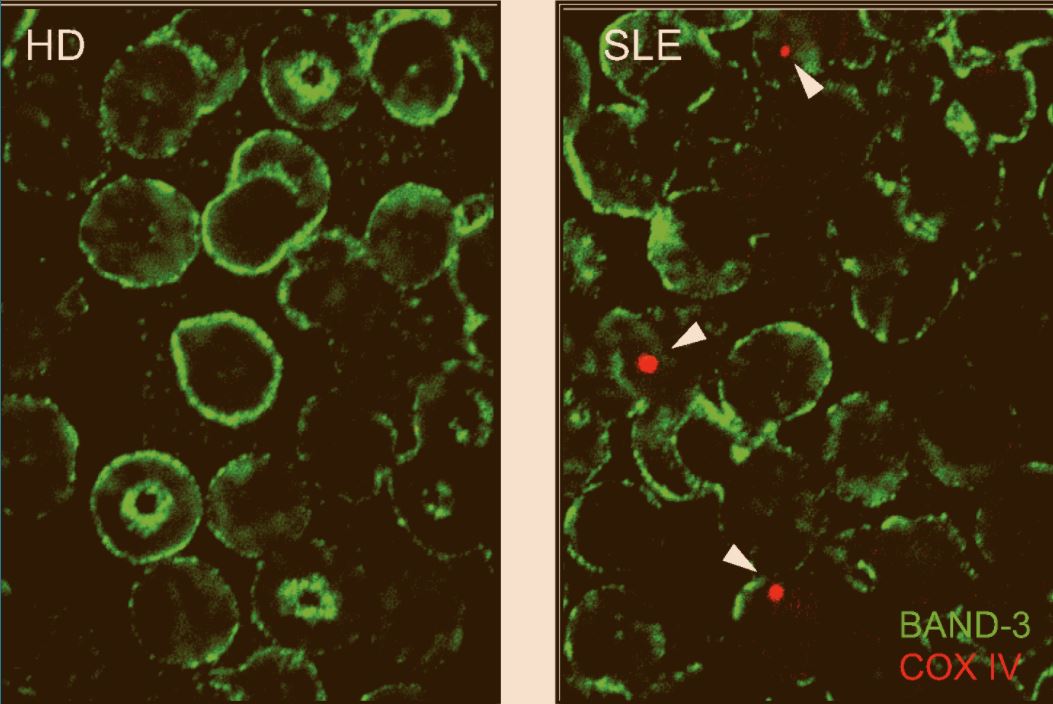
Mitochondria (labeled with anti-COXIV antibody) can be detected in lupus red blood cells (labeled with Band-3 antibody) but not in healthy red blood cells.

The autoimmune disease lupus may be triggered by a defective process in the development of red blood cells (RBCs), according to a study led by researchers at Weill Cornell Medicine. The discovery could lead to new methods for classifying and treating patients with this disease.

The researchers, who published their findings August 11 in Cell, found that in a number of lupus patients, maturing red blood cells fail to get rid of their mitochondria — tiny molecular reactors that help convert oxygen into chemical energy in most cell types, but are normally excluded from red blood cells...

Read More