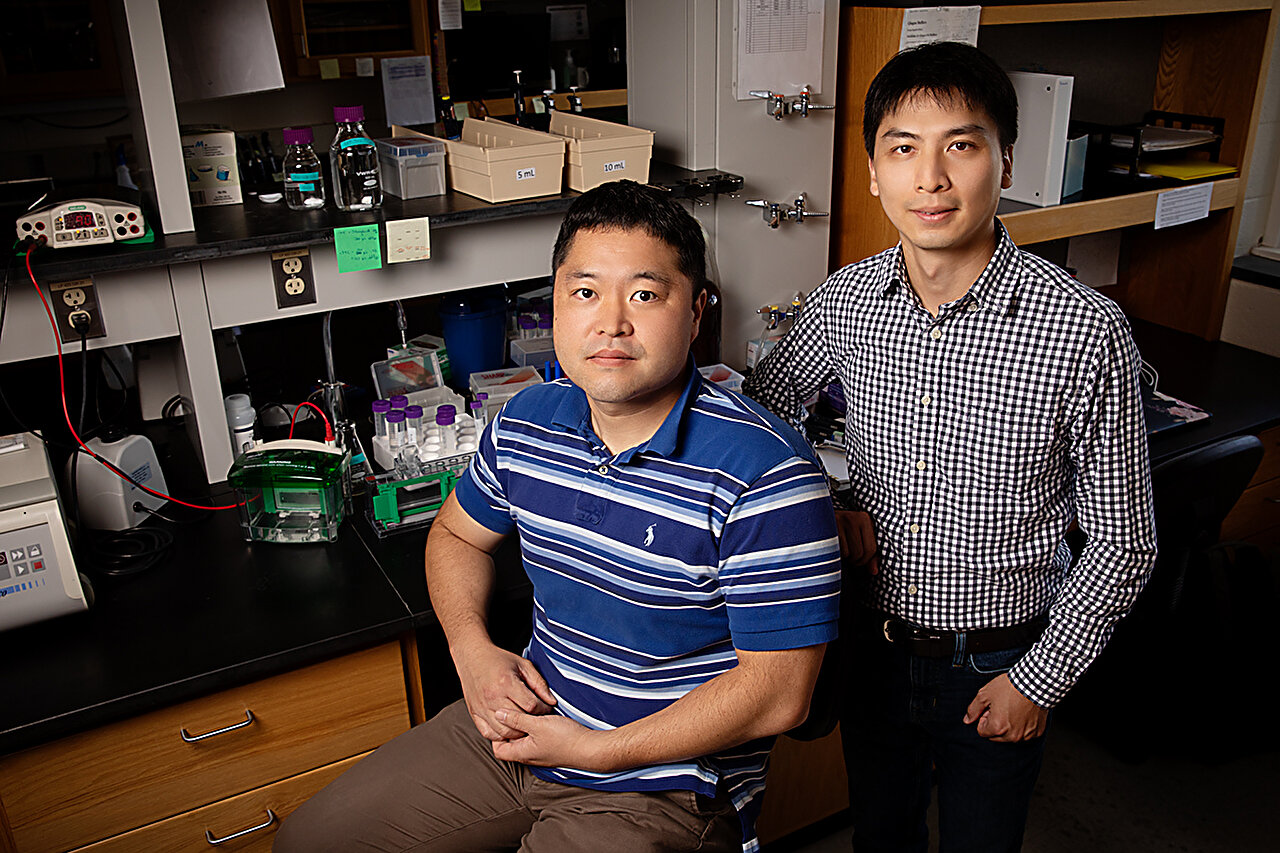
Researchers at the University of Illinois Urbana-Champaign’s Beckman Institute for Advanced Science and Technology led by Professor Nien-Pei Tsai (right) and Kwan Young Lee have established the protein p53 as critical for regulating sociability, repetitive behavior, and hippocampus-related learning and memory in mice, illuminating the relationship between the protein-coding gene TP53 and neurodevelopmental and psychiatric disorders like autism spectrum disorder. Credit: University of Illinois/L. Brian Stauffer
Researchers have established the protein p53 as critical for regulating sociability, repetitive behavior, and hippocampus-related learning and memory in mice, illuminating the relationship between the protein-coding gene TP53 and neurodevelopmental and psychiatric disorders like ...
Neurons produce rhythmic patterns of electrical activity in the brain. One of the unsettled questions in the field of neuroscience is what primarily drives these rhythmic signals, called oscillations. University of Arizona researchers have found that simply remembering events can trigger them, even more so than when people are experiencing the actual event.
The researchers, whose findings are published in the journal Neuron, specifically focused on what are known as theta oscillations, which emerge in the brain’s hippocampus region during activities like exploration, navigation and sleep. The hippocampus plays a crucial role in the brain’s ability to remember the past.
Prior to this study, it was believed that the external environment played a mo...
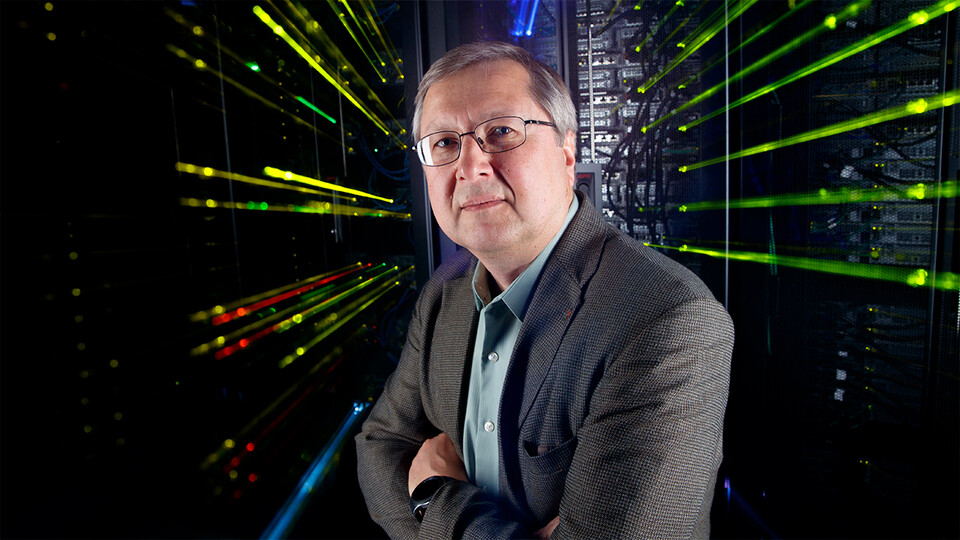
Nebraska’s Evgeny Tsymbal and an international team have demonstrated how to construct, control and explain nanoscopic walls that could yield multiple technological benefits. Craig Chandler | University Communication and Marketing
Nanomaterial feature could help electronic circuits adopt benefits of human memory. For all of the unparalleled, parallel-processing, still-indistinguishable-from-magic wizardry packed into the three pounds of the adult human brain, it obeys the same rule as the other living tissue it controls: Oxygen is a must.
So it was with a touch of irony that Evgeny Tsymbal offered his explanation for a technological wonder — movable, data-covered walls mere atoms wide — that may eventually help computers behave more like a brain.
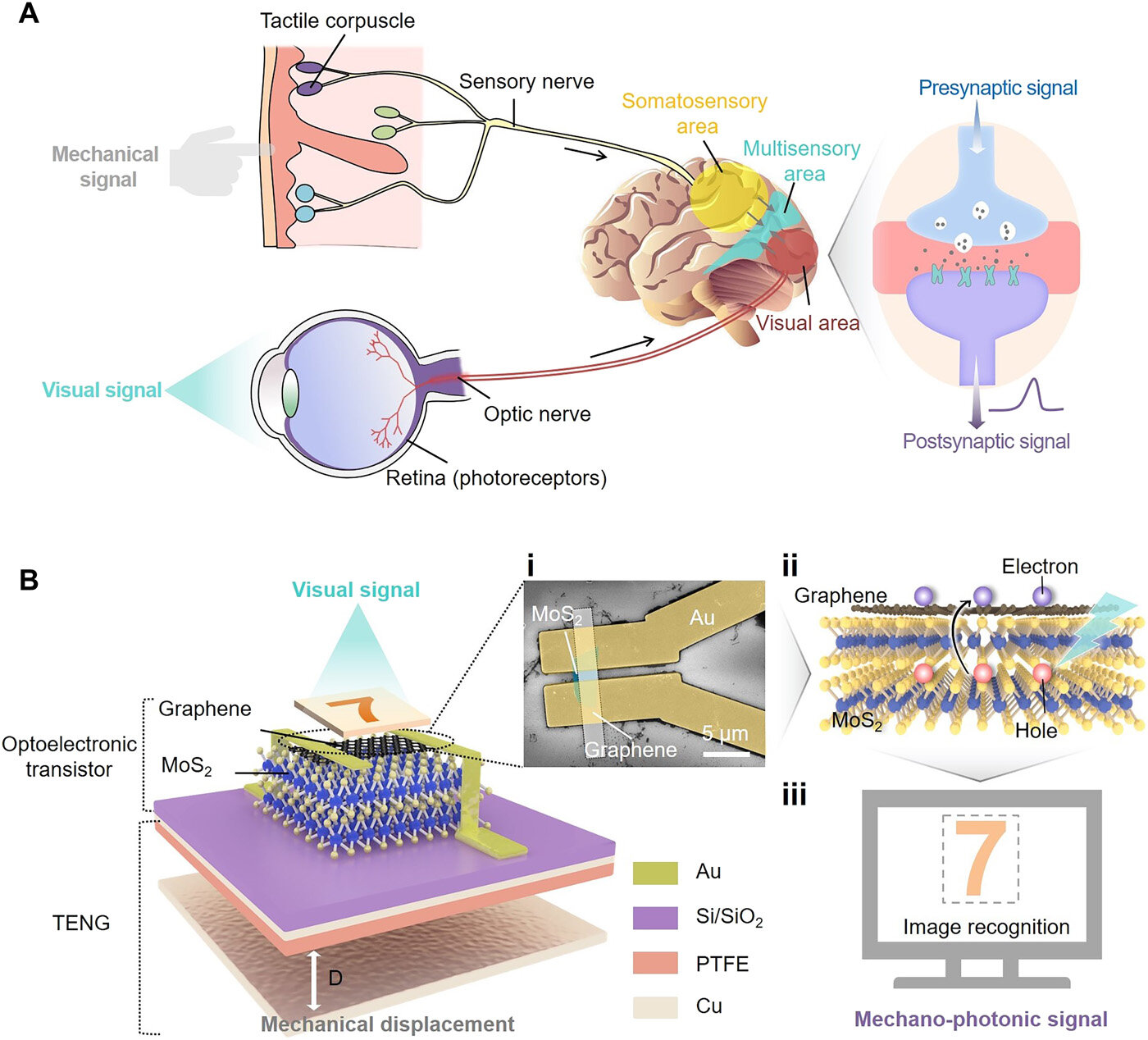
Biological tactile/visual neurons and mechano-photonic artificial synapse. (A) Schematic illustrations of biological tactile/visual sensory system. (B) Schematic diagram of the mechano-photonic artificial synapse based on graphene/MoS2 (Gr/MoS2) heterostructure. (i) Top-view scanning electron microscope (SEM) image of the optoelectronic transistor; scale bar, 5 μm. The cyan area indicates the MoS2 flake, while the white strip is graphene. (ii) Illustration of charge transfer/exchange for Gr/MoS2 heterostructure. (iii) Output mechano-photonic signals from the artificial synapse for image recognition. Credit: Science Advances, doi: 10.1126/sciadv.abd9117
Multifunctional and diverse artificial neural systems can incorporate multimodal plasticity, memory and supervised learning functions ...






Recent Comments