
metabolites tagged posts

Turning the gut microbiome into a longevity factory

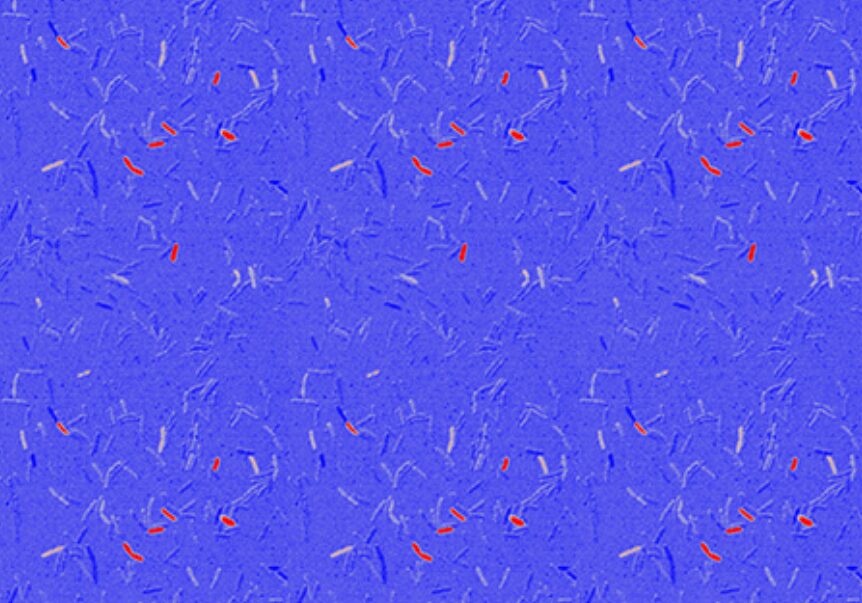
New research finds that low doses of the antibiotic cephalordine induces the cps operon in bacteria, visualized in red. This operon is responsible for synthesizing colanic acids, resulting in attenuation of age-related metabolic changes. Credit: Meng Wang

A team of researchers has found a way to turn the bacteria living in the digestive tracts of animals into factories that can produce compounds that promote longevity in their hosts—showing a potential new drug development strategy.

Janelia Senior Group Leader Meng Wang and her team study longevity and were interested in seeing how they could transfer their research findings about longevity-promoting compounds into practical applications.

One idea they had was to induce the body’s gut microbiota—a collection of bacteria in th...

Read More

Low-cost Plastic Sensors could Monitor a Range of Health Conditions

A low-cost sensor made from semiconducting plastic could be used to diagnose or monitor a wide range of health conditions, such as surgical complications or neurodegenerative diseases. Credit: KAUST

A low-cost sensor made from semiconducting plastic could be used to diagnose or monitor a wide range of health conditions, such as surgical complications or neurodegenerative diseases. Credit: KAUST

An international team of researchers have developed a low-cost sensor made from semiconducting plastic that can be used to diagnose or monitor a wide range of health conditions, such as surgical complications or neurodegenerative diseases. The sensor can measure the amount of critical metabolites, such as lactate or glucose, that are present in sweat, tears, saliva or blood, and, when incorporated into a diagnostic device, could allow health conditions to be monitored quickly, cheaply and accurately...

Read More

New way to Activate Stem Cells to make Hair Grow

Untreated mouse skin showing no hair growth (left) compared to mouse skin treated with the drug UK5099 (right) showing hair growth. Credit: UCLA Broad Stem Cell Center/Nature Cell Biology

Untreated mouse skin showing no hair growth (left) compared to mouse skin treated with the drug UK5099 (right) showing hair growth. Credit: UCLA Broad Stem Cell Center/Nature Cell Biology

UCLA researchers have discovered a new way to activate the stem cells in the hair follicle to make hair grow. The research may lead to new drugs that could promote hair growth for people with baldness or alopecia, which is hair loss associated with such factors as hormonal imbalance, stress, aging or chemotherapy treatment. Hair follicle stem cells are long-lived cells in the hair follicle; they are present in the skin and produce hair throughout a person’s lifetime...

Read More
