
Molecular switch tagged posts

Molecular switch links early life stimulation to lasting memory changes

Researchers identify the molecular mechanisms linking early-life environments with memory
Mice raised in enriched environments show improved learning and memory driven by sustained activation of the transcription factor AP-1, the molecular ‘switch’ that converts early-life experiences into lasting changes in the brain. Credit: Instituto de Neurociencias UMH-CSIC

Researchers have identified a molecular mechanism that helps explain why growing up in a stimulating environment enhances memory. In contrast, a lack of stimulation can impair it. The team from the Institute for Neurosciences (IN), a joint research center of the Spanish National Research Council (CSIC) and Miguel Hernández University of Elche (UMH), was led by researcher Ángel Barco.

Their study, conducted in mice and published in Nature Communications, demonstrates that the environment during childhood and ado...

Read More
A ‘Switch’ that turns Autoimmunity Drugs into powerful Anti-Cancer Treatments

CCI

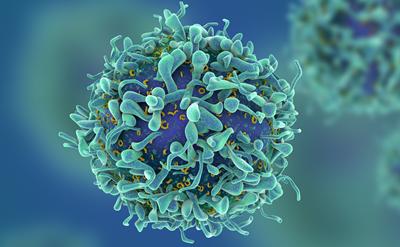
Scientists from the Antibody and Vaccine group at the University of Southampton have discovered a way to transform antibody drugs previously developed to treat autoimmunity into antibodies with powerful anti-cancer activity through a simple molecular “switch.”

This work, published in the journal Cancer Cell, focuses on a molecule called CD40 which is present on the surface of immune cells and controls both autoimmunity and cancer. In autoimmunity, CD40 is thought to be over-stimulated, increasing the chance of the immune system attacking healthy tissues; whereas in cancer, CD40 is believed to be under-stimulated, enabling tumour cells to evade the immune system. Targeting of CD40 with antibody drugs is ongoing in therapeutic interventions for both diseases.

Accordingly, antibody...

Read More

Molecular ‘Switch’ Reverses Chronic Inflammation and Aging

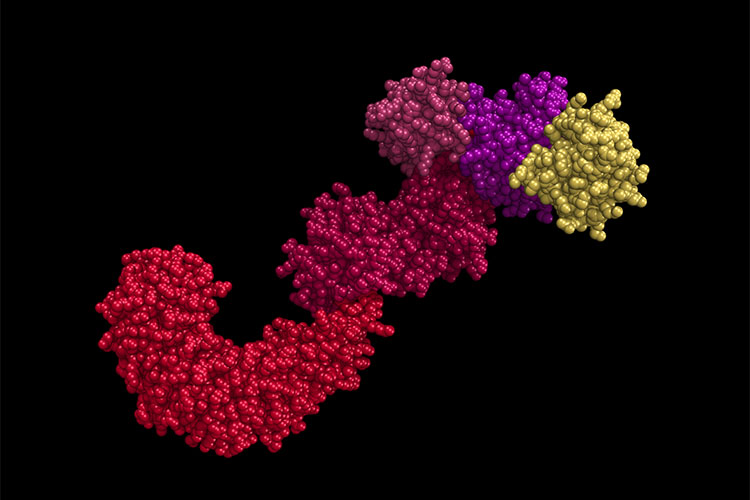
A molecular modeling image showing the detector portion of the NLRP3 inflammasome in red, magenta, and yellow
The NLRP3 receptor protein is responsible for detecting potential pathogens in the body and launching an immune response. (Image by MLGProGamer123 via Wikimedia Commons)

Chronic inflammation, which results when old age, stress or environmental toxins keep the body’s immune system in overdrive, can contribute to a variety of devastating diseases, from Alzheimer’s and Parkinson’s to diabetes and cancer.

Now, scientists at the University of California, Berkeley, have identified a molecular “switch” that controls the immune machinery responsible for chronic inflammation in the body. The finding, which appears online Feb. 6 in the journal Cell Metabolism, could lead to new ways to halt or even reverse many of these age-related conditions.

“My lab is very interested in unde...

Read More

Molecular Switch for Repairing Central Nervous System disorders

regenerative medicine researcher pipetting stem cells
A molecular switch has the ability to turn on a substance in animals that repairs neurological damage in disorders such as multiple sclerosis (MS)Mayo Clinic researchers discovered. The early research in animal models could advance an already approved Food and Drug Administration therapy and also could lead to new strategies for treating diseases of the central nervous system.

A molecular switch has the ability to turn on a substance in animals that repairs neurological damage in disorders such as multiple sclerosis (MS), Mayo Clinic researchers discovered. The early research in animal models could advance an already approved Food and Drug Administration therapy and also could lead to new strategies for treating diseases of the central nervous system.

Research by Isobel Scarisbr...

Read More
