
MUSE tagged posts

“This Appears To Be A Universal Law”: 50-Year-Old Mystery About Our Sun’s Storms May Have Been Solved

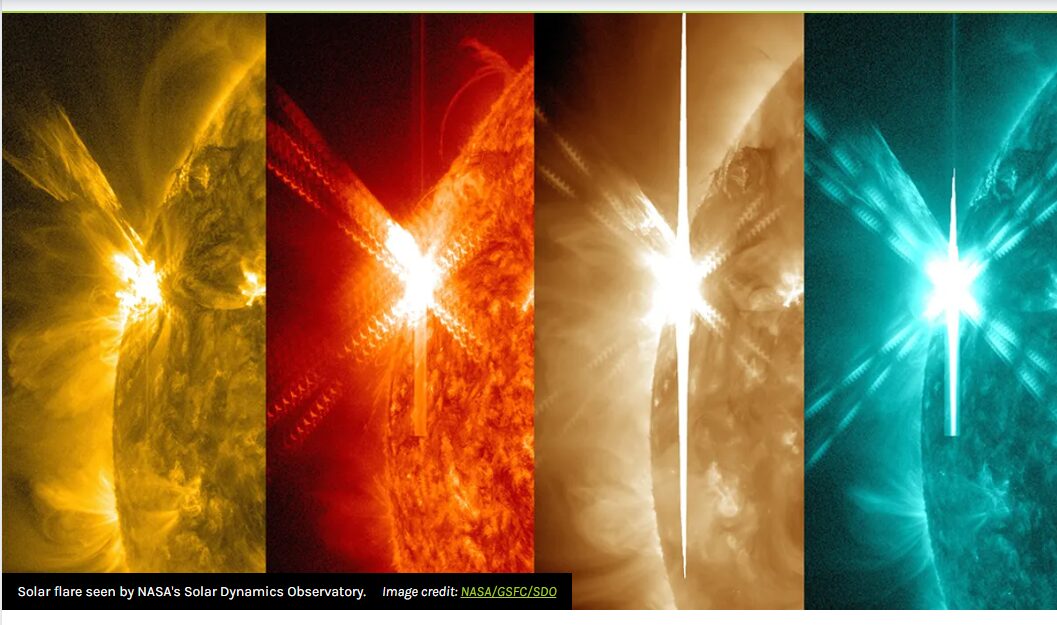
For around half a century, scientists have been puzzled by the odd spectral lines produced by solar flares. Now we may have some answers.
Anew study looking at solar flares may have solved a 50-year-old mystery about our host star, finding that solar flares may be far hotter than we realized.

Solar flares are a common event on the Sun’s surface. They can be seen regularly throughout the year, and particularly during the solar maximum phase of the Sun’s cycle.

“A solar flare is an intense burst of radiation coming from the release of magnetic energy associated with sunspots. Flares are our solar system’s largest explosive events. They are seen as bright areas on the Sun and they can last from minutes to hours,” NASA explains...

Read More
Astronomers see a Massive Black Hole Awaken in Real Time

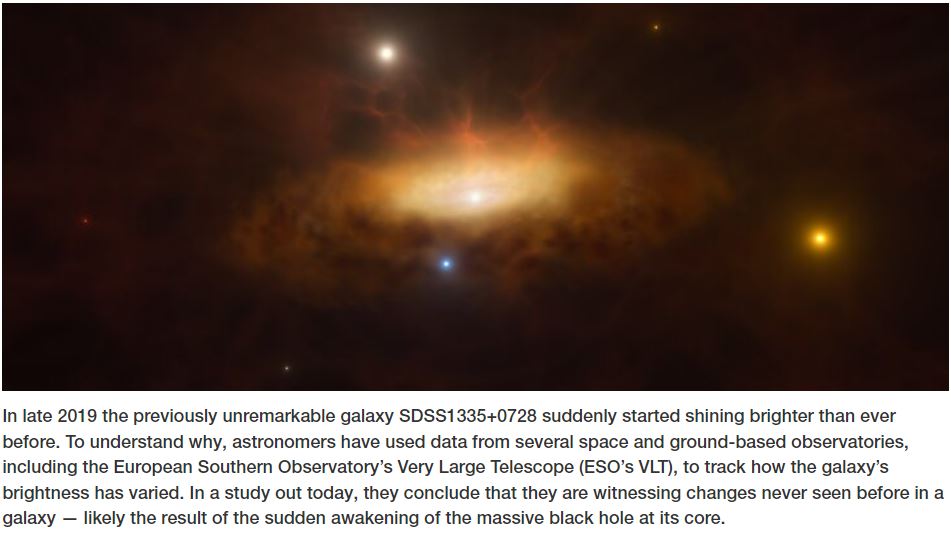
In late 2019 the previously unremarkable galaxy SDSS1335+0728 suddenly started shining brighter than ever before. To understand why, astronomers have used data from several space and ground-based observatories, including the European Southern Observatory’s Very Large Telescope (ESO’s VLT), to track how the galaxy’s @brightness has varied. In a study out today, they conclude that they are witnessing changes never seen before in a galaxy – likely the result of the sudden awakening of the massive black hole at its core.

“Imagine you’ve been observing a distant galaxy for years, and it always seemed calm and inactive,” says Paula Sánchez Sáez, an astronomer at ESO in Germany and lead author of the study accepted for publication in Astronomy & Astrophysics...

Read More

New Images reveal what Neptune and Uranus really look like

New images reveal what Neptune and Uranus really look like
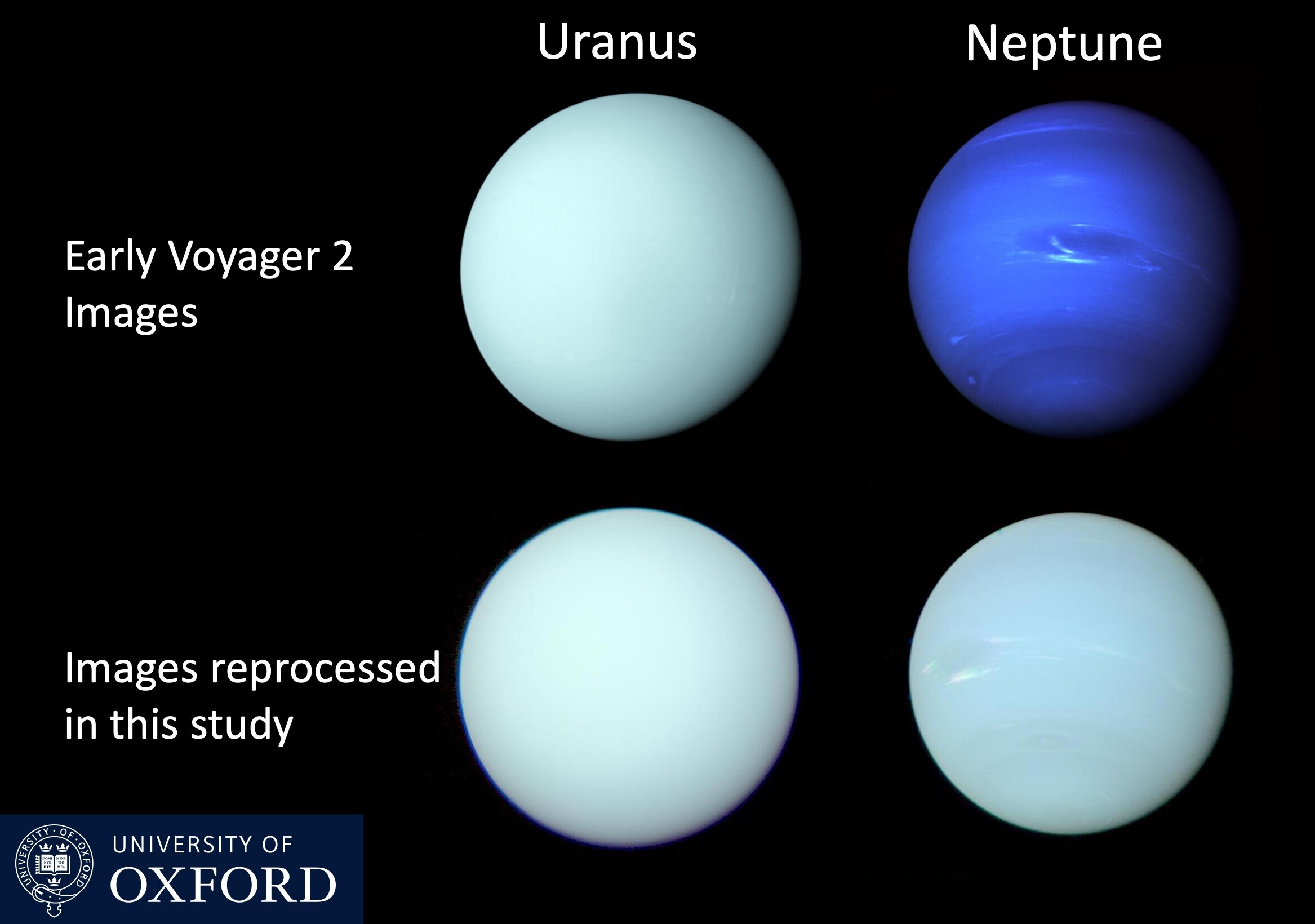
Voyager 2/ISS images of Uranus and Neptune released shortly after the Voyager 2 flybys in 1986 and 1989, respectively, compared with a reprocessing of the individual filter images in this study to determine the best estimate of the true colors of these planets. Credit: Patrick Irwin.

Neptune is fondly known for being a rich blue, and Uranus green—but a new study has revealed that the two ice giants are actually far closer in color than typically thought.

The correct shades of the planets have been confirmed with the help of research led by Professor Patrick Irwin from the University of Oxford, which has been published today in the Monthly Notices of the Royal Astronomical Society.

He and his team found that both worlds are in fact a similar shade of greenish blue, despite the c...

Read More

Mysterious Neptune Dark Spot detected from Earth for the first time

There are four telescopic images of the planet Neptune side-by-side. The rightmost one is an almost-featureless cyan disc with a faint dark spot to the upper-right. The other three, coloured in blue, green and red, show higher contrast views of dark and bright spots, as well as bands crossing the planet diagonally.

Using ESO’s Very Large Telescope (VLT), astronomers have observed a large dark spot in Neptune’s atmosphere, with an unexpected smaller bright spot adjacent to it. This is the first time a dark spot on the planet has ever been observed with a telescope on Earth. These occasional features in the blue background of Neptune’s atmosphere are a mystery to astronomers, and the new results provide further clues as to their nature and origin.

Large spots are common features in the atmospheres of giant planets, the most famous being Jupiter’s Great Red Spot. On Neptune, a dark spot was first discovered by NASA’s Voyager 2 in 1989, before disappearing a few years later...

Read More
