
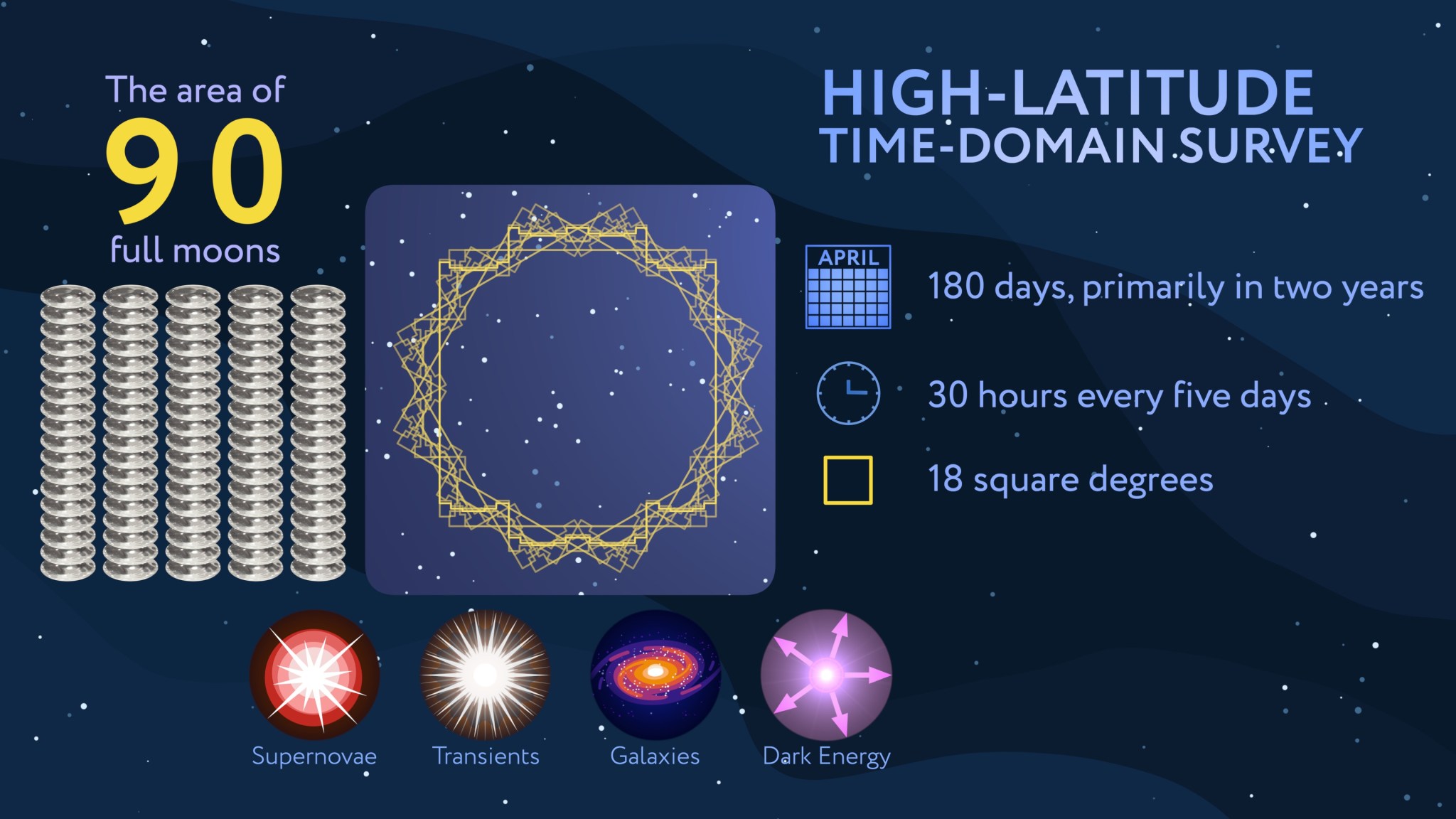
Credit: NASA’s Goddard Space Flight Center
NASA’s Roman Space T...
Read More


July 24, 2025,
 Astronomy/Space
NASA’s Roman Space T...
Read More
June 27, 2023,
Astronomy/Space
The first stars of the universe were very different than the stars we see today. They were made purely of hydrogen and helium, without heavier elements to help them generate energy in their core. As a result, they were likely hundreds of times more massive than the sun. But some of the first stars may have been even stranger. In the early universe, dark matter could have been more concentrated than it is now, and it may have powered strange stellar objects known as dark stars.
Since dark matter and regular matter act similarly under gravity, clumps of dark matter in the early universe could have gathered clouds of hydrogen and helium around them. As this matter collapsed under its own weight, dark matter in its core might have generated energy...
Read More

Recent Comments