“This research holds promise for treating serious neurodegenerative diseases that impact millions of people each year. Our researchers at the University of Maryland School of Medicine have discovered what could be a critical and non-invasive way to use stem cells as a therapy for these diseases,” said UMSOM Dean, E. Albert Reece, MD, PhD, MBA, Executive Vice President for Medical Affairs, UM Baltimore, and the John Z. and Akiko K. Bowers Distinguished Professor.
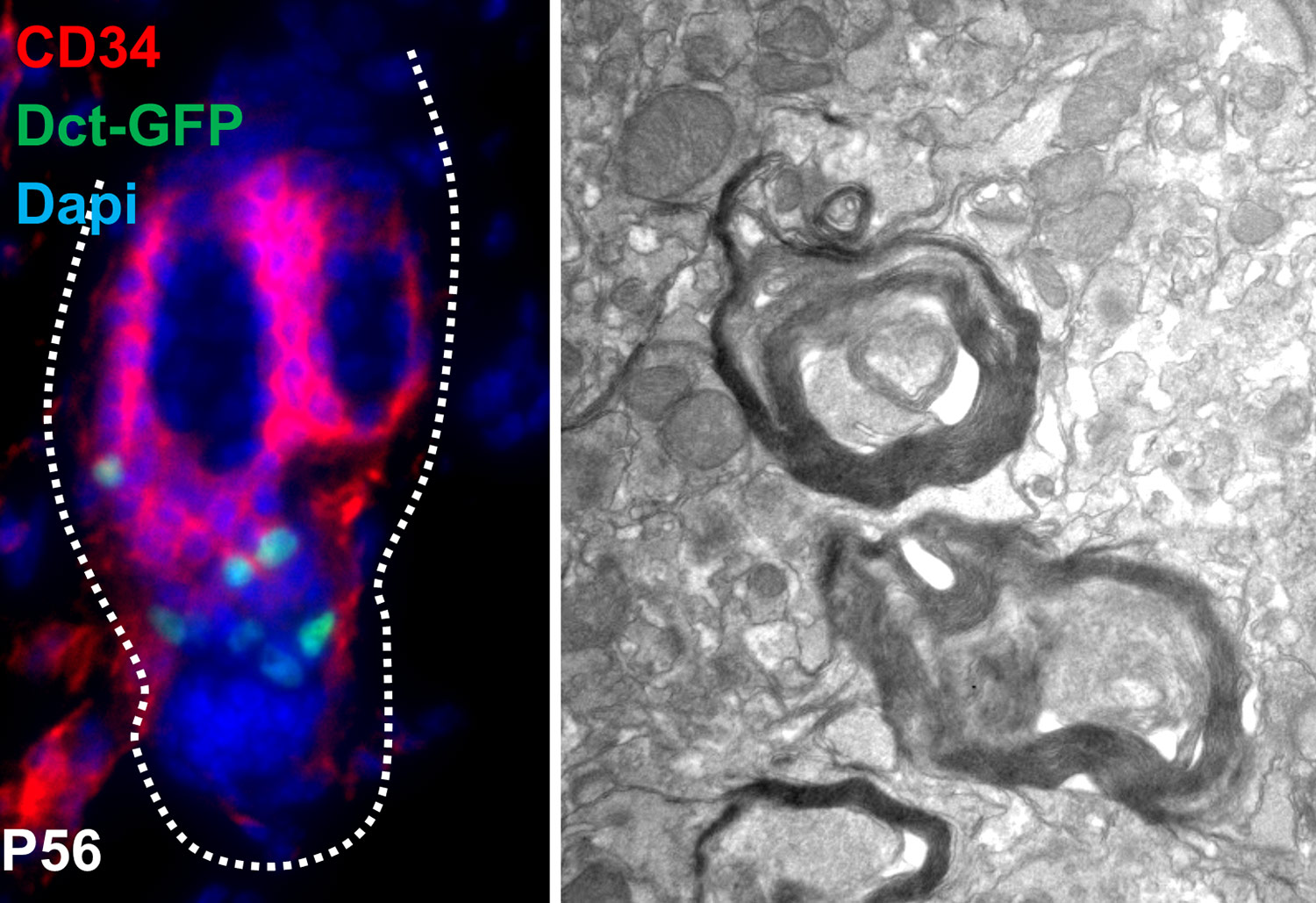
Researchers discover certain skin-related stem cells could help in treating neurogenerative diseases. Neurodegenerative diseases like multiple sclerosis (MS) affect millions of people worldwide and occur when parts of the nervous system lose function over time...
Highlights •Enterochromaffin (EC) cells are excitable and express voltage-gated ion channels •EC cells use sensory receptors to detect irritants, metabolites, and catecholamines •EC cell activation leads to voltage-gated Ca2+ channel-dependent serotonin release •EC cells modulate sensory nerves via serotonin receptors and synaptic connections
Cells that alert nervous system to intestinal trouble could provide new target for gastrointestinal treatments. Specialized cells in the gut sense potentially noxious chemicals and trigger electrical impulses in nearby nerve fibers, according to a new study led by UC San Francisco scientists. “These cells are sensors, like a window looking into the contents of the gut,” said James Bayrer, MD, PhD, an assistant professor of pediatrics at UCSF.







Recent Comments