
NH3 tagged posts

Scientists use lightning to make ammonia out of thin air

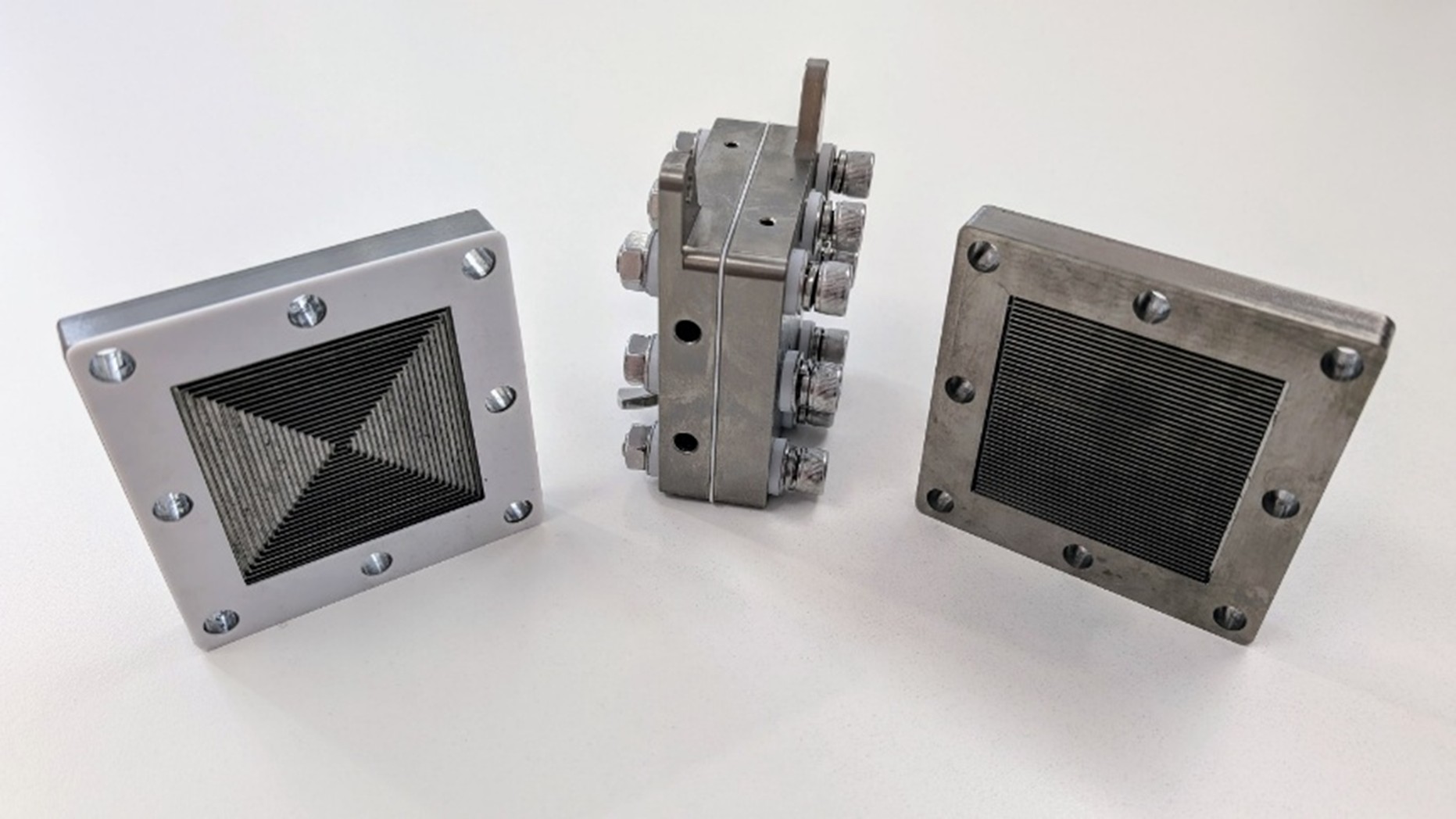
Electrolyser, the key equipment used for the conversion to ammonia
The membrane-based electrolyser, key to where the conversion to gaseous ammonia happens. Credit. PJ Cullen

University of Sydney researchers have harnessed human-made lightning to develop a more efficient method of generating ammonia—one of the world’s most important chemicals. Ammonia is also the main ingredient of fertilizers that account for almost half of all global food production.

The research was published in Angewandte Chemie International edition.

The team have successfully developed a more straightforward method to produce ammonia (NH3) in gas form. Previous efforts by other laboratories produced ammonia in a solution (ammonium, NH4+), which requires more energy and processes to transform it into the final gas product.

The current method to generate ammonia, the Hab...

Read More
A Safe, Easy, and Affordable Way to Store and Retrieve Hydrogen

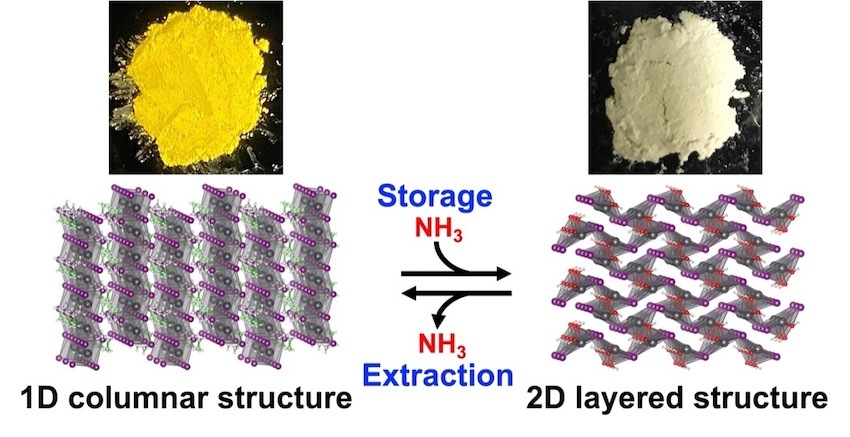
diagram showing the compounds storing and extracting ammonia
Reversible changes in color and crystal structures during storage and extraction of ammonia through chemical conversion

Researchers at the RIKEN Center for Emergent Matter Science (CEMS) in Japan have discovered a compound that uses a chemical reaction to store ammonia, potentially offering a safer and easier way to store this important chemical. This discovery, published in the Journal of the American Chemical Society on July 10, makes it possible not only to safely and conveniently store ammonia, but also the important hydrogen is carries. This finding should help lead the way to a decarbonized society with a practical hydrogen economy.

For society to make the switch from carbon-based to hydrogen-based energy, we need a safe way to store and transport hydrogen, which by itself is ...

Read More

New Catalyst turns Ammonia into an Innovative Clean Fuel

CuOx/3A2S selectively produces N2 and H2O from NH3 through a two-step reaction. Credit: Dr. Satoshi Hinokuma

CuOx/3A2S selectively produces N2 and H2O from NH3 through a two-step reaction. Credit: Dr. Satoshi Hinokuma

Ammonia (NH3) has attracted attention in recent years as a carbon-free fuel that does not emit carbon dioxide. For use as a fuel, it should have a lower combustion temperature and produce only nitrogen (N2) and water. Now, researchers have succeeded in developing a new catalyst that burns NH3 at a low temperature and produces N2. The results are expected to contribute to climate change countermeasures and increased renewable energy use.

NH3 is a combustible gas that can be widely used in thermal power generation and industrial furnaces as an alternative to gasoline and light oil...

Read More
