perovskite tagged posts

New Efficiency Record for Solar Cell Technology

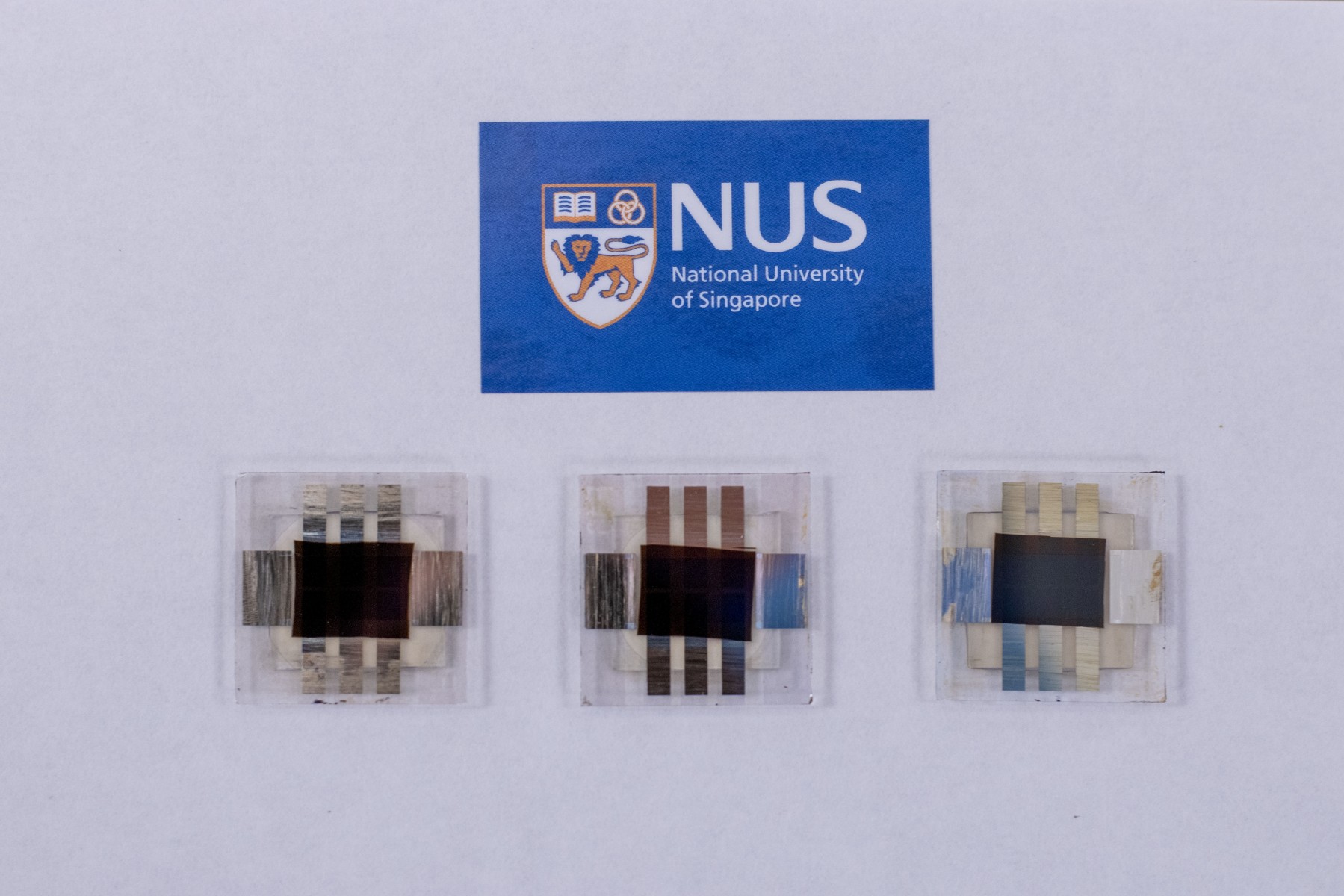
Solar cells made using perovskite and organic materials are flexible, light, low cost and ultra-thin. They are ideal for powering vehicles, boats, and more.

A team of researchers from the National University of Singapore (NUS) has set a new record in the power conversion efficiency of solar cells made using perovskite and organic materials. This technological breakthrough paves the way for flexible, light-weight, low cost and ultra-thin photovoltaic cells which are ideal for powering vehicles, boats, blinds and other applications.

“Technologies for clean and renewable energy are extremely important for carbon reduction. Solar cells that directly convert solar energy into electricity are among the most promising clean energy technologies...

Read More

A Safer, Greener way to make Solar Cells: Toxic Solvent Replaced

Researcher Carys Worsley at work in the SPECIFIC labs, identifying a safer, greener way to make solar cells
Researcher Carys Worsley at work in the SPECIFIC labs, identifying a safer, greener way to make solar cells 

Scientists at SPECIFIC Innovation and Knowledge Centre, Swansea University, have found a way to replace the toxic, unsustainable solvents currently needed to make the next generation of solar technology.

Printed carbon perovskite solar cells have been described as a likely front runner to the market because they are extremely efficient at converting light to electricity, cheap and easy to make.

A major barrier to the large-scale manufacture and commercialisation of these cells is the solvents used to control crystallisation of the perovskite during fabrication: this is because they are made from unsustainable materials and are banned in many countries due to their toxicity...

Read More

Key Advance for Printing Circuitry on Wearable Fabrics

Perovskite crystal structure
Image:e Perovskite crystal structure

Electronic shirts that keep the wearer comfortably warm or cool, as well as medical fabrics that deliver drugs, monitor the condition of a wound and perform other tasks, may one day be manufactured more efficiently thanks to a key advance by Oregon State University researchers.

The breakthrough involves inkjet printing and materials with a crystal structure discovered nearly two centuries ago. The upshot is the ability to apply circuitry, with precision and at low processing temperatures, directly onto cloth — a promising potential solution to the longstanding tradeoff between performance and fabrication costs.

“Much effort has gone into integrating sensors, displays, power sources and logic circuits into various fabrics for the creation of we...

Read More

Laser Evaporation technology to create new Solar materials

This is a closer look at the target of frozen solution that contains the building blocks for the solar cell material. Credit: E. Tomas Barraza

This is a closer look at the target of frozen solution that contains the building blocks for the solar cell material. Credit: E. Tomas Barraza

Delicate hybrid organic-inorganic crystals open new possibilities for light-based technologies. Materials scientists at Duke University have developed a method to create hybrid thin-film materials that would otherwise be difficult or impossible to make. The technique could be the gateway to new generations of solar cells, LEDs and photodetectors.

Perovskites are a class of materials that – with the right combination of elements – have a crystalline structure that makes them particularly well-suited for light-based applications...

Read More