
qubit tagged posts

Physicists develop world’s best Quantum Bits

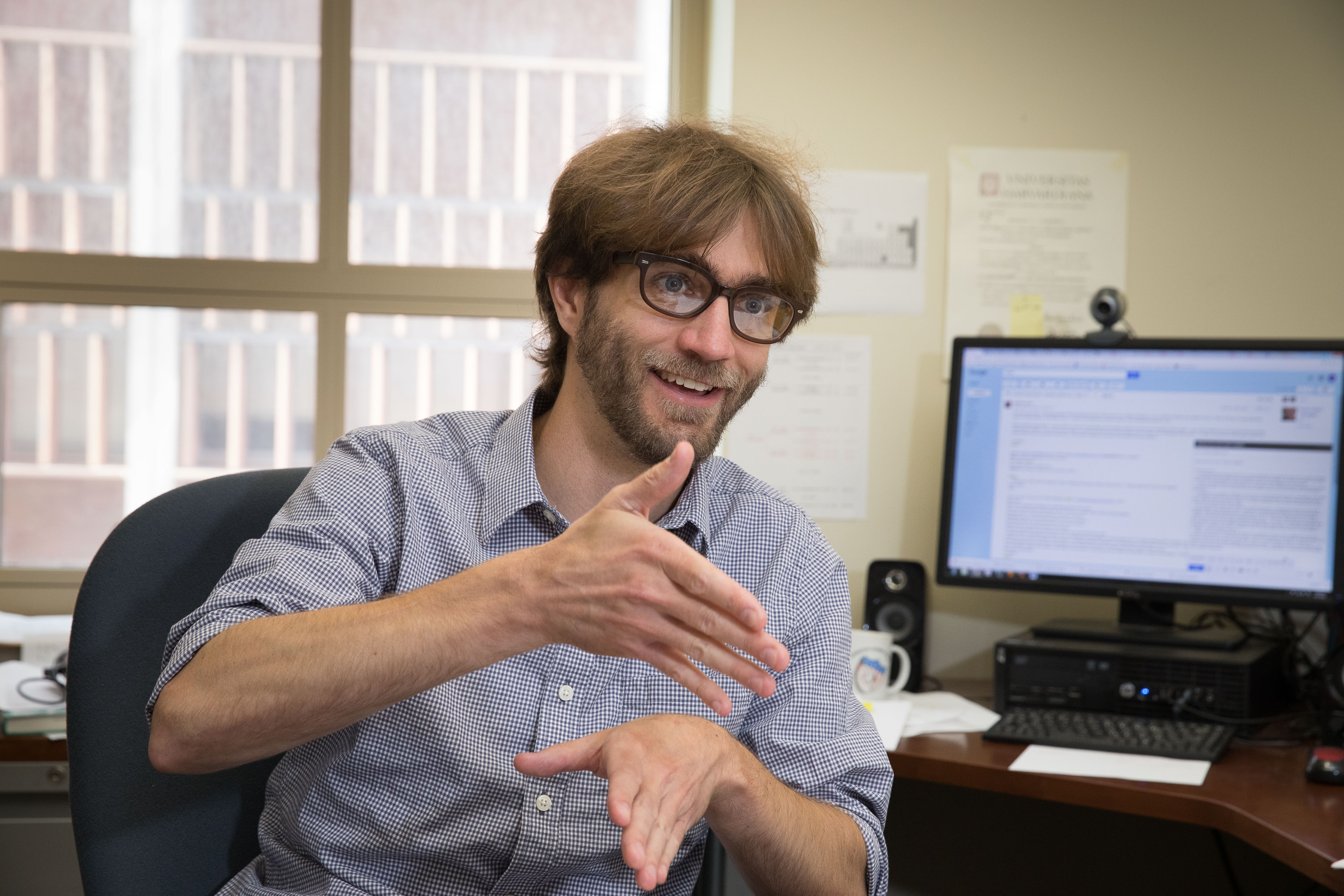
A photo of Assistant Professor Wesley Campbell, UCLA Physics & Astronomy
Assistant Professor Wesley Campbell, UCLA Physics & Astronomy (Photo Credit: UCLA)

A team of researchers at UCLA has set a new record for preparing and measuring the quantum bits, or qubits, inside of a quantum computer without error. The techniques they have developed make it easier to build quantum computers that outperform classical computers for important tasks, including the design of new materials and pharmaceuticals. The research is published in the peer-reviewed, online open-access journal, npj Quantum Information, published by Nature and including the exceptional research on quantum information and quantum computing.

Currently, the most powerful quantum computers are “noisy intermediate-scale quantum” (NISQ) devices and are very sensitive to errors...

Read More

Could Aluminum Nitride be engineered to produce Quantum bits?

This graphic illustrates an engineered nitrogen vacancy in aluminum nitride. Credit: H.Seo, M.Govoni and G.Galli, University of Chicago

This graphic illustrates an engineered nitrogen vacancy in aluminum nitride. Credit: H.Seo, M.Govoni and G.Galli, University of Chicago

The leading method for qubit creation involves exploiting the structural defects in diamonds. But researchers found that the same defect could be engineered in cheaper aluminum nitride. If confirmed by experiments, this could significantly reduce the cost of manufacturing quantum technologies. Using supercomputers at NERSC at Berkeley Lab, these researchers have identified a possible candidate in aluminum nitride...

Read More

Crucial Hurdle Overcome in Quantum Computing

This image shows inside the laboratories at ANFF, where the researchers designed and built the world's first two-qubit logic gate. Credit: UNSW

This image shows inside the laboratories at ANFF, where the researchers designed and built the world’s first two-qubit logic gate. Credit: UNSW

Quantum logic gate in silicon built for the for the first time, making calculations between 2 qubits of information possible – and thereby clearing the final hurdle to making silicon quantum computers a reality. “What we have is a game changer,” said Andrew Dzurak, Scientia Professor and Director of the Australian National Fabrication Facility at UNSW. “Because we use essentially the same device technology as existing computer chips, we believe it will be much easier to manufacture a full-scale processor chip than for any of the leading designs, which rely on more exotic technologies.”

In classical computers, data is rendered as binary bits, which ...

Read More
