
regeneration of nerve cells tagged posts

Injectable Porous Scaffolds Promote Better, Quicker Healing after Spinal Cord Injuries

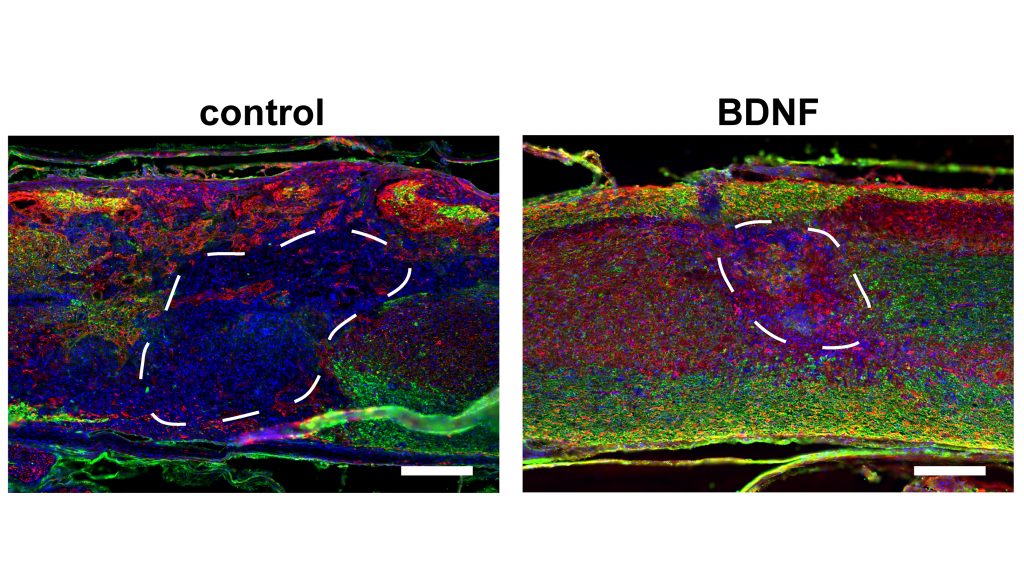
Images show myelinated axons in biomaterial scaffolds eight weeks after injection into the injured cord of a mouse. Scaffolds were fabricated from hyaluronic acid (HA) with a regular network of cell-scale macropores and loaded with gene therapy vectors encoding for brain-derived neurotrophic factor (BDNF), to promote axonal survival and regeneration. These were compared to control scaffolds, which were lacking the BDNF vector. Images show dense infiltration of cells (shown in blue, cell nuclei), axons (shown in red in A, NF200 protein) and myelinating glial cells (shown in green, myelin basic protein) in the BDNF-laden scaffolds. Scale bars = 200 µm. CREDIT: Seidlits et al.
Images show myelinated axons in biomaterial scaffolds eight weeks after injection into the injured cord of a mouse. 

Hydrogel scaffolds with regularly spaced pores encourage spinal cords cells to grow, improve regeneration of nerve cells. Researchers have developed materials that can interface with an injured spinal cord and provide a scaffolding to facilitate healing. To do this, scaffolding materials need to mimic the natural spinal cord tissue, so they can be readily populated by native cells in the spinal cord, essentially filling in gaps left by injury. The researchers show how the pores improve efficiency of gene therapies administered locally to the injured tissues, which can further promote tissue regeneration.

Spinal cord injuries can be life-changing and alter many importa...

Read More
