
retina tagged posts

Vision can be rebooted in adults with amblyopia, study suggests

MIT study shows how vision can be rebooted in adults with amblyopia
A new MIT study suggests a strategy for treating adults with amblyopia. Credit: Skitterphoto, CC0, via Wikimedia Commons

Temporarily anesthetizing the retina briefly reverts the activity of the visual system to that observed in early development and enables growth of responses to the amblyopic eye, new research shows.

In the common vision disorder amblyopia, impaired vision in one eye during development causes neural connections in the brain’s visual system to shift toward supporting the other eye, leaving the amblyopic eye less capable even after the original impairment is corrected. Current interventions are only effective during infancy and early childhood while the neural connections are still being formed.

But a new study in mice by neuroscientists in The Picower Institute f...

Read More
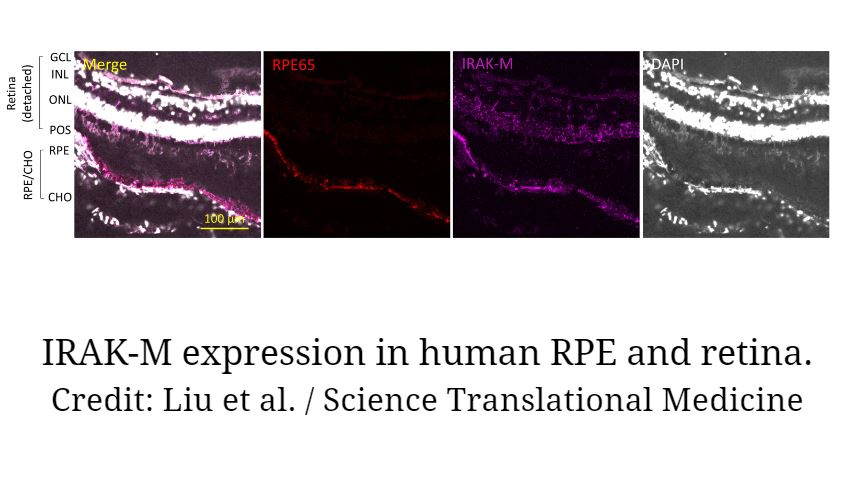

Researchers Unveil Pioneering Approach to Combat Age-Related Vision Loss

Cirrus Therapeutics, the University of Bristol, and London’s Global University Institute of Ophthalmology have discovered a new treatment for age-related macular degeneration (AMD), the leading cause of vision loss among older adults.

Featured on the cover of the journal Science Translational Medicine, this research reveals that boosting a specific protein, IRAK-M, in retinal cells could offer a new and highly effective therapy for AMD.

AMD can severely impact a person’s vision. Patients suffering from AMD often start with blurred vision or seeing a black dot in their central vision, which can ultimately expand to the point where there is no useful central vision...

Read More

Greater intake of dietary Omega-3 fatty acids associated with lower risk of Diabetic Retinopathy

Eating oily fish twice a week can protect your eyesight a study has revealed

Eating oily fish twice a week can protect your eyesight a study has revealed

In middle-aged and older individuals with type 2 diabetes, intake of at least 500 mg/d of dietary long-chain ω-3 polyunsaturated fatty acids, easily achievable with 2 weekly servings of oily fish, was associated with a decreased risk of sight-threatening diabetic retinopathy, according to a study published online by JAMA Ophthalmology.

Given the economic and societal burden of DR, developing effective strategies to prevent or at least delay its onset is a major public health issue. The retina is rich in long-chain ω-3 polyunsaturated fatty acids (LCω3PUFAs). Experimental models support dietary LCω3PUFA protection against DR, but clinical data are lacking. Aleix Sala-Vila, D.Pharm., Ph.D...

Read More
