SARS-CoV-2 tagged posts

Far-UVC Light Safely Kills Airborne Coronaviruses, study finds

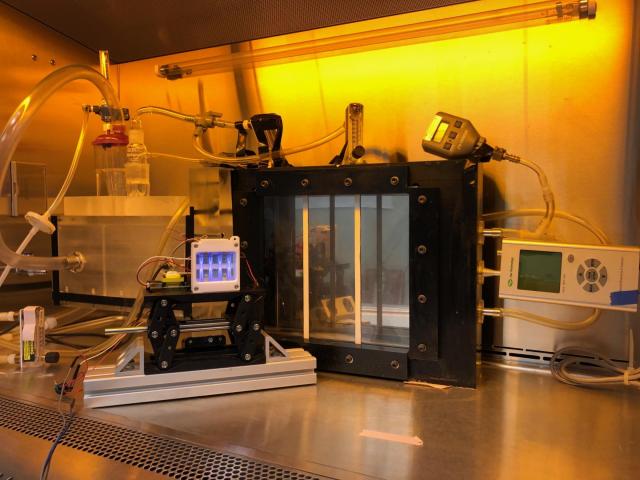
Equipment used to test the effect of far-UVC light on airborne coronaviruses. Photo: Center for Radiological Research at Columbia University.

More than 99.9% of seasonal coronaviruses present in airborne droplets were killed when exposed to a particular wavelength of ultraviolet light that is safe to use around humans, a new study at Columbia University Irving Medical Center has found.

“Based on our results, continuous airborne disinfection with far-UVC light at the current regulatory limit could greatly reduce the level of airborne virus in indoor environments occupied by people,” says the study’s lead author David Brenner, PhD, Higgins Professor of Radiation Biophysics at Columbia University Vagelos College of Physicians and Surgeons and director of the Center for Radiological Res...

Read More

Super-potent Human Antibodies protect against COVID-19 in Animal Tests

A human antibody (blue) attaches to the receptor binding domain (red) on the SARS-CoV-2 virus. (Model courtesy of the Burton lab.)

Scientists isolate powerful coronavirus-neutralizing antibodies from COVID-19 patients and successfully test in animals. A team led by Scripps Research has discovered antibodies in the blood of recovered COVID-19 patients that provide powerful protection against SARS-CoV-2, the coronavirus that causes the disease, when tested in animals and human cell cultures.

The research, published today in Science, offers a paradigm of swift reaction to an emergent and deadly viral pandemic, and sets the stage for clinical trials and additional tests of the antibodies, which are now being produced as potential treatments and preventives for COVID-19.

“The discover...

Read More

Durable, Washable Textile Coating can Repel Viruses

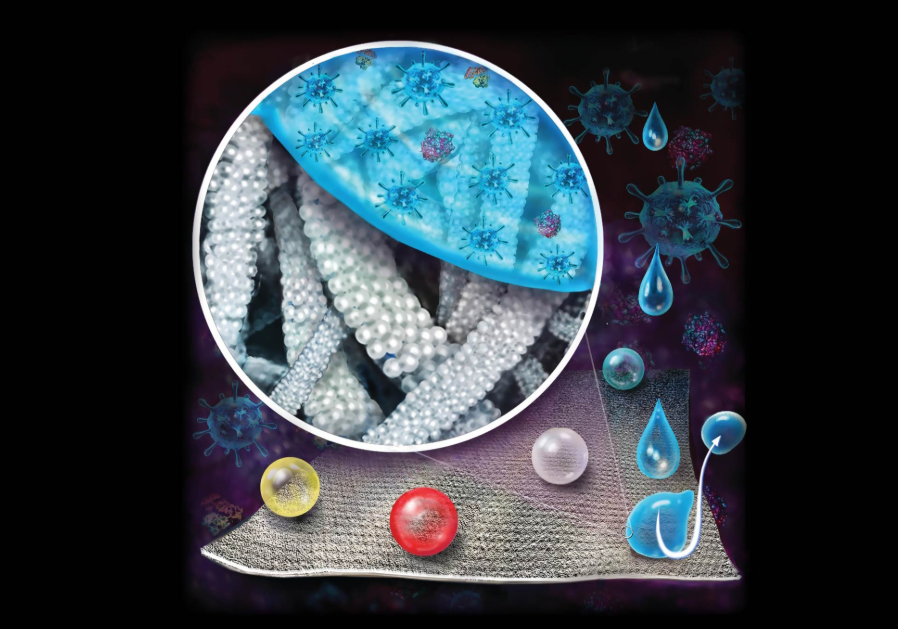
An illustration shows the treated textile’s ability to repel fluids.

New research could lead to safely reusable PPE. Researchers have created a textile coating that can not only repel liquids like blood and saliva but can also prevent viruses from adhering to the surface. Masks, gowns, and other personal protective equipment (PPE) are essential for protecting healthcare workers. However, the textiles and materials used in such items can absorb and carry viruses and bacteria, inadvertently spreading the disease the wearer sought to contain.

When the coronavirus spread amongst healthcare professionals and left PPE in short supply, finding a way to provide better protection while allowing for the safe reuse of these items became paramount.

Research from the LAMP Lab at the Universit...

Read More

Imaging reveals Bowel Abnormalities in Patients with COVID-19

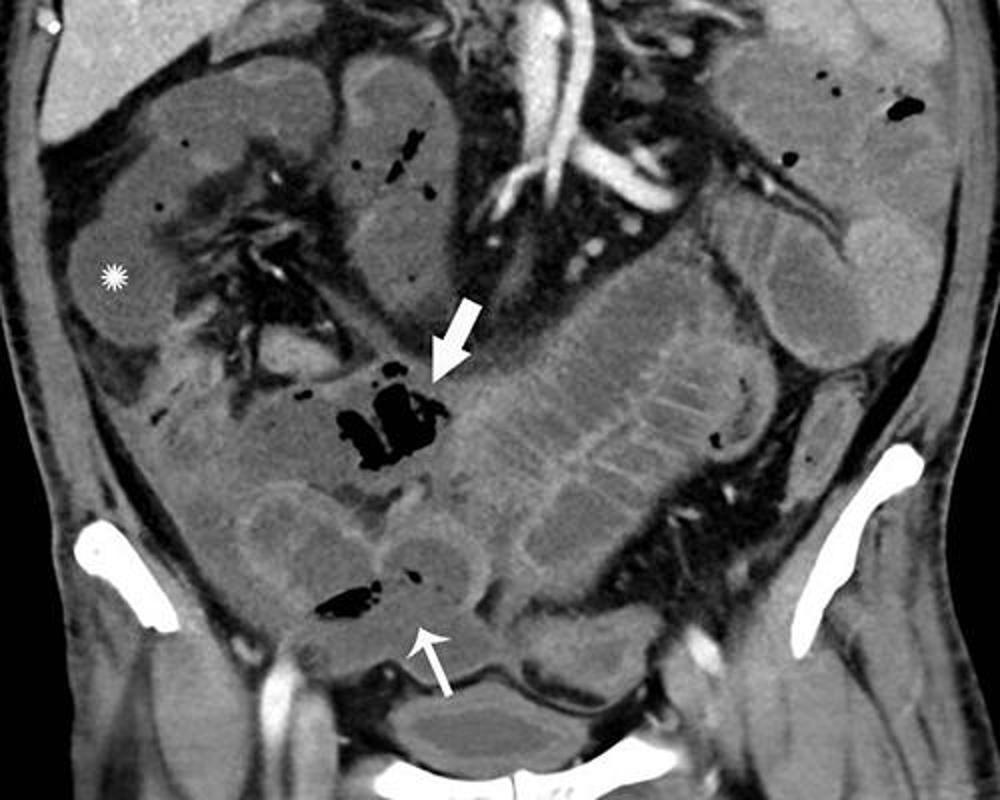
Coronal CT of the abdomen and pelvis with IV contrast in a 47-year-old man with abdominal tenderness demonstrates typical findings of mesenteric ischemia and infarction, including pneumatosis intestinalis (arrow) and non-enhancing bowel (*). Frank discontinuity of a thickened loop of small bowel in the pelvis (thin arrow) is in keeping with perforation.

Patients with COVID-19 can have bowel abnormalities, including ischemia, according to a new study published recently in the journal Radiology.

Several studies have evaluated the chest imaging findings in COVID-19, which helped improve understanding of how the disease affects the lungs. More recently, reports have documented that gastrointestinal symptoms, liver injury, and vascular findings are common in these patients...

Read More