
SARS-CoV-2 tagged posts

Diagnostic Biosensor quickly detects SARS-CoV-2 from Nasopharyngeal Swabs

An artist’s rendering above shows a new test that quickly detects SARS-CoV-2 (spheres) through binding to antibodies (Y-shapes) on a field-effect transistor.
Adapted from ACS Nano 2020, DOI: 10.1021/acsnano.0c02823

Researchers have developed a field-effect transistor-based biosensor that detects SARS-CoV-2 in nasopharyngeal swabs from patients with COVID-19, in less than one minute.

According to many experts, early diagnosis and management are critical for slowing the spread of SARS-CoV-2, the new coronavirus that causes COVID-19. Therefore, the race is on to develop diagnostic tests for the virus that are faster, easier and more accurate than existing ones...

Read More
Trial Drug can significantly Block Early stages of COVID-19 in engineered human tissues

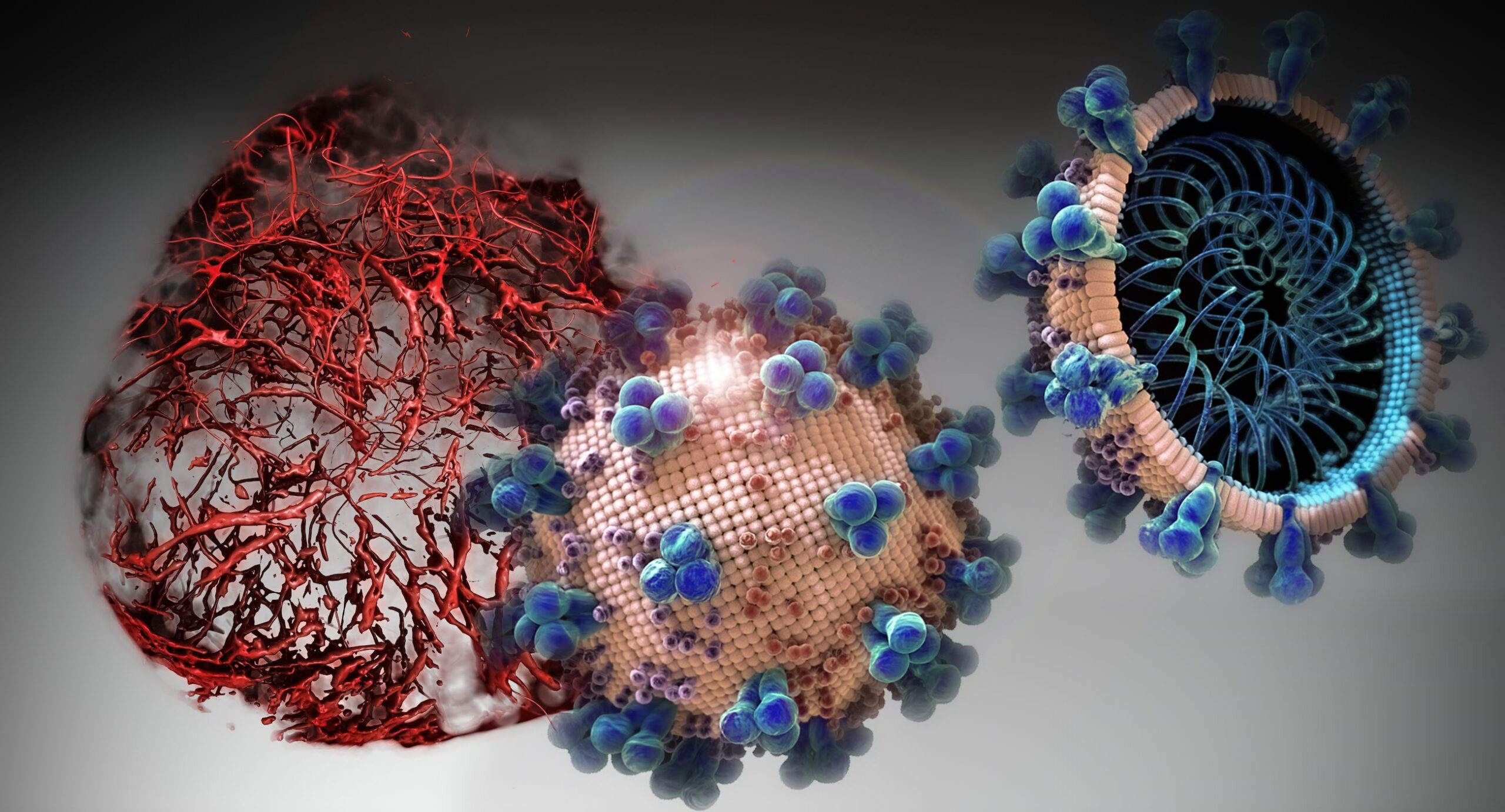
In cell cultures analyzed in the current study, hrsACE2 inhibited the coronavirus load by a factor of 1,000-5,000. Credit: IMBA/Tibor Kulcsar

An international team led by University of British Columbia researcher Dr. Josef Penninger has found a trial drug that effectively blocks the cellular door SARS-CoV-2 uses to infect its hosts.

The findings, published today in Cell, hold promise as a treatment capable of stopping early infection of the novel coronavirus that, as of April 2, has affected more than 981,000 people and claimed the lives of 50,000 people worldwide.

The study provides new insights into key aspects of SARS-CoV-2, the virus that causes COVID-19, and its interactions on a cellular level, as well as how the virus can infect blood vessels and kidneys.

“We are hopefu...

Read More

New Coronavirus Stable for Hours on Surfaces

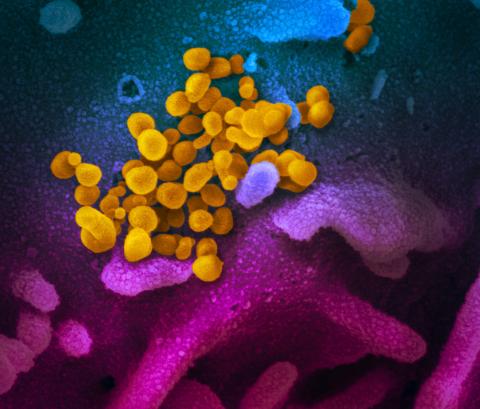
This scanning electron microscope image shows SARS-CoV-2 (yellow)—also known as 2019-nCoV, the virus that causes COVID-19—isolated from a patient in the U.S., emerging from the surface of cells (blue/pink) cultured in the lab.
Credit: NIAID RML

SARS-CoV-2 stability similar to original SARS virus. The virus that causes coronavirus disease 2019 (COVID-19) is stable for several hours to days in aerosols and on surfaces, according to a new study from National Institutes of Health, CDC, UCLA and Princeton University scientists in The New England Journal of Medicine.

The scientists found that severe acute respiratory syndrome coronavirus 2 (SARS-CoV-2) was detectable in aerosols for up to 3hrs , up to 4hours on copper, up to the24hours on cardboard and up to 2d to 3d on plastic and s...

Read More
