
solar plasma tagged posts

Solar flares may be 6.5 times hotter than previously thought

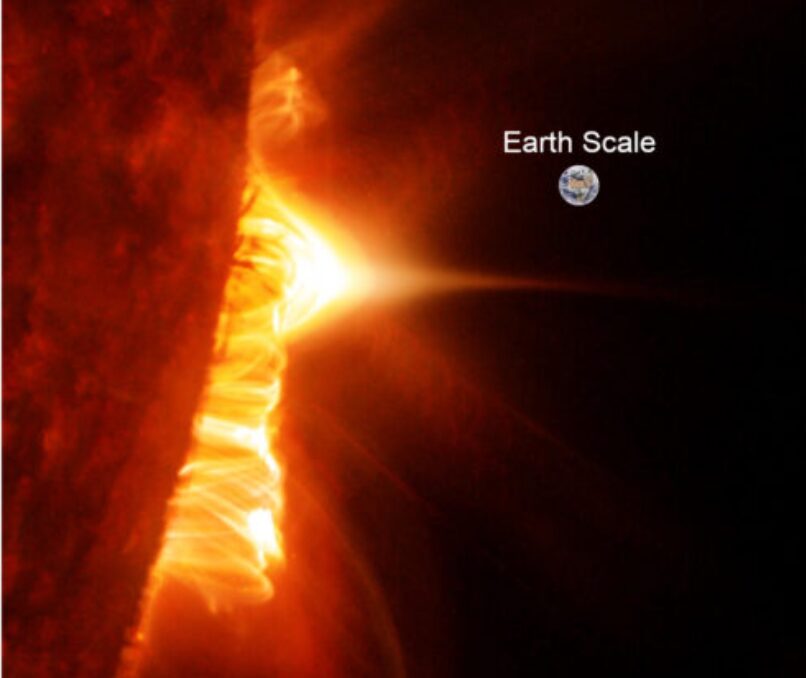
New research from the University of St Andrews has proposed that particles in solar flares are 6.5 times hotter than previously thought. The research provides an unexpected solution to a 50-year-old mystery about our nearest star.

Solar flares are sudden and huge releases of energy in the sun’s outer atmosphere that heat parts of it to greater than 10 million degrees. These dramatic events greatly increase the solar X-rays and radiation reaching Earth and are hazardous to spacecraft and astronauts, as well as affecting our planet’s upper atmosphere.

The research, published in The Astrophysical Journal Letters, looks at evidence of how flares heat solar plasma to greater than 10 million degrees. This solar plasma is made up of ions and electrons...

Read More

Origins of Sun’s swirling Spicules discovered

At any given moment, as many as 10 million wild jets of solar material burst from the sun's surface. They erupt as fast as 60 miles per second, and can reach lengths of 6,000 miles before collapsing. These are spicules, and despite their grass-like abundance, scientists didn't understand how they form. Now, for the first time, a computer simulation -- so detailed it took a full year to run -- shows how spicules form, helping scientists understand how spicules can break free of the sun's surface and surge upward so quickly. Credit: NASA’s Goddard Space Flight Center

At any given moment, as many as 10 million wild jets of solar material burst from the sun’s surface. They erupt as fast as 60 miles per second, and can reach lengths of 6,000 miles before collapsing. These are spicules, and despite their grass-like abundance, scientists didn’t understand how they form. Now, for the first time, a computer simulation — so detailed it took a full year to run — shows how spicules form, helping scientists understand how spicules can break free of the sun’s surface and surge upward so quickly. Credit: NASA’s Goddard Space Flight Center

For the first time, a computer simulation – so detailed it took a full year to run – shows how spicules form, helping scientists understand how spicules can break free of the sun’s surface and surge upward so quickly...

Read More
