solid-state batteries tagged posts

Record-setting lithium-ion conductors: Researchers develop new material for solid-state batteries

World record for lithium-ion conductors
Prof. Thomas F. Fässler in his laboratory at the Chair of Inorganic Chemistry with a Focus on Novel Materials. Credit: Wenzel Schuermann / TUM

Researchers at TUM and TUMint.Energy Research have taken a significant step towards improving solid-state batteries. They developed a new material made of lithium, antimony and scandium that conducts lithium ions more than 30% faster than any previously known material. The work is published in the journal Advanced Energy Materials.

The team led by Prof. Thomas F. Fässler from the Chair of Inorganic Chemistry with a Focus on Novel Materials partially replaced lithium in a lithium antimonide compound with the metal scandium. This creates specific gaps, so-called vacancies, in the crystal lattice of the conductor material...

Read More
New Scalable Method resolves materials joining in Solid-State Batteries

ORNL scientists developed a scalable, low-cost electrochemical pulse method to improve the contact between layers of materials in solid-state batteries, resolving a key challenge in energy-dense solid-state batteries. Credit: Andy Sproles/ORNL, U.S. Dept. of Energy

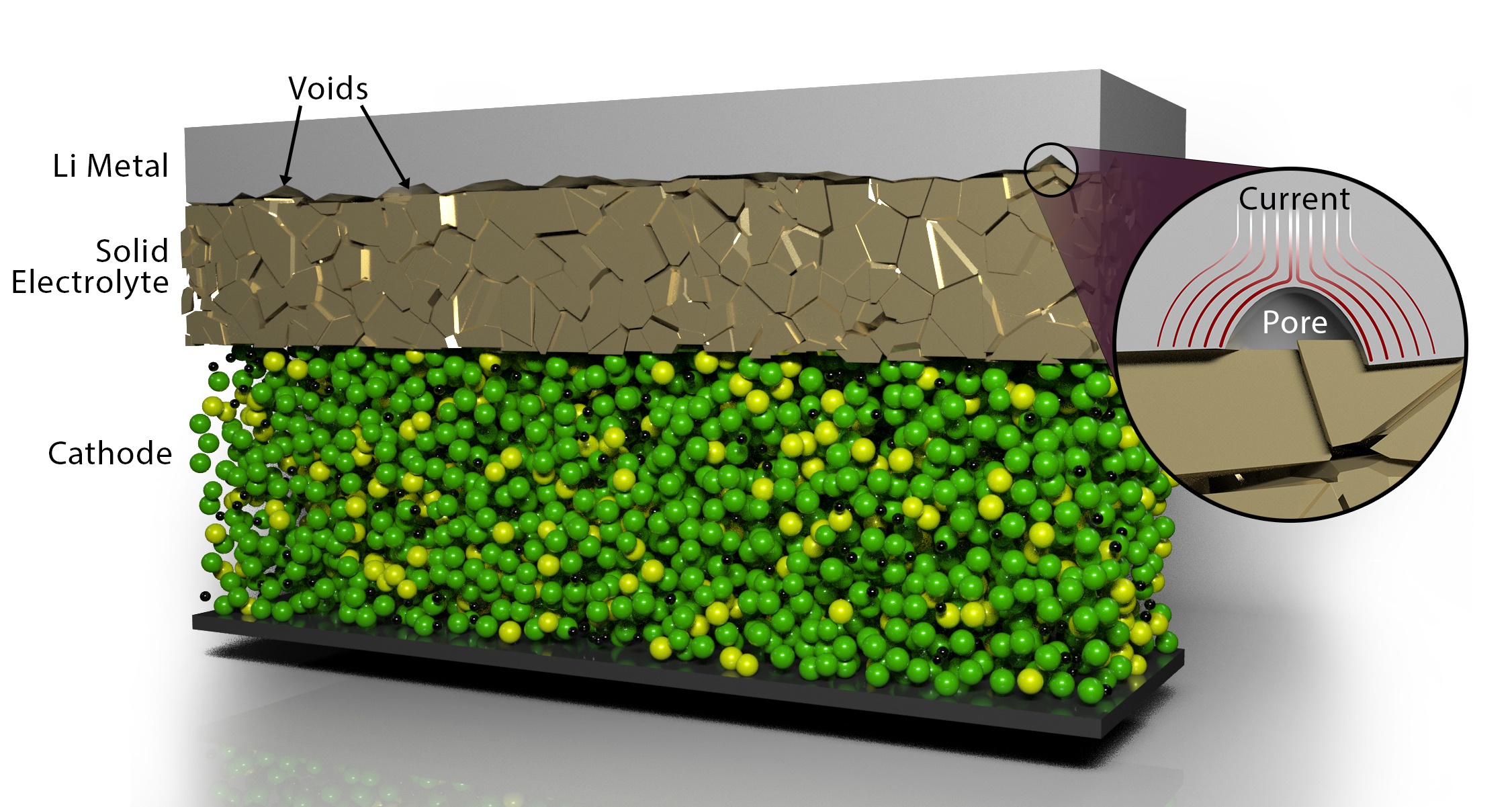
Scientists at the Department of Energy’s Oak Ridge National Laboratory have developed a scalable, low-cost method to improve the joining of materials in solid-state batteries, resolving one of the big challenges in the commercial development of safe, long-lived energy storage systems.

Solid-state batteries incorporate a safer, fast-charging architecture featuring a solid-state electrolyte versus the liquid electrolytes in today’s lithium-ion batteries...

Read More

Solid Batteries improve Safety

A slice of (white) lithium garnet electrolyte coated with a (black) lithium compound acting as the battery's minus pole in the laboratory of the ETH researchers. Credit: ETH Zurich / Fabio Bergamin

A slice of (white) lithium garnet electrolyte coated with a (black) lithium compound acting as the battery’s minus pole in the laboratory of the ETH researchers. Credit: ETH Zurich / Fabio Bergamin

A new lithium-ion battery made entirely of solid material has been developed by scientists. It has neither liquids nor gels. The battery is non-flammable, even at very high temperatures, giving it a safety advantage over conventional batteries. Mobile phones, laptops, e-bikes and electric cars are all powered by such batteries.

Conventional lithium-ion batteries are not without their dangers: mobile phone batteries have exploded several times in the past, resulting in injuries, and only 6 months ago an entire row of houses burned down in the old town of Steckborn on Lake Constance...

Read More