
space mission tagged posts

Hit the wrong spot and an asteroid returns on a collision course

Asteroid deflection could save Earth, or accidentally doom it, depending on where we aim the impact.

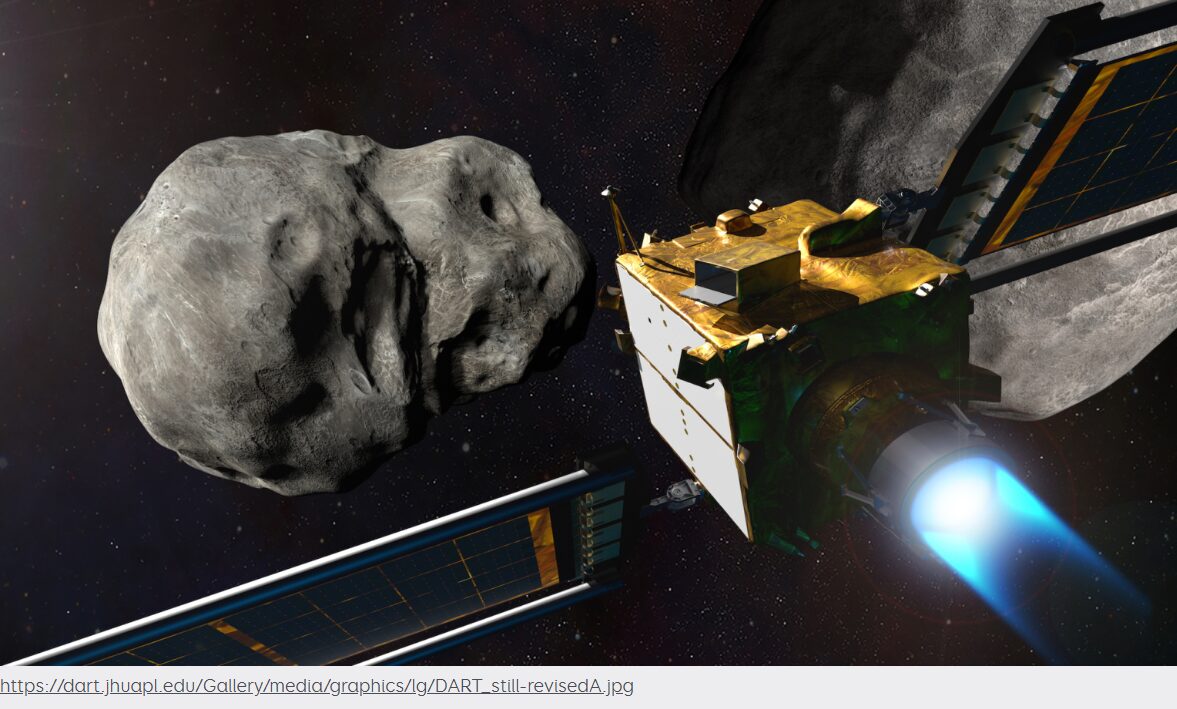
Scientists caution that asteroid deflection must be precise, as striking the wrong spot risks sending it through a gravitational keyhole that sets up a future collision with Earth. Using lessons from NASA’s DART mission, researchers are developing probability maps to guide safer impact strategies.

Selecting the right spot to smash a spacecraft into the surface of a hazardous asteroid to deflect it must be done with great care, according to new research presented at the EPSC-DPS2025 Joint Meeting this week in Helsinki...

Read More
Face to Face with Sun-Eclipsing Proba-3

Face to face with sun-eclipsing Proba-3
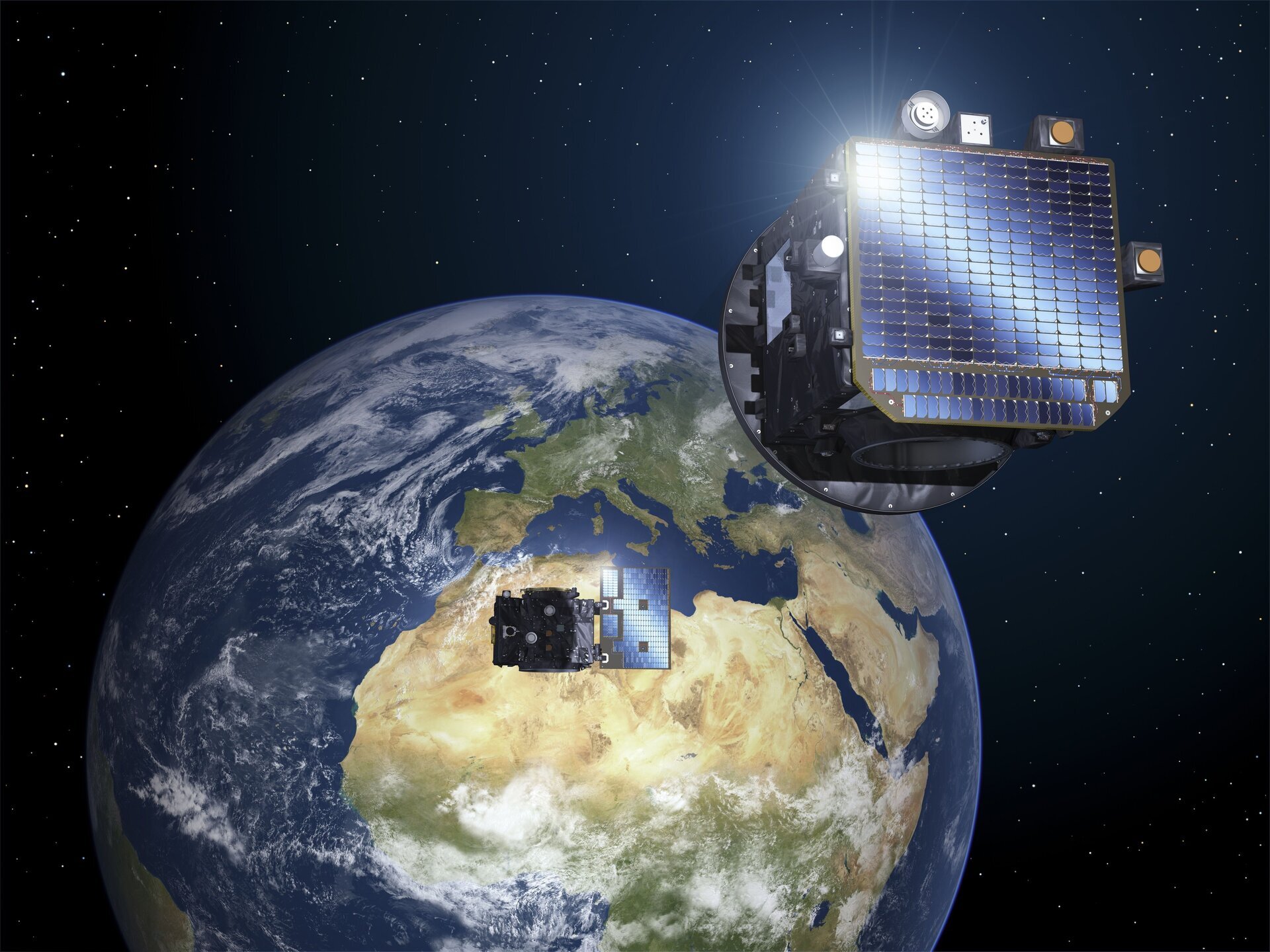
Proba-3’s pair of satellites will be in a highly elliptical orbit around Earth, performing formation flying maneuvers as well as scientific studies of the solar corona. The occulter satellite will have solar panels on its sun-facing side. Credit: ESA-P. Carril

Through exquisite, millimeter-scale, formation flying, the dual satellites making up ESA’s Proba-3 will accomplish what was previously a space mission impossible: Cast a precisely held shadow from one platform to the other, in the process blocking out the fiery sun to observe its ghostly surrounding atmosphere on a prolonged basis.

Ahead of the Proba-3 pair launching together later this year, the scientists who will make use of Proba-3 observations were able to see the satellites with their own eyes...

Read More

Medical-like tools for NASA to Study Samples of the Solar system

A NASA team scanned these terrestrial rock samples, all measuring two to four inches in diameter, to investigate possibilities for future in-space use of non-destructive evaluation techniques. The two rock samples on the bottom are from Earth's newest volcanic island in the Kingdom of Tonga; the sample on the upper left from kilometers deep contains large green olivine crystals and came from Oahu in Hawaii. The sample on the upper right is a 3.7-million-year old impact melt breccia from the Elgygytgyn impact crater in Siberia. Credit: NASA/W. Hrybyk

A NASA team scanned these terrestrial rock samples, all measuring two to four inches in diameter, to investigate possibilities for future in-space use of non-destructive evaluation techniques. The two rock samples on the bottom are from Earth’s newest volcanic island in the Kingdom of Tonga; the sample on the upper left from kilometers deep contains large green olivine crystals and came from Oahu in Hawaii. The sample on the upper right is a 3.7-million-year old impact melt breccia from the Elgygytgyn impact crater in Siberia. Credit: NASA/W. Hrybyk

A diagnostic tool, similar in theory to those used by the medical profession to non-invasively image internal organs, bones, soft tissue, and blood vessels, could be equally effective at “triaging” extraterrestrial rocks and other samples befor...

Read More
