
standard cosmological model tagged posts

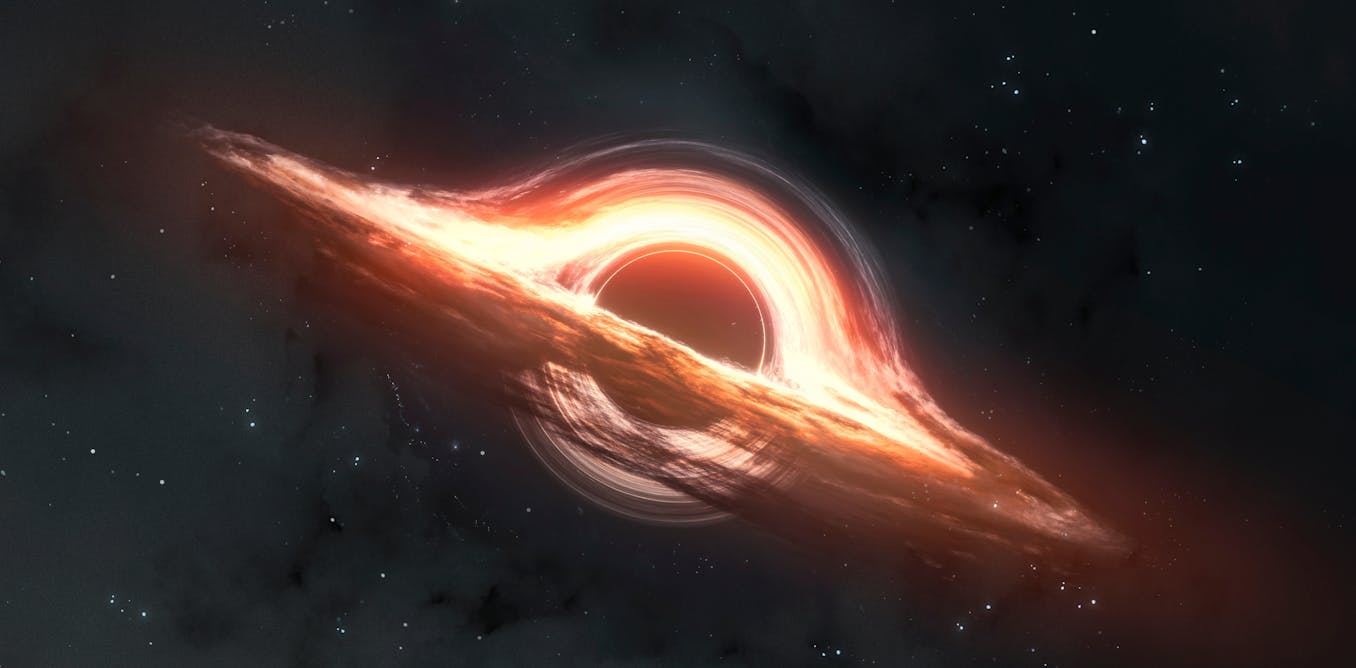
What if the Big Bang wasn’t the beginning? Research suggests it may have taken place inside a black hole

The Big Bang is often described as the explosive birth of the universe—a singular moment when space, time and matter sprang into existence. But what if this was not the beginning at all? What if our universe emerged from something else—something more familiar and radical at the same time?

In a new paper, published in Physical Review D, my colleagues and I propose a striking alternative. Our calculations suggest the Big Bang was not the start of everything, but rather the outcome of a gravitational crunch or collapse that formed a very massive black hole—followed by a bounce inside it.

This idea, which we call the black hole universe, offers a radically different view of cosmic origins, yet it is grounded entirely in known physics and observations.

Today’s standard cosmo...

Read More
New Measurements of Galaxy Rotation lean toward Modified Gravity as an explanation for Dark Matter

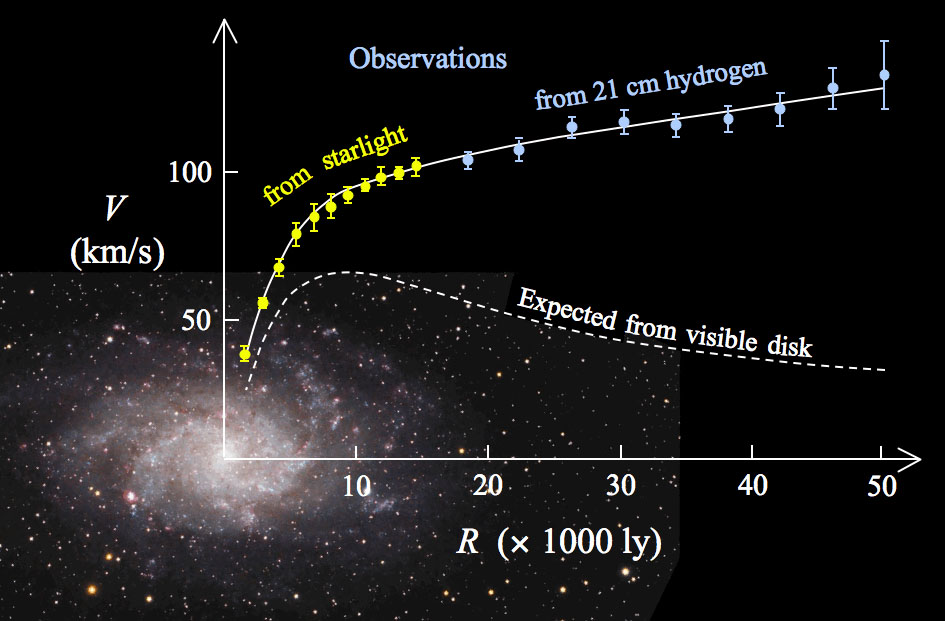
Rotation curve of the typical spiral galaxy M 33 (yellow and blue points with errorbars) and the predicted one from distribution of the visible matter (white line). The discrepancy between the two curves is accounted for by adding a dark matter halo surrounding the galaxy. Credit: Public domain / Wikipedia

Although dark matter is a central part of the standard cosmological model, it’s not without its issues. There continue to be nagging mysteries about the stuff, not the least of which is the fact that scientists have found no direct particle evidence of it.

Despite numerous searches, we have yet to detect dark matter particles. So some astronomers favor an alternative, such as modified Newtonian dynamics (MoND) or modified gravity model...

Read More

Dark Energy measured with Record-breaking 3D Map of 1.2 million Galaxies

The Sloan Digital Sky Survey and its Baryon Oscillation Spectroscopic Survey has transformed a two-dimensional image of the sky (left panel) into a three-dimensional map spanning distances of billions of light years, shown here from two perspectives (middle and right panels). This map includes 120,000 galaxies over 10% of the survey area. The brighter regions correspond to the regions of the Universe with more galaxies and therefore more dark matter. Credit: Jeremy Tinker and SDSS-III

The Sloan Digital Sky Survey and its Baryon Oscillation Spectroscopic Survey has transformed a two-dimensional image of the sky (left panel) into a three-dimensional map spanning distances of billions of light years, shown here from two perspectives (middle and right panels). This map includes 120,000 galaxies over 10% of the survey area. The brighter regions correspond to the regions of the Universe with more galaxies and therefore more dark matter. Credit: Jeremy Tinker and SDSS-III

A team of hundreds of physicists and astronomers constructed a 3D map to make one of the most precise measurements yet of the dark energy currently driving the accelerated expansion of the Universe. “We have spent 5 years collecting measurements of 1...

Read More
