
stroke tagged posts

Repairing Stroke-Damaged Rat Brains

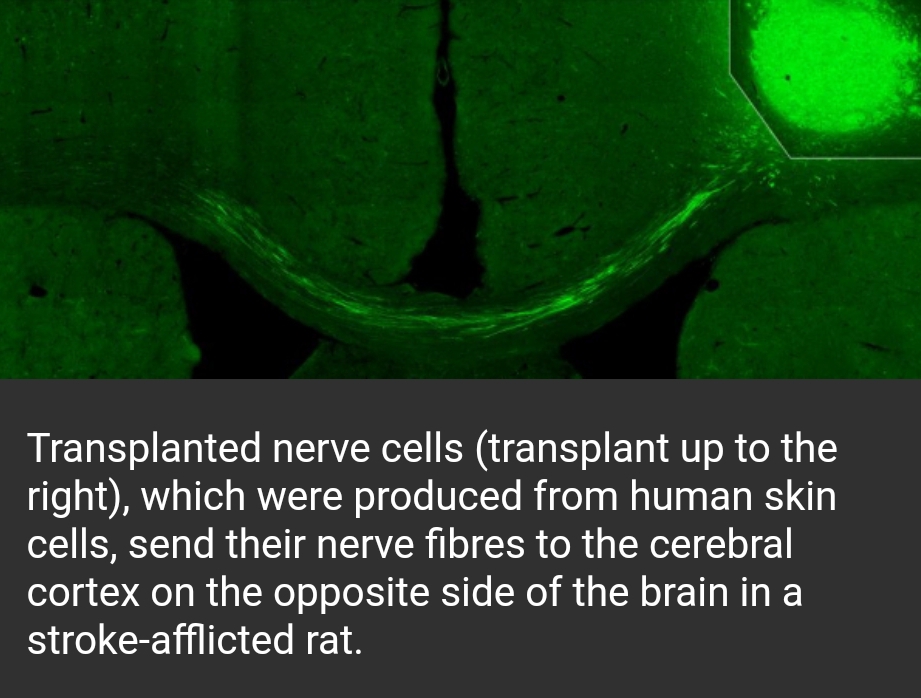
Researchers at Lund University in Sweden have succeeded in restoring mobility and sensation of touch in stroke-afflicted rats by reprogramming human skin cells to become nerve cells, which were then transplanted into the rats’ brains. The study has now been published in the Proceedings of the National Academy of Sciences (PNAS).

“Six months after the transplantation, we could see how the new cells had repaired the damage that a stroke had caused in the rats’ brains,” says Professor Zaal Kokaia, who together with senior professor Olle Lindvall and researcher Sara Palma-Tortosa at the Division of Neurology is behind the study.

Several previous studies from the Lund team and others have shown that it is possible to transplant nerve cells derived from human stem cells or from reprog...

Read More

Study of 418,000 Europeans finds Different Foods linked to Different Types of Stroke

This is the largest study on multiple dietary factors and subtypes of stroke. Ischaemic and haemorrhagic stroke have markedly different patterns of dietary associations. For ischaemic stroke, lower risks were associated with higher consumption of dietary fibre, fruit and vegetables, and dairy foods. For haemorrhagic stroke, higher risk was associated with higher egg consumption. The results highlight the importance of examining stroke subtypes separately.

Different types of food are linked to risks of different types of stroke, according to the largest study to investigate this, published in the European Heart Journal today (Monday).

Until now, most studies have looked at the association between food and total stroke (all types of stroke combined), or focused on ischaemic stroke o...

Read More

First Long-Term Estimates suggest Link between Cholesterol Levels and Risk of Heart Disease and Stroke

Figure thumbnail gr4
Model of long-term cardiovascular disease risk prediction and the benefit of lipid reduction
Individual risk of fatal or non-fatal cardiovascular disease in women (A) and men (B) according to age, non-HDL cholesterol concentration, and the number of additional cardiovascular risk factors (daily smoking, arterial hypertension, diabetes, and obesity; white circle). The red circle represents the probability (%) of cardiovascular disease by the age of 75 years. The hypothetically achievable probability (%) for cardiovascular disease by the age of 75 years after 50% reduction of non-HDL cholesterol is given in the green circle. 

The most comprehensive analysis of its kind suggests that there is a strong link between non-HDL cholesterol levels and long-term risk for cardiovascular disease in...

Read More

Dietary Cholesterol or Egg consumption do not increase the risk of Stroke, Finnish study finds

Image result for Dietary Cholesterol or Egg consumption do not increase the risk of Stroke, Finnish study finds
Egg consumption, cholesterol intake, and risk of incident stroke in men: the Kuopio Ischaemic Heart Disease Risk Factor StudyThe American Journal of Clinical Nutrition, 2019; DOI: 10.1093/ajcn/nqz066

A new study from the University of Eastern Finland shows that a moderately high intake of dietary cholesterol or consumption of up to one egg per day is not associated with an elevated risk of stroke. Furthermore, no association was found in carriers of the APOE4 phenotype, which affects cholesterol metabolism and is remarkably common among the Finnish population. The findings were published in the American Journal of Clinical Nutrition.

Findings from earlier studies addressing the association of dietary cholesterol or egg intake with the risk of stroke have been contradictory...

Read More
