Supermassive Dark Stars tagged posts

JWST may have found the Universe’s first stars powered by dark matter

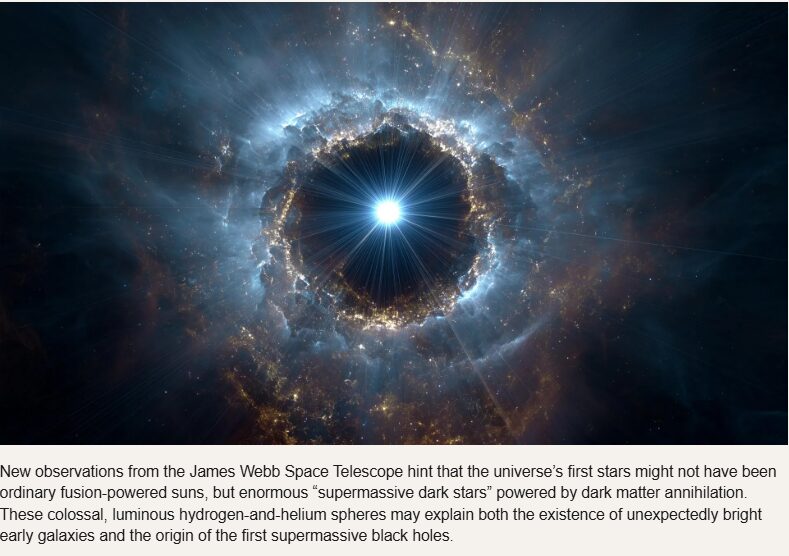
New observations from the James Webb Space Telescope hint that the universe’s first stars might not have been ordinary fusion-powered suns, but enormous “supermassive dark stars” powered by dark matter annihilation. These colossal, luminous hydrogen-and-helium spheres may explain both the existence of unexpectedly bright early galaxies and the origin of the first supermassive black holes.

In the early universe, a few hundred million years after the Big Bang, the first stars emerged from vast, untouched clouds of hydrogen and helium. Recent observations from the James Webb Space Telescope (JWST) suggest that some of these early stars may have been unlike the familiar (nuclear fusion-powered) stars that astronomers have studied for centuries...

Read More
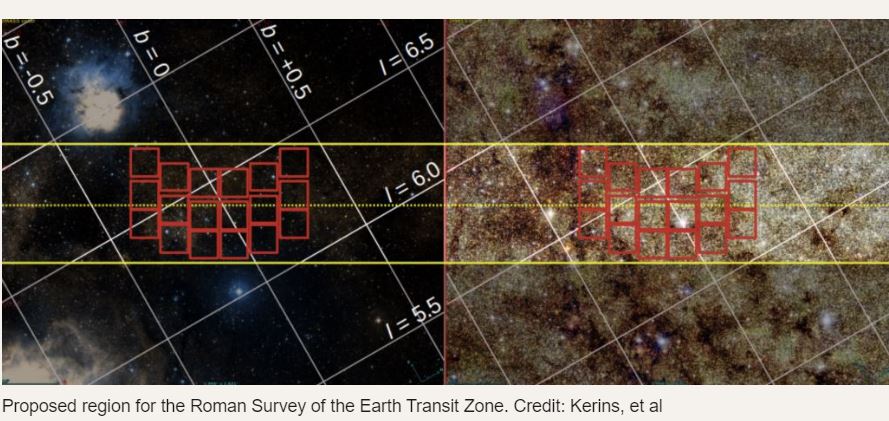
Nancy Grace Roman Space Telescope could detect Supermassive Dark Stars

The first stars of the universe were very different than the stars we see today. They were made purely of hydrogen and helium, without heavier elements to help them generate energy in their core. As a result, they were likely hundreds of times more massive than the sun. But some of the first stars may have been even stranger. In the early universe, dark matter could have been more concentrated than it is now, and it may have powered strange stellar objects known as dark stars.

Since dark matter and regular matter act similarly under gravity, clumps of dark matter in the early universe could have gathered clouds of hydrogen and helium around them. As this matter collapsed under its own weight, dark matter in its core might have generated energy...

Read More