Time-Restricted Eating tagged posts

Time-restricted eating may help retain cognitive function in older adults

older adults eating
Credit: Unsplash/CC0 Public Domain

Results from a small clinical trial suggest it may be possible to reduce the risk of dementia by eating during fewer hours of the day. The pilot study, which involved a weight-loss program for older women with overweight or obesity, showed modest cognitive improvements among those who limited their daily eating window instead of just reducing their calorie intake.

“Losing weight alone will ward off some of the aging-related cognitive decline, and these data suggest that there may be additional benefits if you stop eating four hours before going to sleep and reduce food intake to 8–9 hours per day, compared with the usual eating window of 12 hours per day,” said Sue Shapses, Ph.D...

Read More
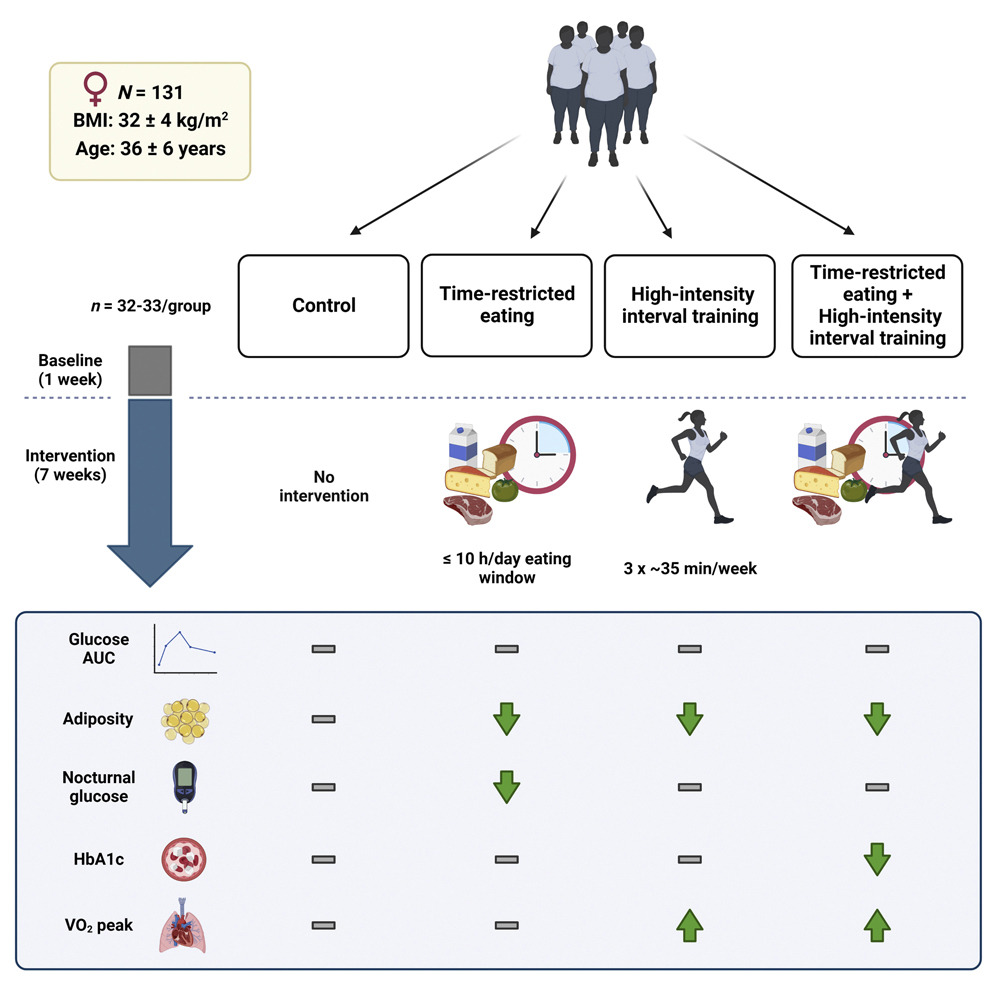
Combining Time-Restricted Eating and HIIT Improves Health Measures in Women with Obesity

Both time-restricted eating (TRE) and high-intensity interval training (HIIT) have been shown to improve cardiometabolic health in people who are overweight and at risk of serious disease. Now a randomized, controlled trial has tested whether combining these two approaches is more effective than either of them on their own. The results, publishing in the journal Cell Metabolism on October 4, show that the combination improved the average long-term glycemic control compared to a no-intervention control group and induced 2-fold greater reductions in fat mass and visceral fat area compared with each intervention in isolation.

“Isolated TRE and HIIT have received increasing attention for being effective and feasible strategies for at-risk populations,” says senior author Trine Moholdt,...

Read More

Cutting Calories and Eating at the Right Time of day leads to Longer Life in Mice

Experiments that tested various diet plans in mice found that the animals live longest on a low-calorie diet with daily fasting periods. Credit: Fernando Augusto/made-for.studio 

In a study that followed hundreds of mice over their lifespans, calorie restriction combined with time-restricted eating boosted longevity. One recipe for longevity is simple, if not easy to follow: eat less. Studies in a variety of animals have shown that restricting calories can lead to a longer, healthier life.

Now, new research suggests that the body’s daily rhythms play a big part in this longevity effect...

Read More

Intermittent Fasting can help Manage Metabolic Disease

Popular diet trend could reduce the risk of diabetes and heart disease. Eating your daily calories within a consistent window of 8-10 hours is a powerful strategy to prevent and manage chronic diseases such as diabetes and heart disease, according to a new manuscript published in the Endocrine Society’s journal, Endocrine Reviews.

Time-restricted eating is a type of intermittent fasting that limits your food intake to a certain number of hours each day. Intermittent fasting is one of the most popular diet trends, and people are using it to lose weight, improve their health and simplify their lifestyles.

“People who are trying to lose weight and live a healthier lifestyle should pay more attention to when they eat as well as what they eat...

Read More