
TNF-α tagged posts

Mimicking the benefits of exercise with a single molecule

Mimicking the benefits of exercise with a single molecule

Capital Medical University, in collaboration with the Chinese Academy of Sciences, reports that betaine, a molecule produced in the kidney and enhanced through sustained exercise, operates as a potent inhibitor of inflammatory and aging-related pathways.

Regular physical activity boosts health across cardiovascular, metabolic, and neurological systems. Scientists have traced improvements in immune function, insulin sensitivity, clearing of senescent cells and tissue regeneration to consistent physical activity. Earlier animal studies suggested that long-term exercise can delay aging processes and reduce vulnerability to chronic disease.

Precise molecular explanations for how sustained exercise reshapes human biology remain incomplete...

Read More
Cancers in Distant Organs Alter Liver Function

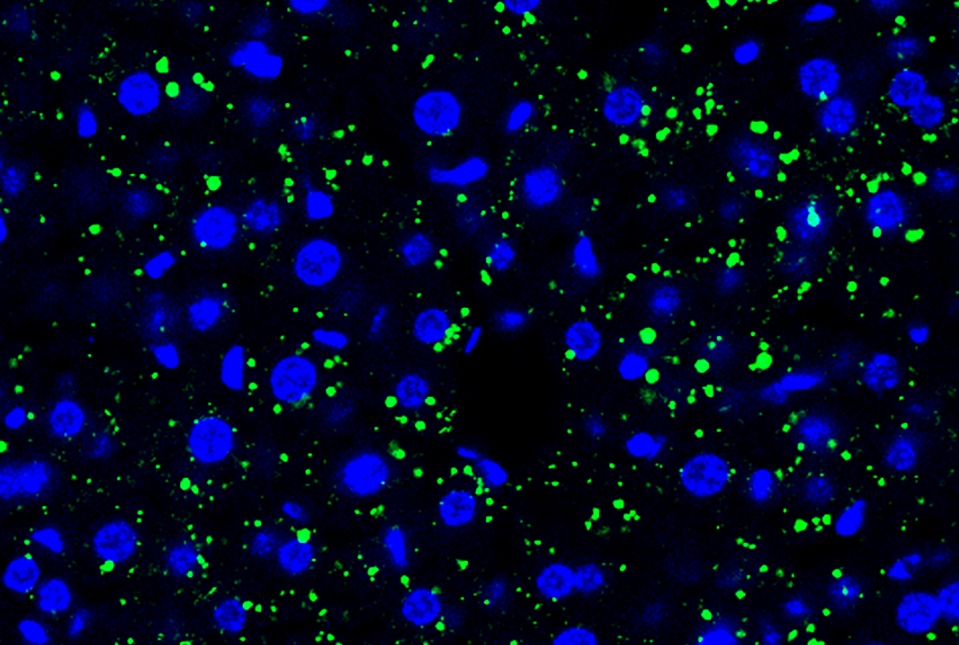
Tumor cell-derived EVPs induced accumulation of lipid droplets in the mouse liver. Green, lipid droplet. Blue, DAPI. Credit: Gang Wang, Jianlong Li, David Lyden.

Cancers often release molecules into the bloodstream that pathologically alter the liver, shifting it to an inflammatory state, causing fat buildup and impairing its normal detoxifying functions, according to a study from investigators at Weill Cornell Medicine. This discovery illuminates one of cancer’s more insidious survival mechanisms and suggests the possibility of new tests and drugs for detecting and reversing this process.

In the study, published May 24 in Nature, the researchers found that a wide variety of tumor types growing outside the liver remotely reprogram the liver to a state resembling fatty liver disease ...

Read More
