
X-ray diffraction tagged posts

Pressure-responsive, layered semiconductor shows potential for next-gen data storage

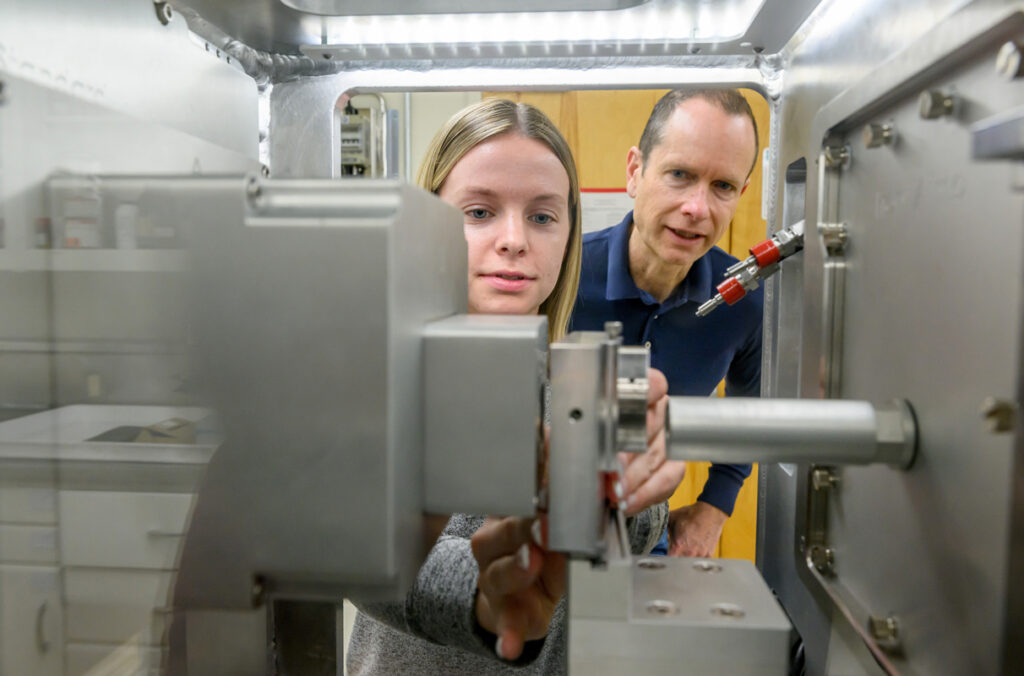
Julie Miller and Matt McCluskey using an X‑ray beamline.
Julie Miller (left) and Matt McCluskey conduct research using the X‑ray beamline at WSU’s Dodgen Research Facility. (Photo by Robert Hubner, WSU Photo Services)

A squishy, layered material that dramatically transforms under pressure could someday help computers store more data with less energy.

That’s according to a new study by researchers at Washington State University and the University of North Carolina at Charlotte that shows a hybrid zinc telluride-based material can undergo surprising structural changes when squeezed together like a molecular sandwich...

Read More

Acetic Acid as a Proton Shuttle in Gold Chemistry

Gold compounds can surpass nickel and palladium-based catalysts in common reactions + often demonstrate novel types of reactivity compared to well-established catalysts. This allowed chemists to discover new chemical reactions and predetermined a fascinating boom in gold catalysis that we have observed in the recent years.

Professor Ananikov’s team introduced gold into well-known catalytic system which led to dramatic change of the reactivity and furnished the formation of novel gold-containing complexes. They appeared to be air stable and were isolated in the individual state. A single crystal Xray diffraction study ascertained the existence of a unique structural motif in the molecule, which cannot be explained within a conventional mechanistic framework.

The study used both theoretic...

Read More
