



Scientists may have uncovered a surprising new weapon in the fight against diabetes: the fruit of an ancient desert plant. Known as Nitraria roborowskii Kom, this resilient shrub has long been used in traditional medicine but has only recently gained scientific attention. In modern experiments, its fruit extract displayed a remarkable ability to reverse insulin resistance and restore healthy metabolism in diabetic mice.
The results went far beyond stabilizing blood sugar. Researchers found that the extract also corrected lipid imbalances and reduced oxidative stress, two major complications of diabetes. These effects were linked to the activation of a key cellular signaling pathway that helps regulate metabolism. Taken together, the findings suggest a powerful new direction for developing safer, more natural treatments for diabetes, one of the world’s most common chronic diseases.
As the number of people living with diabetes continues to climb, potentially reaching 750 million by 2045, scientists are urgently seeking better ways to manage the condition. Current medications can treat symptoms but often fail to tackle the root causes of metabolic dysfunction and may cause side effects over time. This challenge has driven researchers to reexamine traditional medicines in search of untapped therapeutic compounds.
One promising candidate is Nitraria roborowskii Kom. This shrub thrives in the harsh deserts of western China, where its bright red berries, known locally as “desert cherries,” have nourished and healed communities for generations. Despite its long history of use, the plant’s biological mechanisms remained a mystery. The gap between its traditional reputation and scientific understanding led researchers to explore its effects using modern biochemical methods.
The breakthrough findings were reported in the Chinese Journal of Modern Applied Pharmacy by a research team from Qinghai University and the Northwest Institute of Plateau Biology. Using rigorous experimental designs, the scientists examined how a concentrated fruit extract (NRK-C) affected diabetic mice.
Over a seven-week period, the treated mice showed dramatic improvements in several key health markers. NRK-C significantly lowered blood glucose levels, improved insulin response, and corrected metabolic imbalances. Further analysis revealed that the extract’s benefits stemmed from its influence on a previously underexplored biological pathway, pointing to a novel mechanism for restoring metabolic health.
Multifaceted Benefits and Cellular Mechanisms
The research team’s comprehensive investigation yielded striking results, demonstrating NRK-C’s multifaceted therapeutic potential. Over a seven-week treatment period, the desert berry extract produced a remarkable 30-40% reduction in fasting blood glucose levels in diabetic mice, with efficacy increasing in a clear dose-dependent manner. Perhaps most impressively, the natural compound restored insulin sensitivity by approximately 50% compared to untreated diabetic controls, as measured through sophisticated metabolic tests.
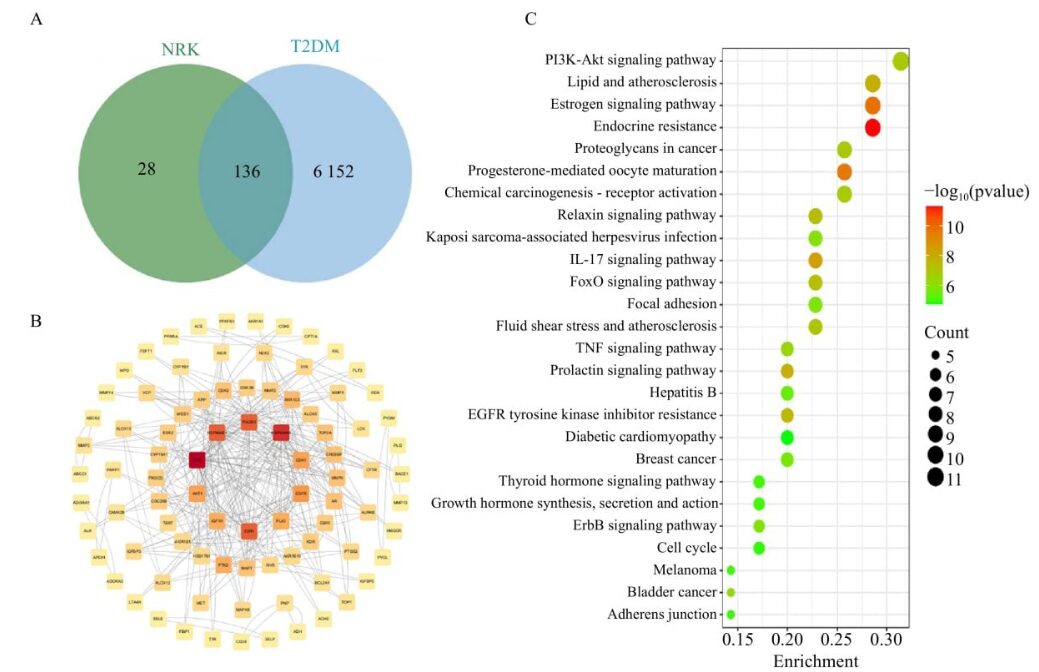
Beyond these primary benefits, NRK-C exhibited an unexpected breadth of action, normalizing cholesterol profiles and slashing oxidative stress markers by up to 60% – effects rarely achieved by single pharmaceutical agents. Molecular analysis revealed the extract’s secret lies in its ability to reactivate the PI3K/AKT pathway, essentially rebooting a critical metabolic signaling system that becomes dysfunctional in diabetes. Microscopic tissue examinations provided visual confirmation of NRK-C’s protective effects, showing preserved liver architecture and pancreatic integrity that starkly contrasted with the damage seen in untreated diabetic mice.
These coordinated improvements across multiple physiological systems suggest NRK-C works through a fundamental metabolic reset rather than simply masking symptoms, offering potential advantages over current single-target diabetes medications. The discovery is particularly noteworthy because it achieves these comprehensive effects through a naturally occurring compound rather than the complex drug cocktails typically required for such broad metabolic benefits.
“These results are exciting because they suggest we might be able to treat diabetes more holistically,” explains Dr. Yue Huilan, senior researcher on the project. “Instead of just lowering blood sugar like most medications, this plant extract appears to help the body regain its natural metabolic balance. The implications could extend beyond diabetes to other conditions involving insulin resistance.”
The research team cautions that human trials are needed but believes this could represent a major step toward more natural diabetes management.
Future Applications and Broader Implications
The discovery opens several promising avenues for diabetes care. Pharmaceutical companies may explore developing standardized NRK-C extracts as complementary therapies, while nutritionists could investigate incorporating the berries into functional foods. Importantly, the findings validate traditional medicinal knowledge while providing a scientific basis for its effects.
As research continues, scientists are particularly interested in whether NRK-C might help prevent diabetes in high-risk individuals or reduce complications in existing patients. The study also highlights the importance of preserving and studying traditional medicinal plants, which may hold solutions to modern health challenges waiting to be rediscovered.
https://scitechdaily.com/this-unknown-desert-berry-could-hold-the-secret-to-treating-diabetes-scientists-say/
http://www.chinjmap.com/article/doi/10.13748/j.cnki.issn1007-7693.20240613




Recent Comments