Category Astronomy/Space

New Method could Allow Multi-Robot Teams to Autonomously and Reliably Explore other Planets

A method that could allow multi-robot teams to autonomously and reliably explore other planets
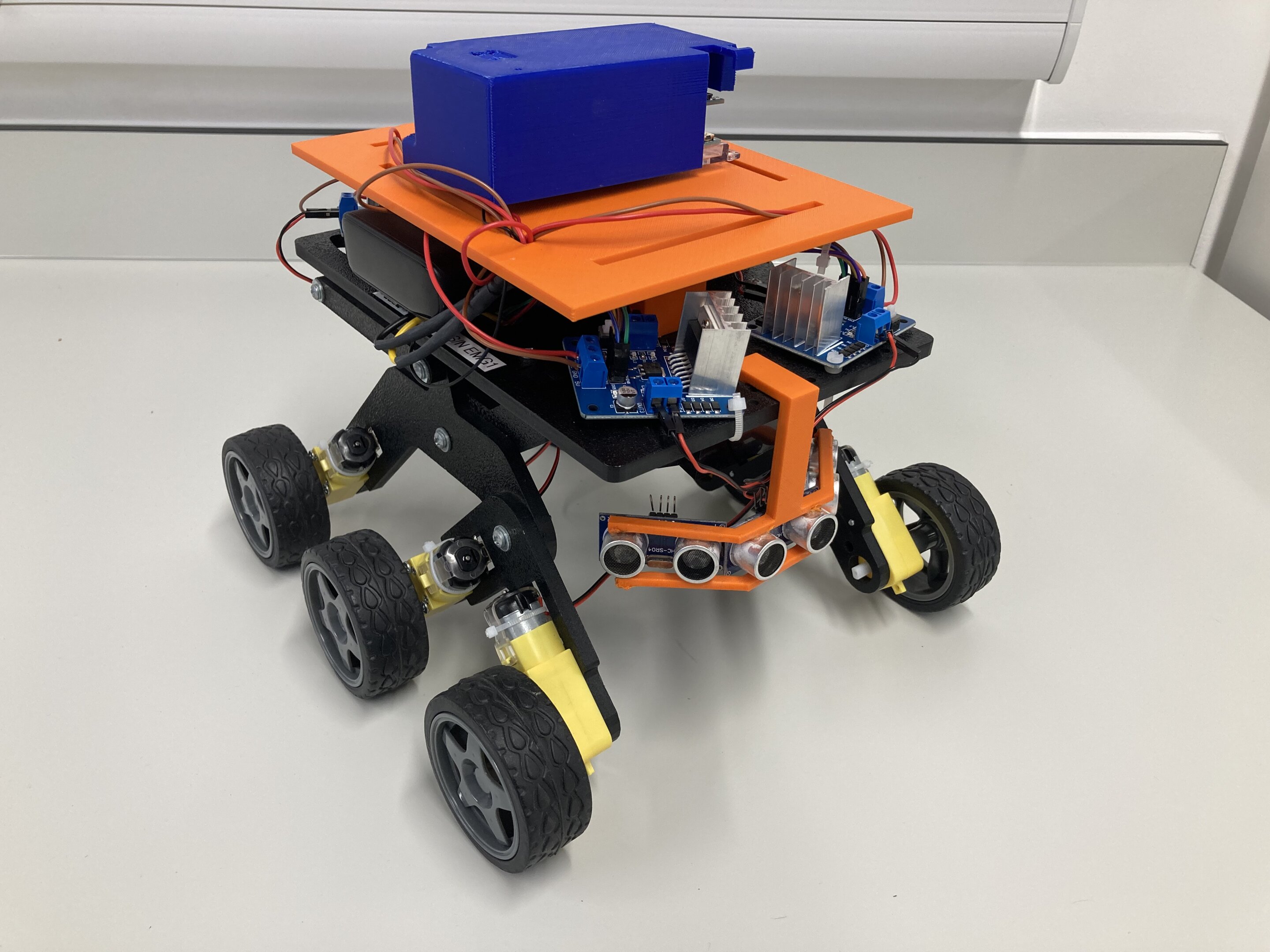
The rocker bogie runt rover has been selected as it has a small form factor and utilises off the shelf components. Credit: Sarah Swinton

While roboticists have developed increasingly sophisticated systems over the past decades, ensuring that these systems can autonomously operate in real-world settings without mishaps often proves challenging. This is particularly difficult when these robots are designed to be deployed in complex environments, including space and other planets.

Researchers at the University of Glasgow recently developed a new methodology that could allow teams of multiple rovers to autonomously and reliably explore other planets...

Read More
Researcher Suggests that Gravity can exist Without Mass, Mitigating the need for hypothetical Dark Matter

gravity
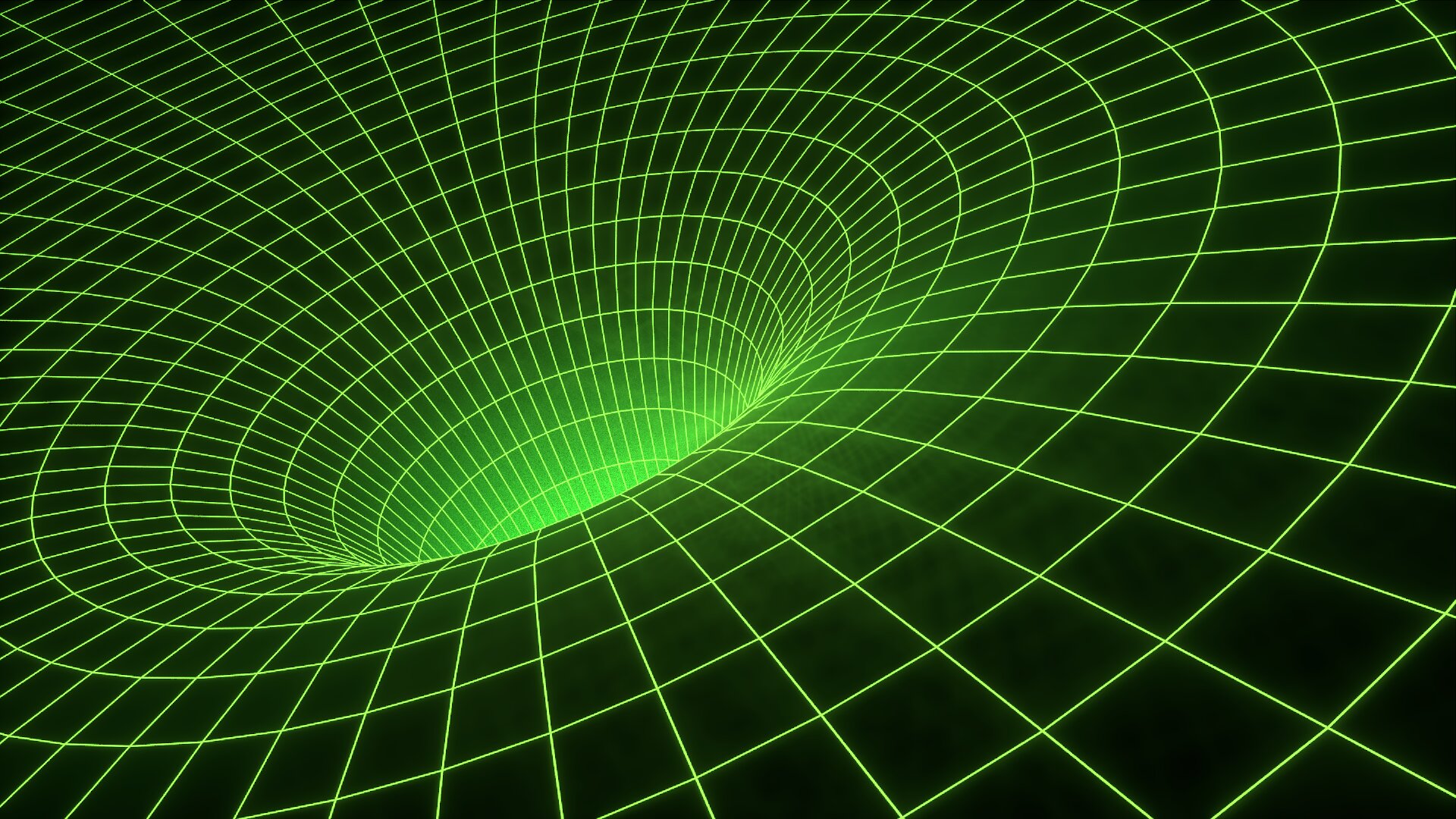
Credit: CC0 Public Domain

Dark matter is a hypothetical form of matter that is implied by gravitational effects that can’t be explained by general relativity unless more matter is present in the universe than can be seen. It remains virtually as mysterious as it was nearly a century ago when first suggested by Dutch astronomer Jan Oort in 1932 to explain the so-called “missing mass” necessary for things like galaxies to clump together.

Now Dr. Richard Lieu at The University of Alabama in Huntsville (UAH) has published a paper in the Monthly Notices of the Royal Astronomical Society that shows, for the first time, how gravity can exist without mass, providing an alternative theory that could potentially mitigate the need for dark matter.

“My own inspiration came from my pursuit fo...

Read More

JWST discovers large variety of Carbon-rich Gases that Serve as Ingredients for Future Planets around Very Low-Mass Star

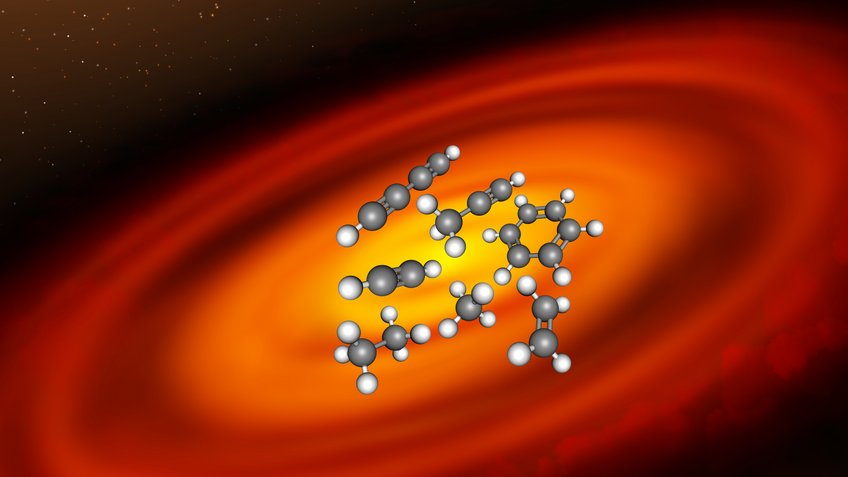
Artist’s impression of a protoplanetary disk around a very low-mass star. It depicts a selection of hydrocarbon molecules (Methane, CH4; Ethane, C2H6; Ethylene, C2H2; Diacetylene, C4H2; Propyne, C3H4; Benzene, C6H6) detected in the disk around ISO-ChaI 147.
© ALMA (ESO/NAOJ/NRAO) / MPIA

Planets form in disks of gas and dust, orbiting young stars. The MIRI Mid-INfrared Disk Survey (MINDS), led by Thomas Henning from the Max Planck Institute for Astronomy (MPIA) in Heidelberg, Germany, aims to establish a representative disk sample. By exploring their chemistry and physical properties with MIRI (Mid-Infrared Instrument) on board the James Webb Space Telescope (JWST), the collaboration links those disks to the properties of planets potentially forming there.

In a new study, a team o...

Read More

Reconnaissance of Potentially Habitable Worlds with Webb

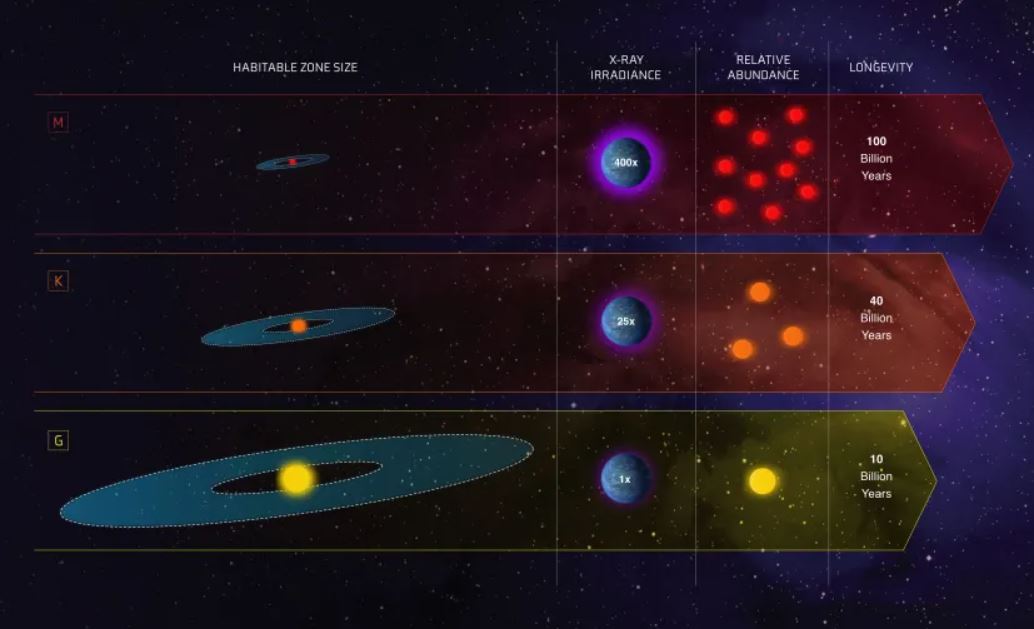
This infographic compares the characteristics of three classes of stars in our galaxy: Sunlike stars are classified as G stars; stars less massive and cooler than our Sun are K dwarfs; and even fainter and cooler stars are the reddish M dwarfs. The size of the habitable zone is different for each class of star. In our solar system, the habitable zone begins just beyond the orbit of Venus and almost encompasses Mars. Credits: NASA, ESA and Z. Levy (STScI)

Exoplanets are common in our galaxy, and some even orbit in the so-called habitable zone of their star. NASA’s James Webb Space Telescope has been busy observing a few of these small, potentially habitable planets, and astronomers are now hard at work analyzing Webb data. We invite Drs...

Read More