Category Astronomy/Space

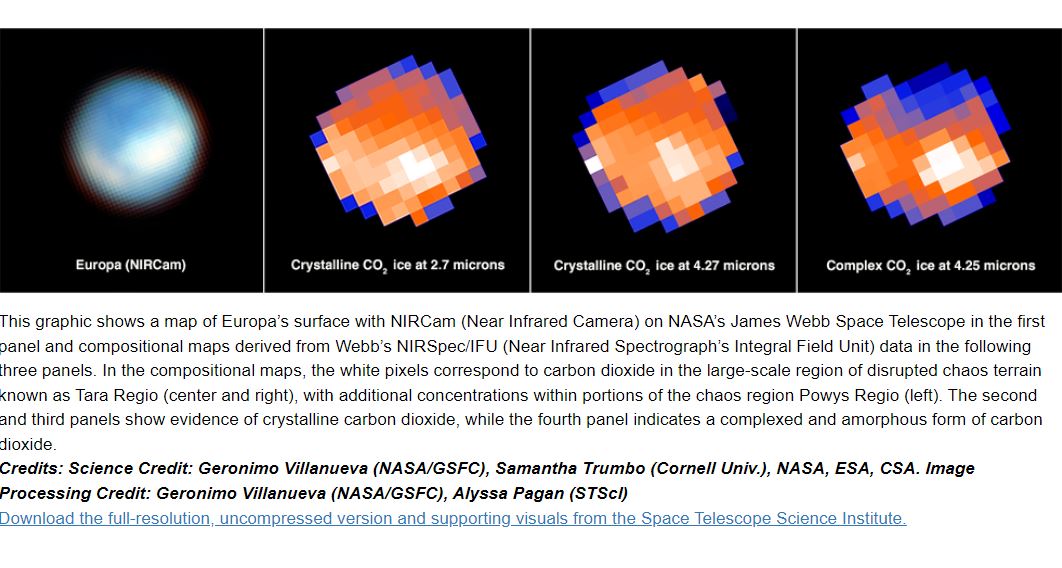
Carbon Source found on Surface of Jupiter’s Moon Europa

Astronomers using data from NASA’s James Webb Space Telescope have identified carbon dioxide in a specific region on the icy surface of Europa.

Jupiter’s moon Europa is one of a handful of worlds in our solar system that could potentially harbor conditions suitable for life. Previous research has shown that beneath its water-ice crust lies a salty ocean of liquid water with a rocky seafloor. However, planetary scientists had not confirmed if that ocean contained the chemicals needed for life, particularly carbon.

Astronomers using data from NASA’s James Webb Space Telescope have identified carbon dioxide in a specific region on the icy surface of Europa...

Read More
New Recipes for Origin of Life may point way to Distant, Inhabited Planets

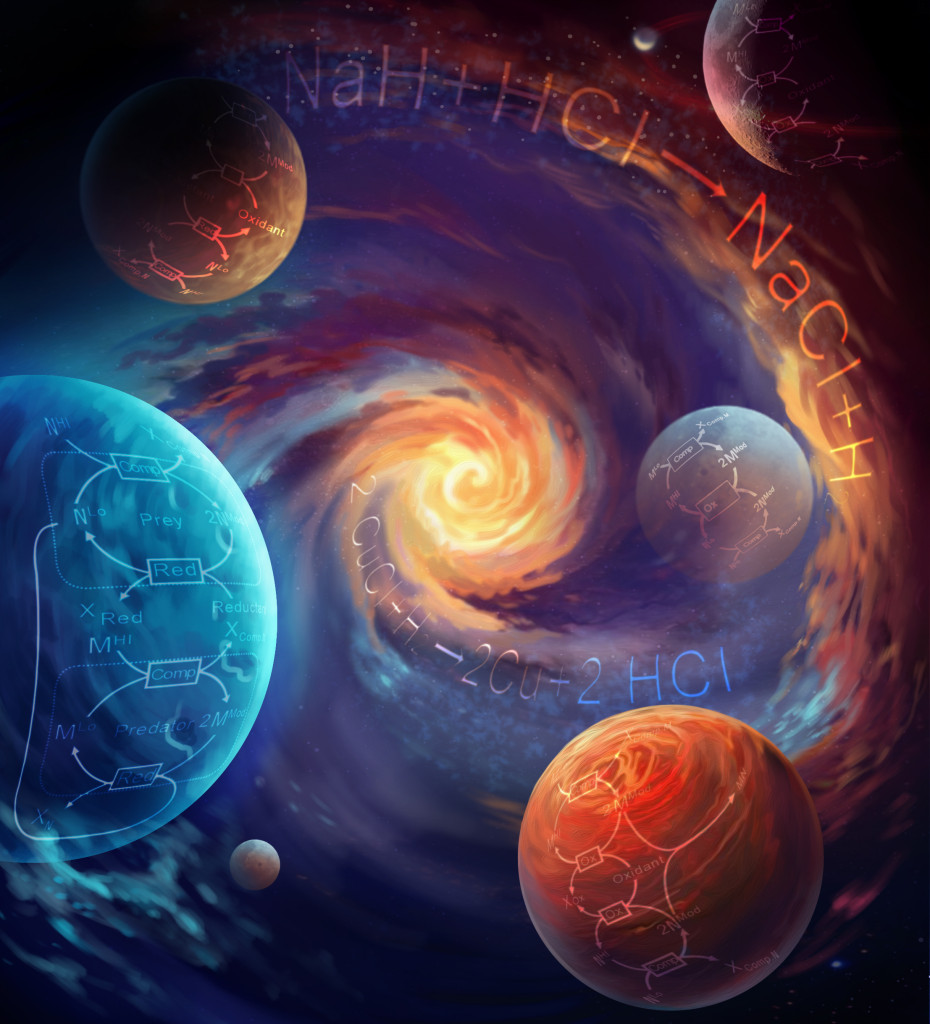
In an artist's rendering, a swirl of planets in blue and orange hues spiral toward a bright orange vortex in the center of the image. Chemical formulas appear written on the planets.
Life requires repetition of chemical reactions. Describing the kinds of reactions and conditions required for self-sustaining repetition — called autocatalysis — could focus the search for life on other planets. Betül Kaçar

Life on a faraway planet—if it’s out there—might not look anything like life on Earth. But there are only so many chemical ingredients in the universe’s pantry, and only so many ways to mix them. A team led by scientists at the University of Wisconsin–Madison has exploited those limitations to write a cookbook of hundreds of chemical recipes with the potential to give rise to life.

Their ingredient list could focus the search for life elsewhere in the universe by pointing out the most likely conditions—planetary versions of mixing techniques, oven tem...

Read More

New Findings Suggest Moon may have Less Water than Previously Thought

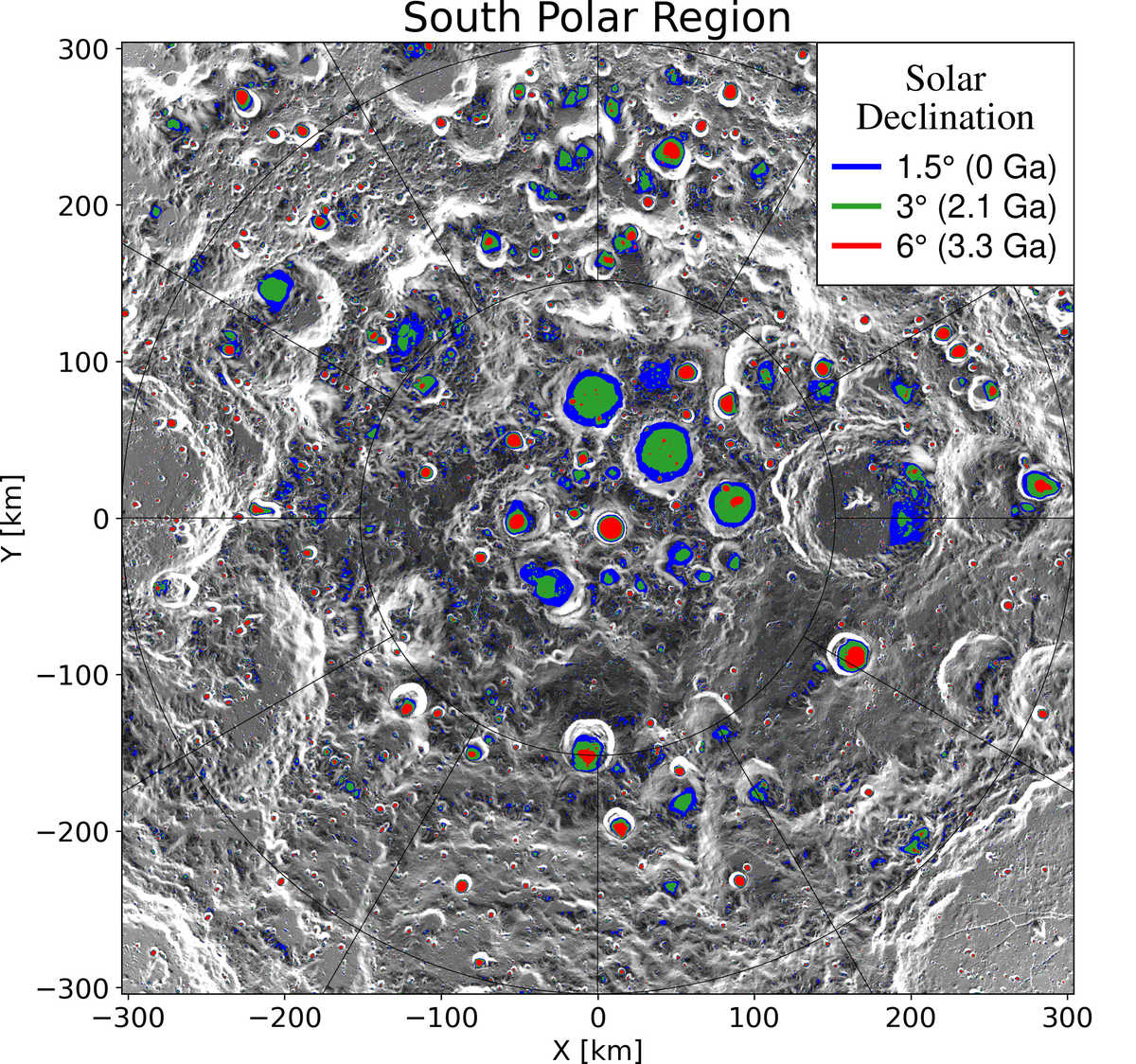
Graph with colored patches showings the extent of PSRs 3.3 billion years ago (red), 2.1 billion years ago (green) and close to present-day (blue) with current topography
Courtesy of Schörghofer/Rufu The scientists used AstroGeo22 and LOLA height measurements to calculate the age of the Moon’s permanently shadowed regions near its poles. Colored patches show the extent of PSRs 3.3 billion years ago (red), 2.1 billion years ago (green) and close to present-day (blue) with current topography. These findings suggest that current estimates for cold-trapped ices are too high.

Moon’s permanently shadowed regions are younger than previously estimated. A team including Southwest Research Institute’s Dr. Raluca Rufu recently calculated that most of the Moon’s permanently shadowed regions (PSRs) are at most around 3.4 billion years old and can contain relatively young deposits of water ice...

Read More

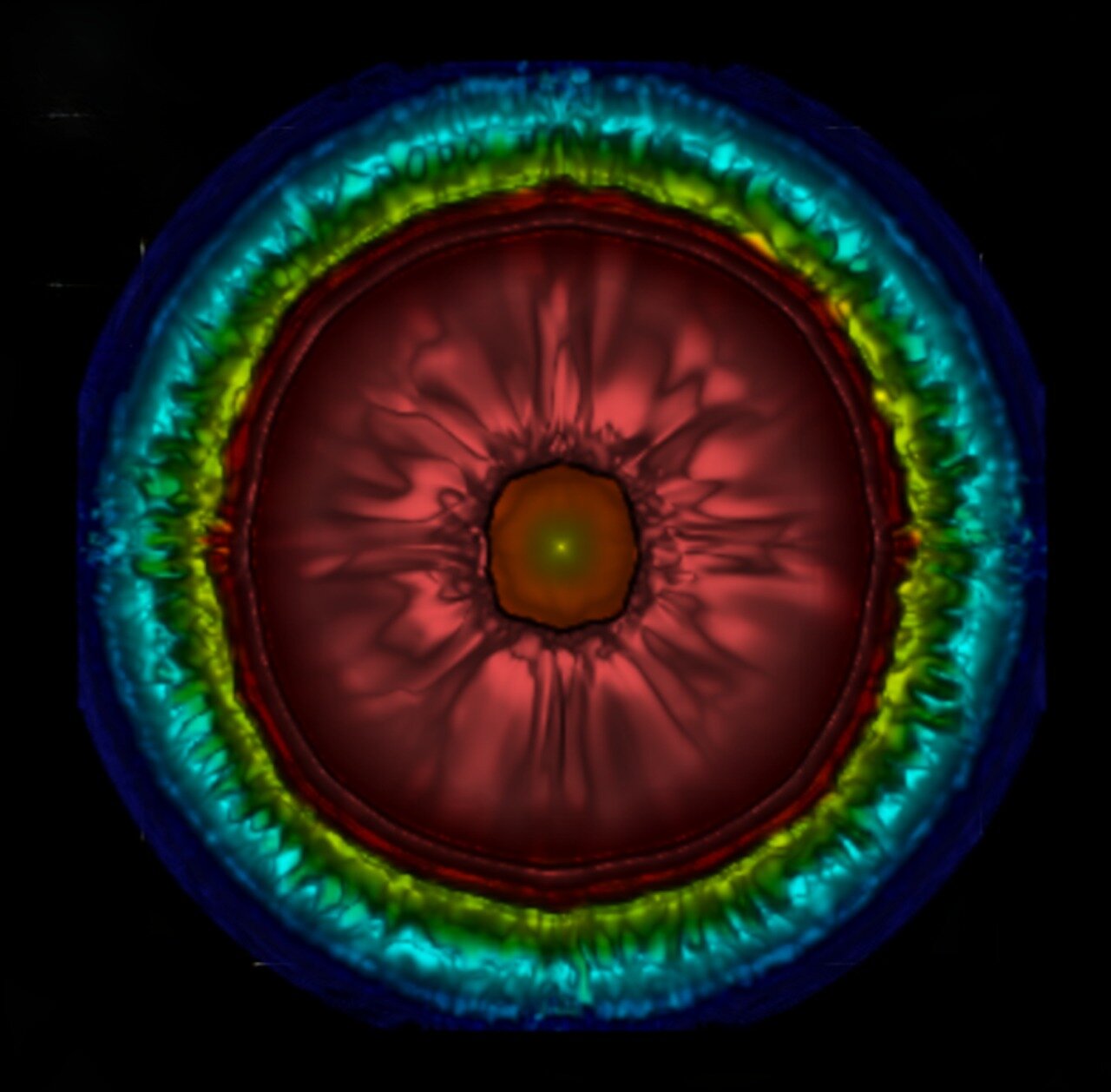
World’s first 3D Simulations reveal the Physics of Exotic Supernovae

World's first 3D simulations reveal the physics of exotic supernovae
The three-dimensional simulation of the exotic supernova reveals the turbulent structures generated during the material ejection in the explosion. These turbulent structures subsequently impact the brightness and explosion structure of the entire supernova. Turbulence plays a critical role in the process of a supernova explosion, resulting from irregular fluid motion, leading to complex dynamics. These turbulent structures mix and distort matter, influencing the release and transfer of energy, thereby affecting the supernova’s brightness and appearance. Through three-dimensional simulations, scientists gain deeper insights into the physical processes of peculiar supernova explosions and can explain the observed phenomena and characteristics of these extraordinary supernovae...
Read More