Category Astronomy/Space

14-inch Spacecraft delivers new Details about ‘Hot Jupiters’

The Colorado Ultraviolet Transit Experiment (CUTE) spacecraft is about the size of a cereal box. It has also recorded incredibly detailed measurements of the atmospheres of planets hundreds of light-years from Earth.

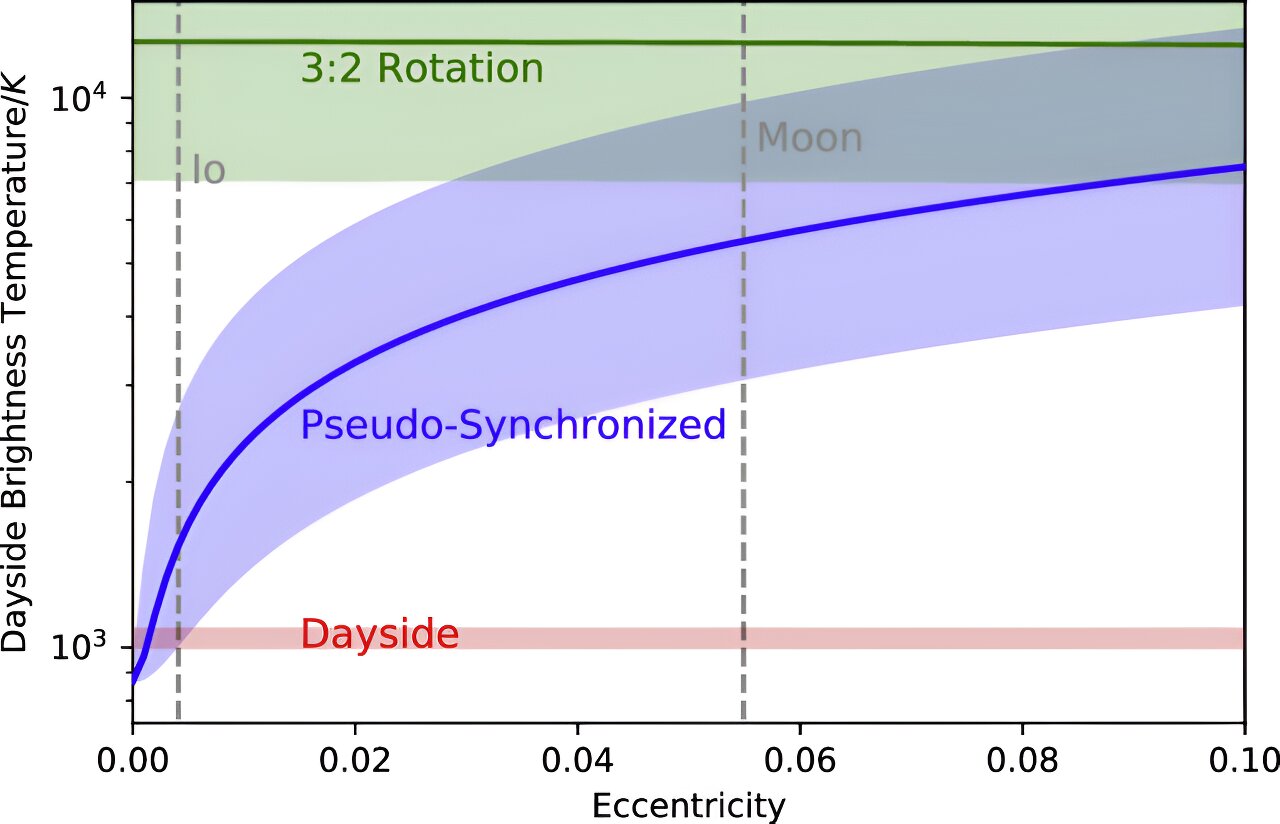
A spacecraft the size of a cereal box has collected precise measurements of the atmospheres of large and puffy planets called “hot Jupiters.” The findings, led by a team from the University of Colorado Boulder, could help reveal how the atmospheres around these and a host of other worlds are escaping into space.

The diminutive spacecraft, which measures just 14 inches in length, may be cute, but its scientific findings are anything but...

Read More

NASA’s Perseverance Rover Deciphers Ancient History of Martian Lake

This image of Jezero Crater on Mars, the landing site for NASA's Mars 2020 mission, was taken by instruments on NASA's Mars Reconnaissance Orbiter.
This image of Mars’ Jezero Crater is overlaid with mineral data detected from orbit. The green color represents carbonates – minerals that form in watery environments with conditions that might be favorable for preserving signs of ancient life. NASA’s Perseverance is currently exploring the green area above Jezero’s fan (center).
 Credit: NASA/JPL-Caltech/MSSS/JHU-APL 

Marking its 1,000th Martian day on the Red Planet, NASA’s Perseverance rover recently completed its exploration of the ancient river delta that holds evidence of a lake that filled Jezero Crater billions of years ago. The six-wheeled scientist has to date collected a total of 23 samples, revealing the geologic history of this region of Mars in the process.

One sample called “Lefroy Bay” contains a large quant...

Read More

Ryugu Samples illuminate Terrestrial Weathering Effects on Primitive Meteorites

Ryugu Samples Illuminate Terrestrial Weathering Effects on Primitive Meteorites

A groundbreaking study conducted by a team of international scientists has unveiled unprecedented insights into the nature of the asteroid Ryugu and shed light on the composition of water- and carbon-rich small bodies in the solar system.

Asteroids like Ryugu are remnants of planetary embryos that never reached larger sizes, making them invaluable windows into materials that formed in the early solar system.

The study centered on laboratory measurements of the samples brought back to the Earth by the Hayabusa2 spacecraft in 2020.

Led by the Japan Aerospace Exploration Agency (JAXA), Hayabusa2 aimed to uncover the true nature of Ryugu and explore how astrologists can use knowledge from meteorites to...

Read More

New Dark Matter Theory Explains Two Puzzles in Astrophysics

Thought to make up 85% of matter in the universe, dark matter is non-luminous and its nature is not well understood. While normal matter absorbs, reflects, and emits light, dark matter cannot be seen directly, making it harder to detect. A theory called “self-interacting dark matter,” or SIDM, proposes that dark matter particles self-interact through a dark force, strongly colliding with one another close to the center of a galaxy.

In work published in The Astrophysical Journal Letters, a research team led by Hai-Bo Yu, a professor of physics and astronomy at the University of California, Riverside, reports that SIDM simultaneously can explain two astrophysics puzzles in opposite extremes.

“The first is a high-density dark matter halo in a massive elliptical galaxy,” Yu said...

Read More