Category Astronomy/Space

A New Technique uses Remote Images to Gauge the Strength of Ancient and Active Rivers Beyond Earth

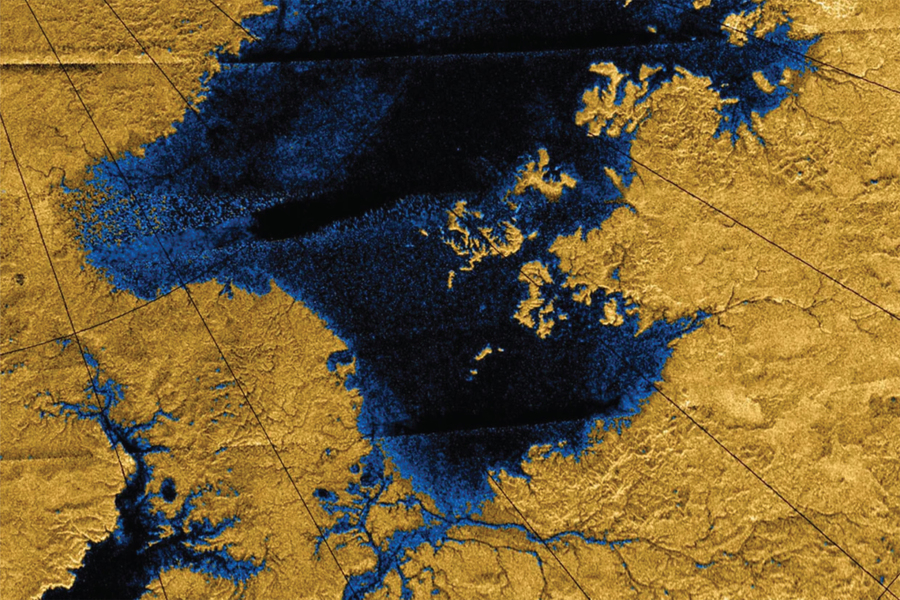
Radar image of a lake taken from high above Titan's surface shows liquid areas as dark blue and land areas as dark yellow
Caption:Images from the Cassini mission show river networks draining into lakes in Titan’s north polar region.
Credits:Image: NASA/JPL/USGS

Rivers have flowed on two other worlds in the solar system besides Earth: Mars, where dry tracks and craters are all that’s left of ancient rivers and lakes, and Titan, Saturn’s largest moon, where rivers of liquid methane still flow today.

A new technique developed by MIT geologists allows scientists to see how intensely rivers used to flow on Mars, and how they currently flow on Titan. The method uses satellite observations to estimate the rate at which rivers move fluid and sediment downstream.

Applying their new technique, the MIT team calculated how fast and deep rivers were in certain regions on Mars more than 1 billion years ago...

Read More
Scientists use NASA MESSENGER mission data to measure Chromium on Mercury

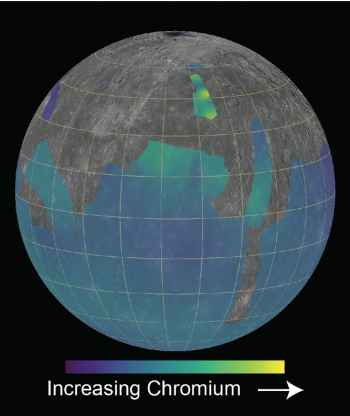
Color-coded chromium abundance map overlain on MESSENGER image of Mercury. Image courtesy Larry Nittler/ASU

The origin of Mercury, the closest planet to the sun, is mysterious in many ways. It has a metallic core, like Earth, but its core makes up a much larger fraction of its volume—85% compared to 15% for Earth.

The NASA Discovery-class MESSENGER (Mercury Surface, Space Environment, Geochemistry and Ranging) mission, and first spacecraft to orbit Mercury, captured measurements revealing that the planet also strongly differs chemically from Earth. Mercury has relatively less oxygen, indicating that it formed from different building blocks in the early solar system. However, it has proven difficult to precisely pin down Mercury’s oxidation state from available data.

In a new st...

Read More

Research group unveils Properties of Cosmic-ray Sulfur and the Composition of other Primary Cosmic Rays

The AMS Collaboration unveils properties of cosmic-ray sulfur and the composition of other primary cosmic rays
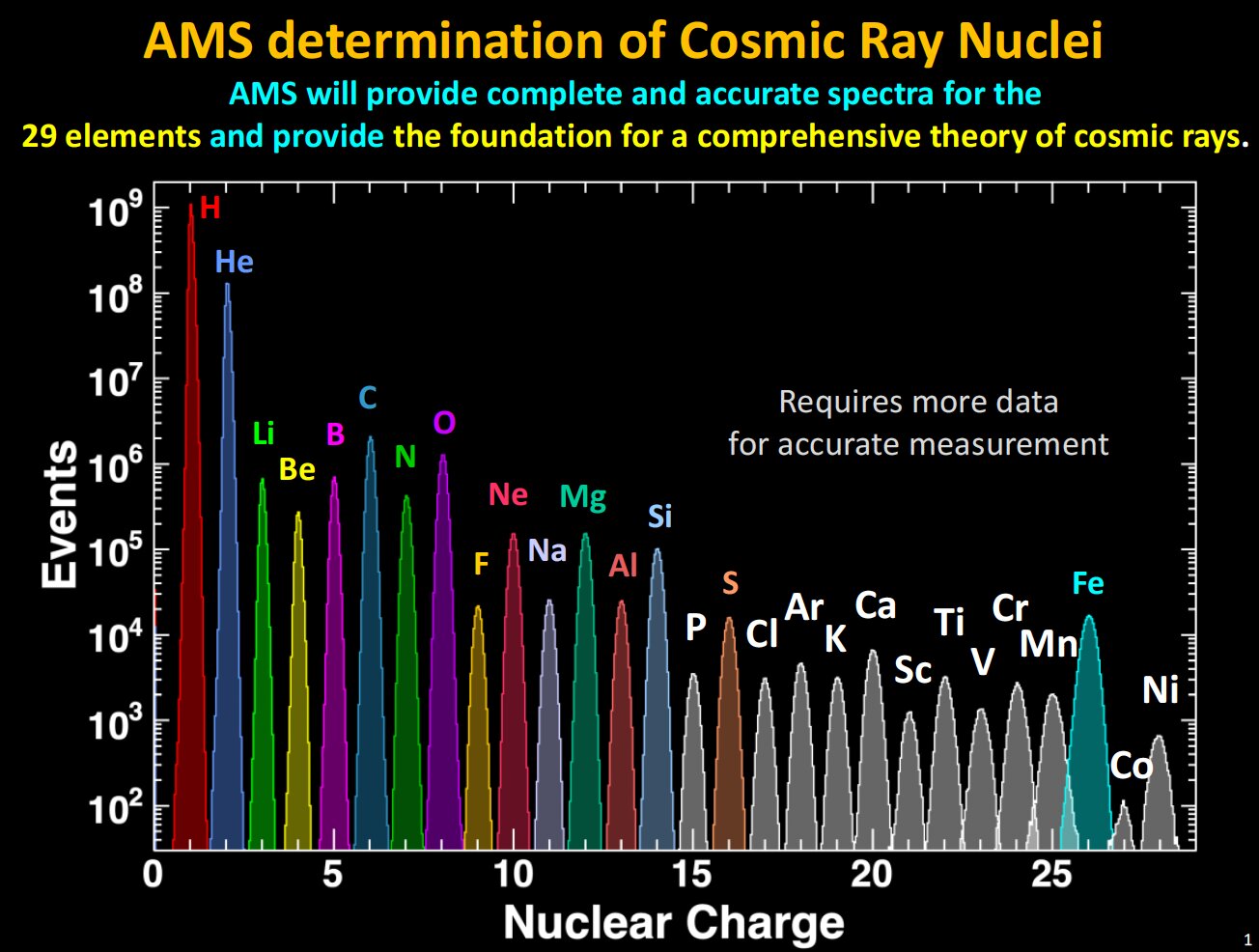
The AMS measured charge Z of all the cosmic ray nuclei up to Ni. Credit: AMS Collaboration.

Charged cosmic rays, high-energy clusters of particles moving through space, were first described in 1912 by physicist Victor Hess. Since their discovery, they have been the topic of numerous astrophysics studies aimed at better understanding their origin, acceleration and propagation through space, using satellite data or other experimental methods.

The Alpha Magnetic Spectrometer (AMS) collaboration, a large research group analyzing data collected by a large magnetic spectrometer in space, recently gathered new insight about the properties and composition of specific types of cosmic rays...

Read More

‘Like a Mirror’: Astronomers Identify most Reflective Exoplanet

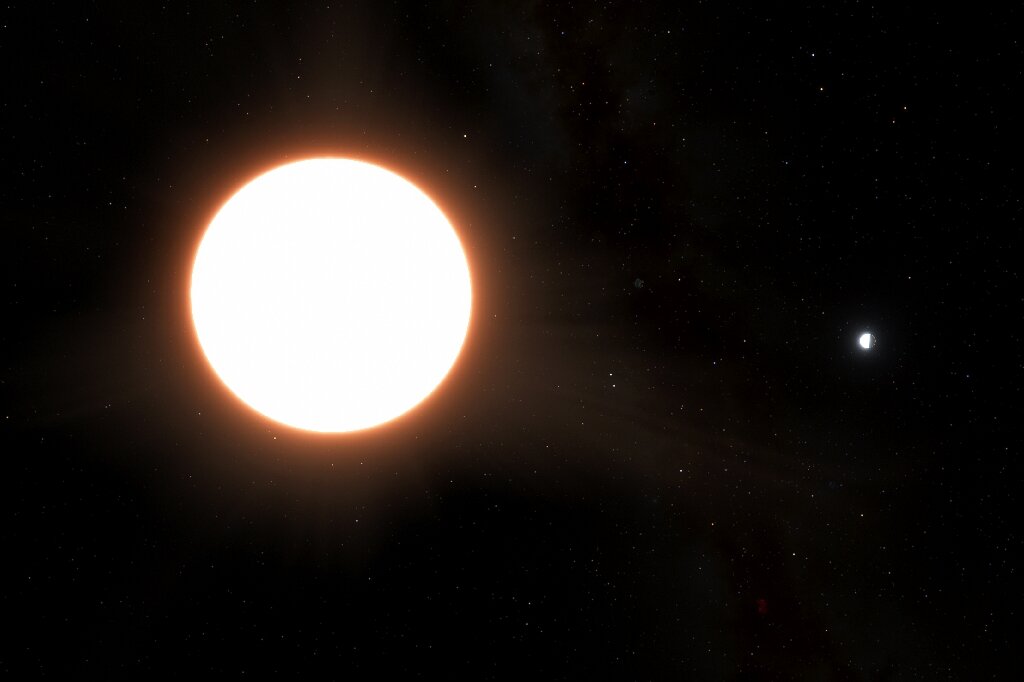
The Neptune-sized exoplanet LTT9779b reflects 80 percent of the light from its star, according to Cheops
The Neptune-sized exoplanet LTT9779b reflects 80 percent of the light from its star, according to Cheops.

A scorching hot world where metal clouds rain drops of titanium is the most reflective planet ever observed outside of our Solar System, astronomers said on Monday.

This strange world, which is more than 260 light years from Earth, reflects 80 percent of the light from its host star, according to new observations from Europe’s exoplanet-probing Cheops space telescope.

That makes it the first exoplanet comparably shiny as Venus, which is the brightest object in our night sky other than the Moon.

First discovered in 2020, the Neptune-sized planet called LTT9779b orbits its star in just 19 hours.

Because it is so close, the side of the planet facing its star is a sizzling ...

Read More