



Category Astronomy/Space
Amid the Jovian system, Europa is of particular interest to scientists because of the strong evidence for nutrients, water and energy to potentially provide a habitable environment for some form of life beyond Earth. In addition, Europa is believed to be made up into four layers (from surface to center): an ice shell, salt water ocean, rocky mantle, and metallic core.Read More
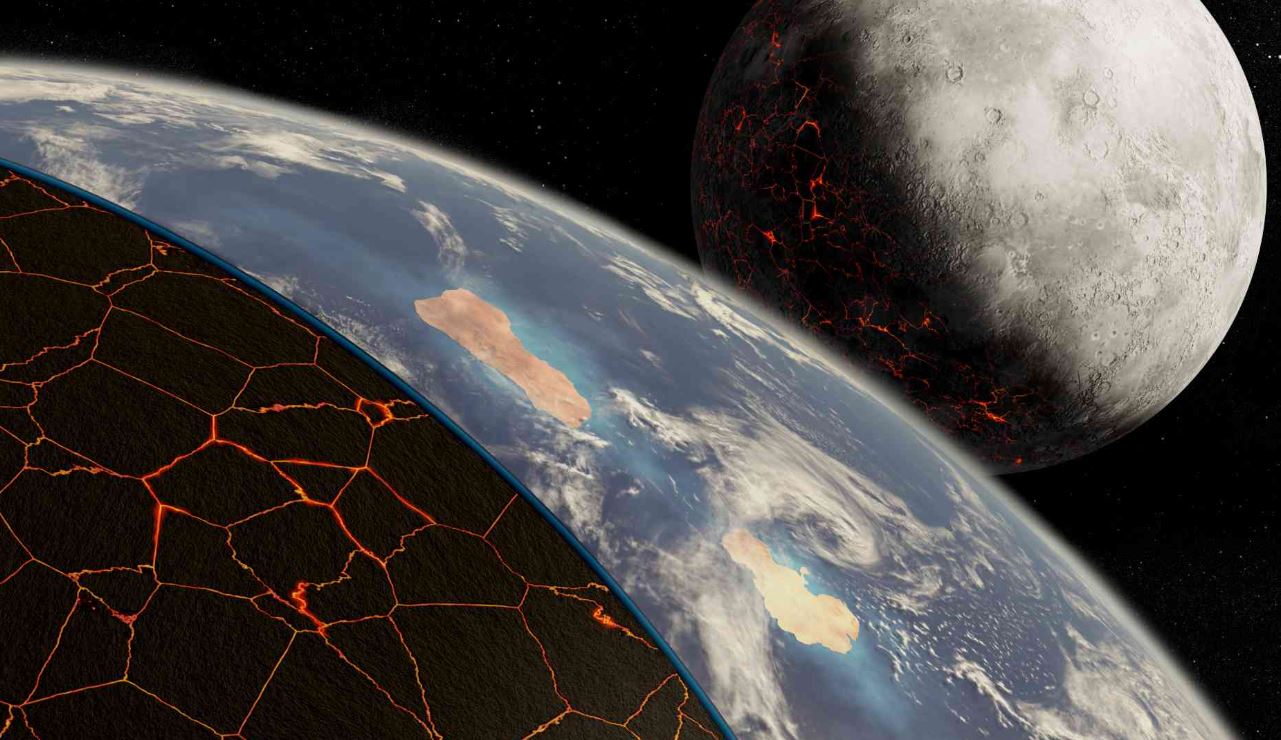
The finding contradicts previous assumptions about the role of mobile plate tectonics in the development of life on Earth. New finding contradicts previous assumptions about the role of mobile plate tectonics in the development of life on Earth. Moreover, the data suggests that ‘when we’re looking for exoplanets that harbor life, the planets do not necessarily need to have plate tectonics,’ says the lead author of a new paper.
Scientists have taken a journey ba...
Read More
The search for extraterrestrial life in our solar system just got more exciting. A team of scientists including Southwest Research Institute’s Dr...
Read MorePass the salt: This Space Rock holds clues as to how Earth got its Water
June 14, 2023,
 Astronomy/Space

The discovery of tiny salt grains in a sample from an asteroid provides strong evidence that liquid water may be more common in the solar system than previously thought. Sodium chloride, better known as table salt, isn’t exactly the type of mineral that captures the imagination of scientists. However, a smattering of tiny salt crystals discovered in a sample from an asteroid has researchers at the University of Arizona Lunar and Planetary Laboratory excited, because these crystals can only have formed in the presence of liquid water.
Even more intriguing, according to the research team, is the fact that th...
Read More

Recent Comments