
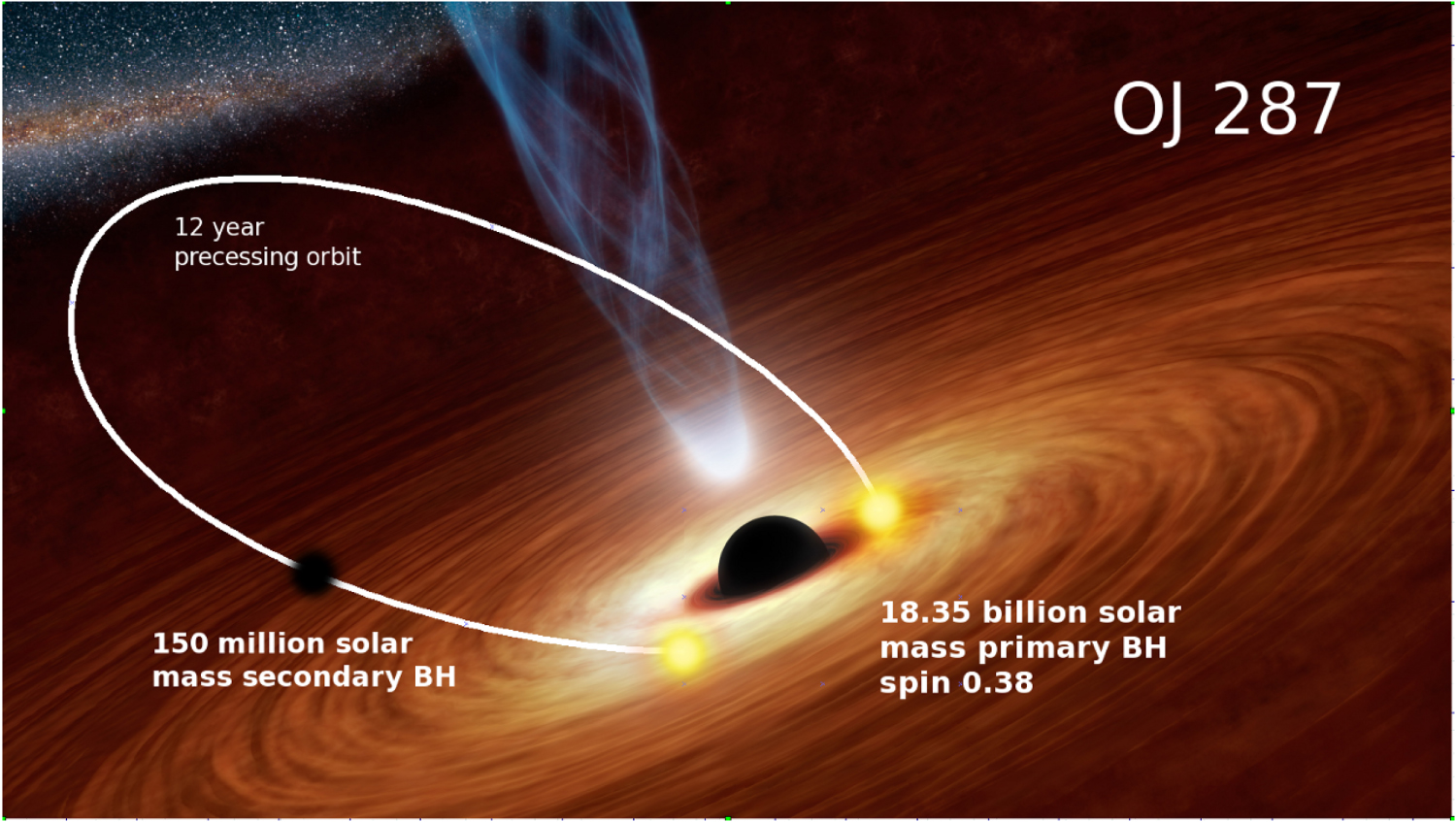
An international team of astronomers observed the second one of the two supermassive black holes circling each other in an active galaxy OJ 287.
Supermassive black holes that weigh sever...
Read More


June 7, 2023,
 Astronomy/Space
An international team of astronomers observed the second one of the two supermassive black holes circling each other in an active galaxy OJ 287.
Supermassive black holes that weigh sever...
Read More
June 7, 2023,
Astronomy/Space
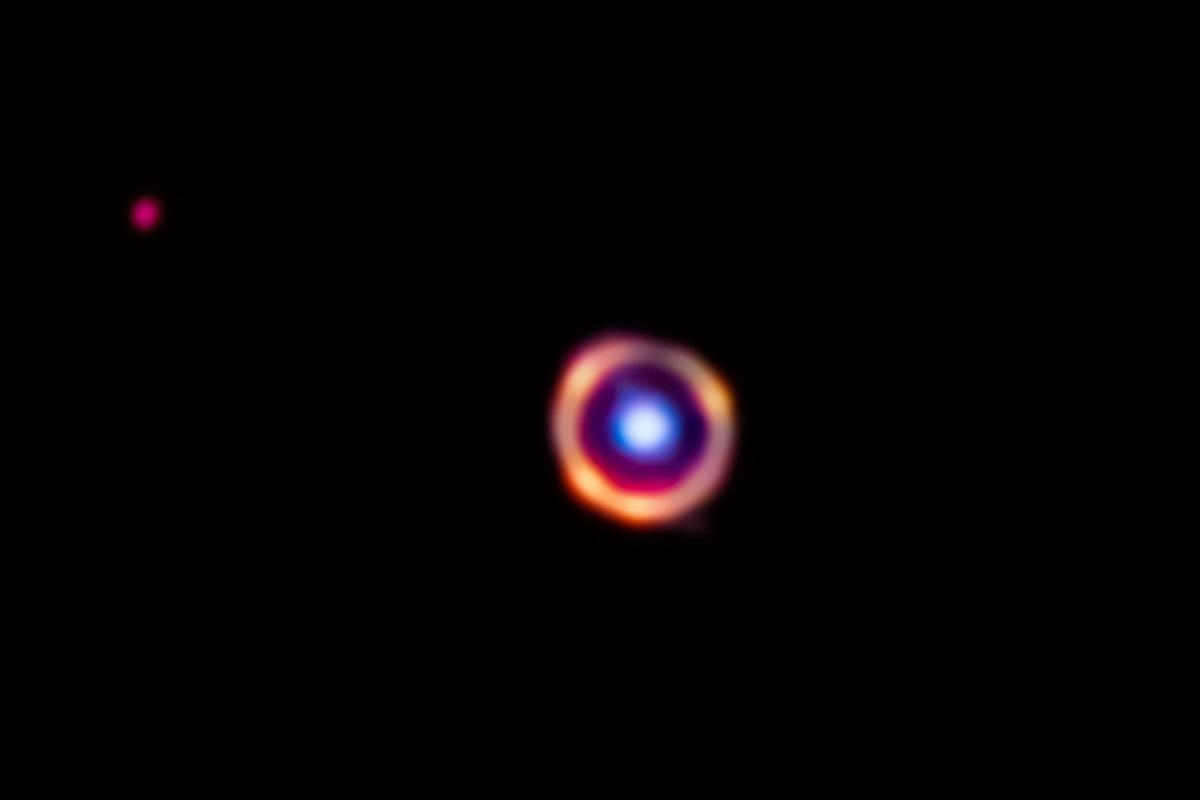
Researchers have detected complex organic molecules in a galaxy more than 12 billion light-years away from Earth — the most distant galaxy in which these molecules are now known to exist...
Read More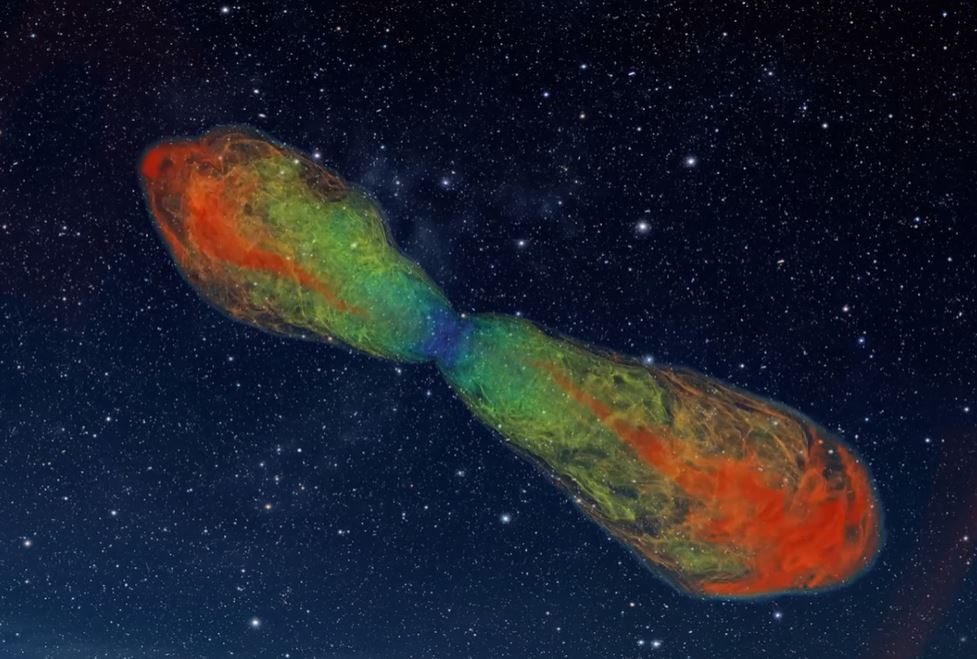
Although astrophysicists theoretically should be able to detect gravitational waves from a single, non-binary source, they have yet to uncover these elusive signals. Now researchers suggest looking at a new, unexpected and entirely unexplored place: The turbulent, energetic cocoons of debris that surround dying massive stars.
For the first time ever, the researchers have used state-of-the-art simulations to show that these cocoons can emit gravitational waves. And, unlike gamma-ray burst jets, cocoons’ gravitational waves should be within the frequency band that the Laser Interferometer Gravitational-Wave Observatory (LIGO) can detect.
“As of today, LIGO has only detected gravitational waves from binary systems, but one day it will detect the first non-binary source of gravitati...
Read More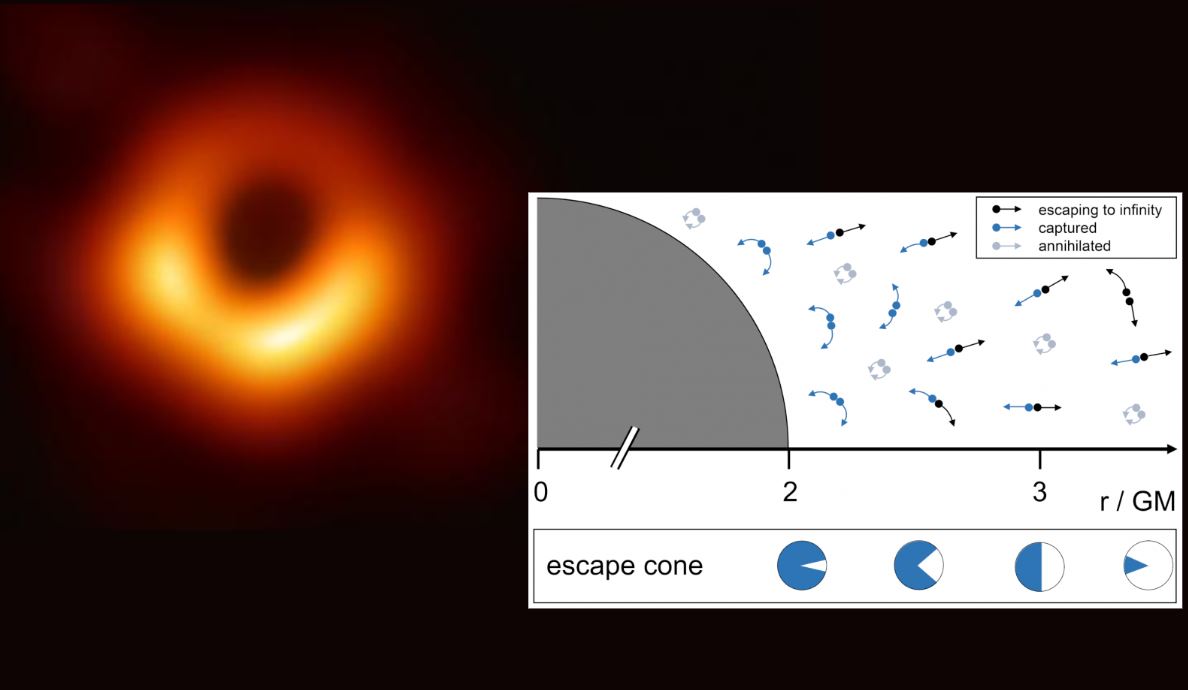
New theoretical research by Michael Wondrak, Walter van Suijlekom and Heino Falcke of Radboud University has shown that Stephen Hawking was right about black holes, although not completely. Due to Hawking radiation, black holes will eventually evaporate, but the event horizon is not as crucial as had been believed. Gravity and the curvature of spacetime cause this radiation too. This means that all large objects in the universe, like the remnants of stars, will eventually evaporate.
Using a clever combination of quantum physics and Einstein’s theory of gravity, Stephen Hawking argued that the spontaneous creation and annihilation of pairs of particles must occur near the event horizon (the point beyond which there is no escape from the gravitational force of a black hole)...
Read More

Recent Comments