Category Astronomy/Space

One-third of Galaxy’s most Common Planets could be in Habitable Zone

exoplanets
Credit: Pixabay/CC0 Public Domain

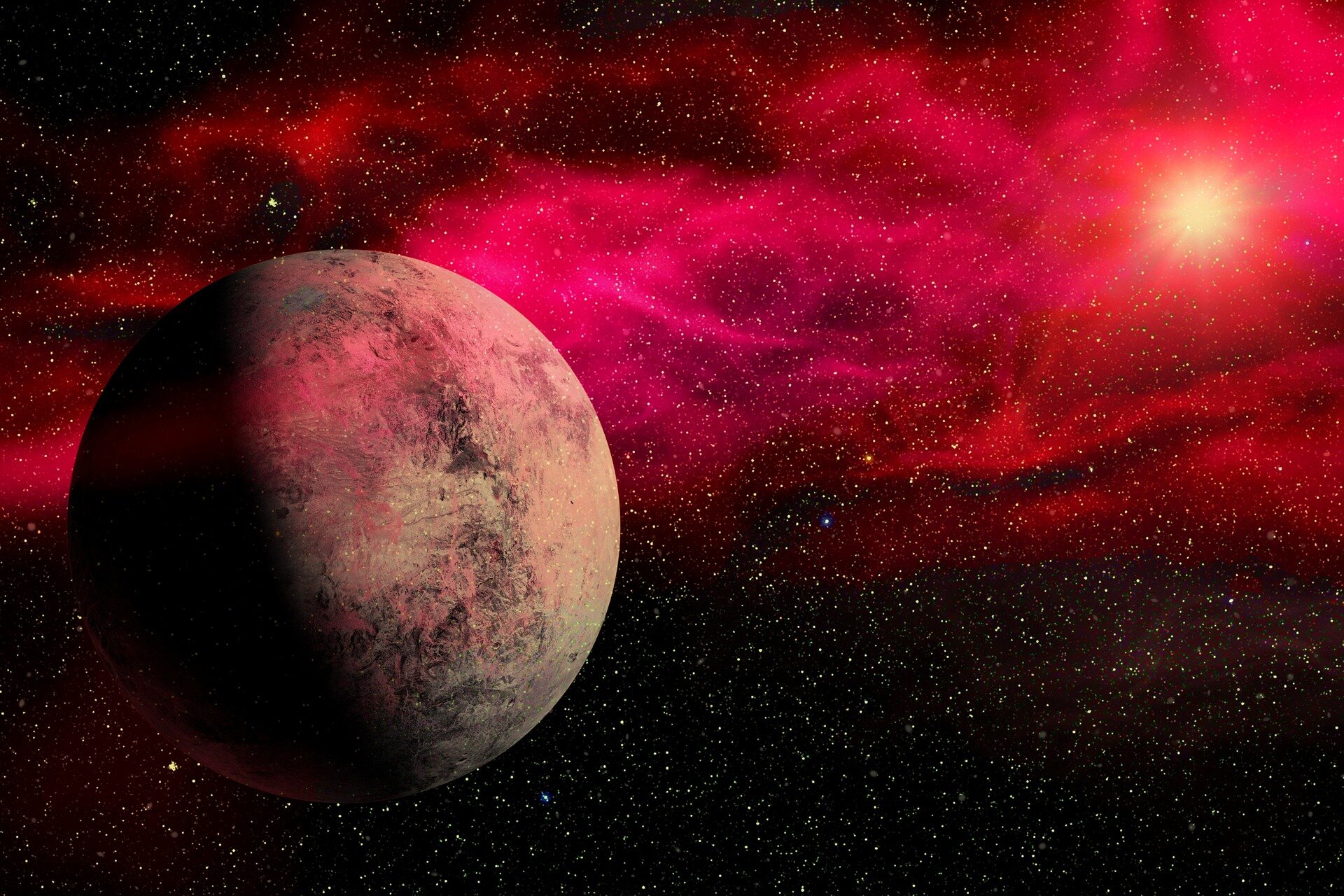
Our familiar, warm, yellow sun is a relative rarity in the Milky Way. By far the most common stars are considerably smaller and cooler, sporting just half the mass of our sun at most. Billions of planets orbit these common dwarf stars in our galaxy. To capture enough warmth to be habitable, these planets would need to huddle very close to their small stars, which leaves them susceptible to extreme tidal forces.

In a new analysis based on the latest telescope data, University of Florida astronomers have discovered that two-thirds of the planets around these ubiquitous small stars could be roasted by these tidal extremes, sterilizing them...

Read More
X-ray Emissions from Black Hole Jets Vary Unexpectedly, Challenging Leading Model of Particle Acceleration

black hole
Credit: Pixabay/CC0 Public Domain

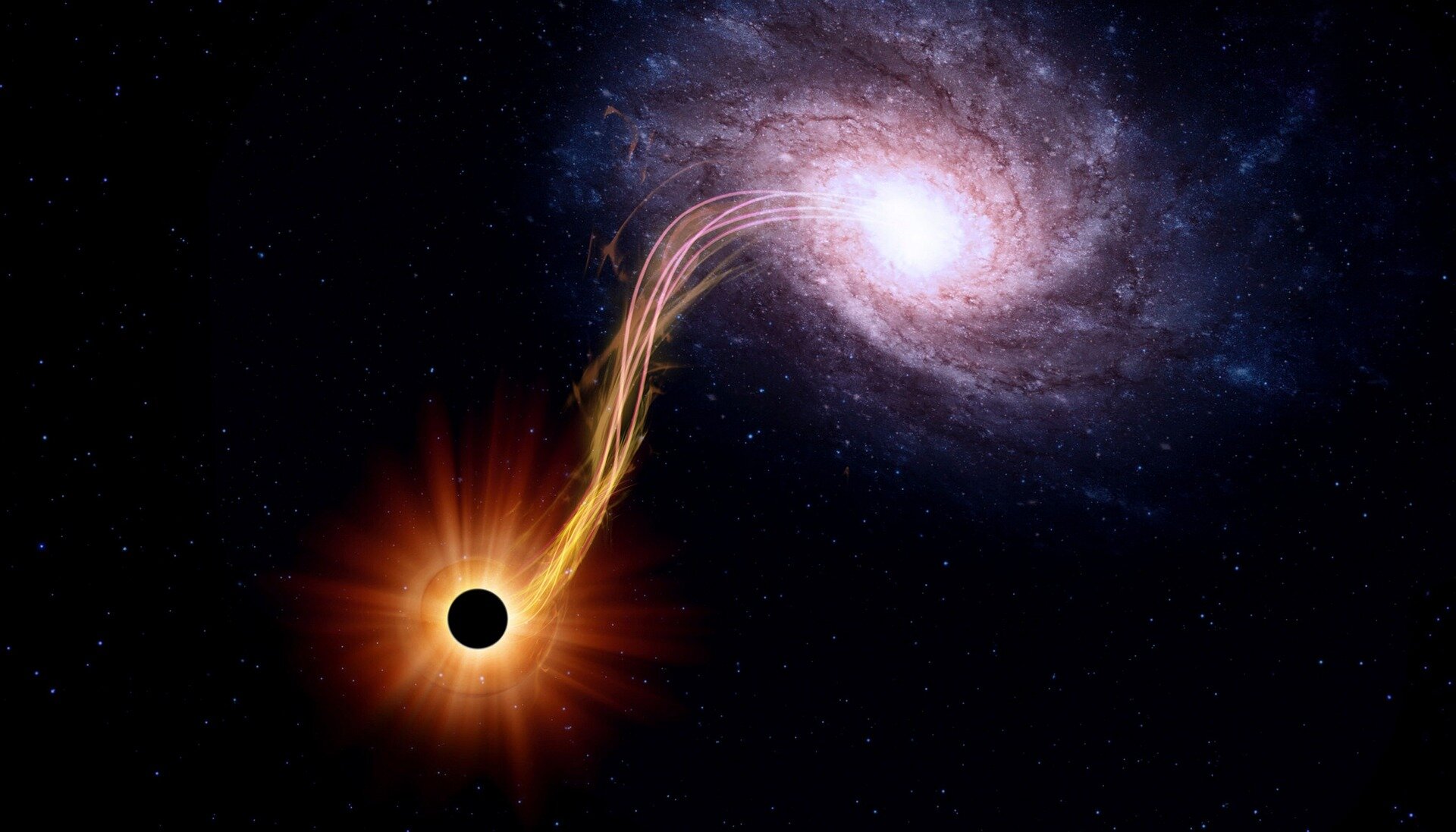
Researchers discovered only relatively recently that black hole jets emit X-rays, and how the jets accelerate particles to this high-energy state is still a mystery. Surprising new findings in Nature Astronomy appear to rule out one leading theory, opening the door to reimagining how particle acceleration works in the jets—and possibly also elsewhere in the universe.

One leading model of how jets generate X-rays expects the jets’ X-ray emissions to remain stable over long time scales (millions of years). However, the new paper found that the X-ray emissions of a statistically significant number of jets varied over just a few years.

“One of the reasons we’re excited about the variability is that there are two main models for how X-rays are produ...

Read More

Astronomers discover a Key Planetary System for Understanding Formation Mechanism of Mysterious ‘Super-Earths’

Astronomers from the University of Liège and CSIC discover a key planetary system to understand the formation mechanism of the m
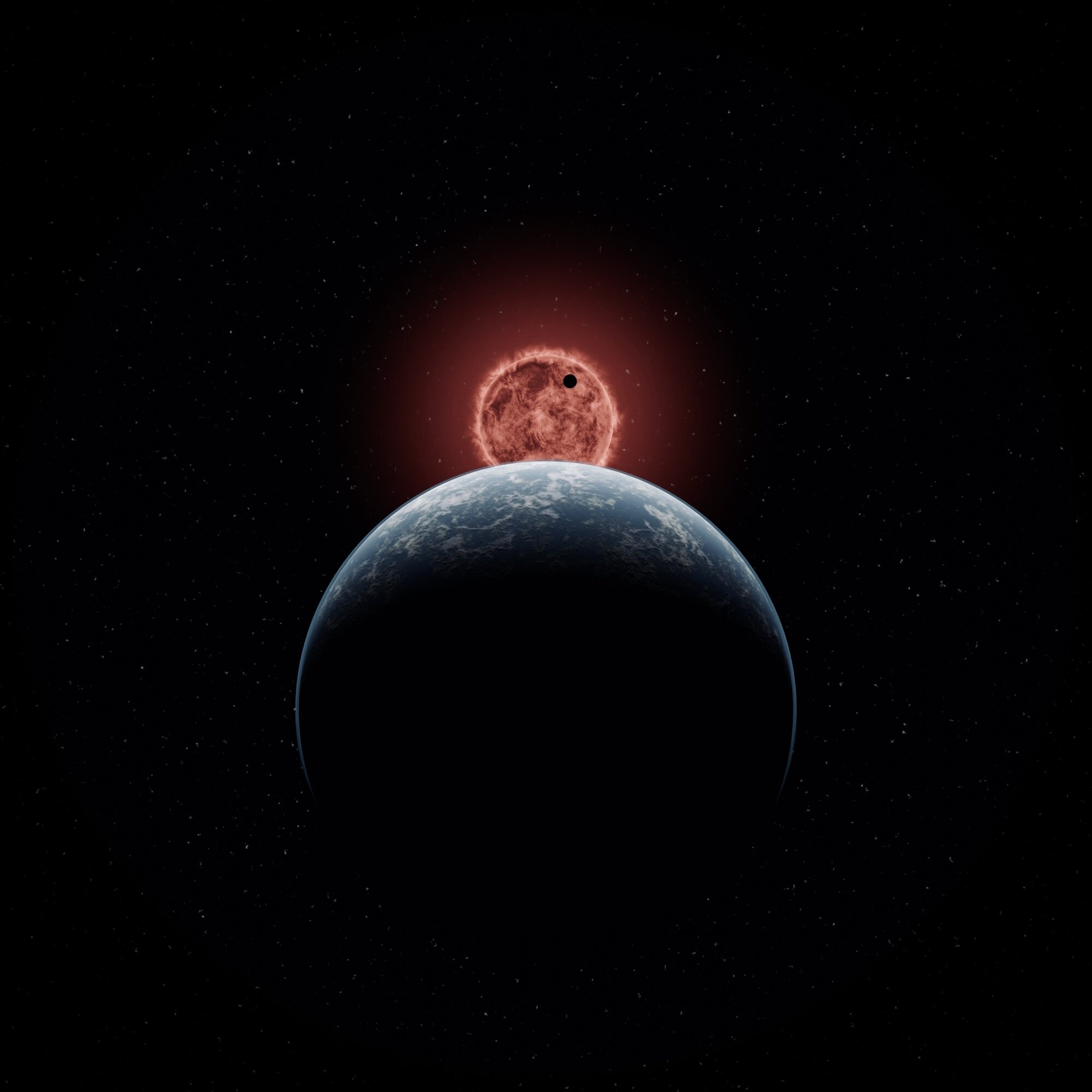
Artist’s view of the TOI-2096 system. Credit: Lionel J. Garcia / ULiège

A study led by researchers of the University of Liège and the CSIC—using observations from NASA’s TESS telescope—presents the detection of a system of two planets slightly larger than Earth orbiting a cold star in a synchronized dance. Named TOI-2096, the system is located 150 light-years from Earth.

The discovery is the result of a close collaboration between European and American universities and was made possible by the US space mission TESS (Transiting Exoplanet Survey Satellite), which aims to find planets orbiting nearby bright stars.

“TESS is conducting an all-sky survey using the transit method, that is, monitoring the stellar brightness of thousands of stars in the search for a slight dimming, ...

Read More

NASA’s Chandra, Webb Telescopes combine for Arresting Views

NASA's Chandra, Webb telescopes combine for arresting views
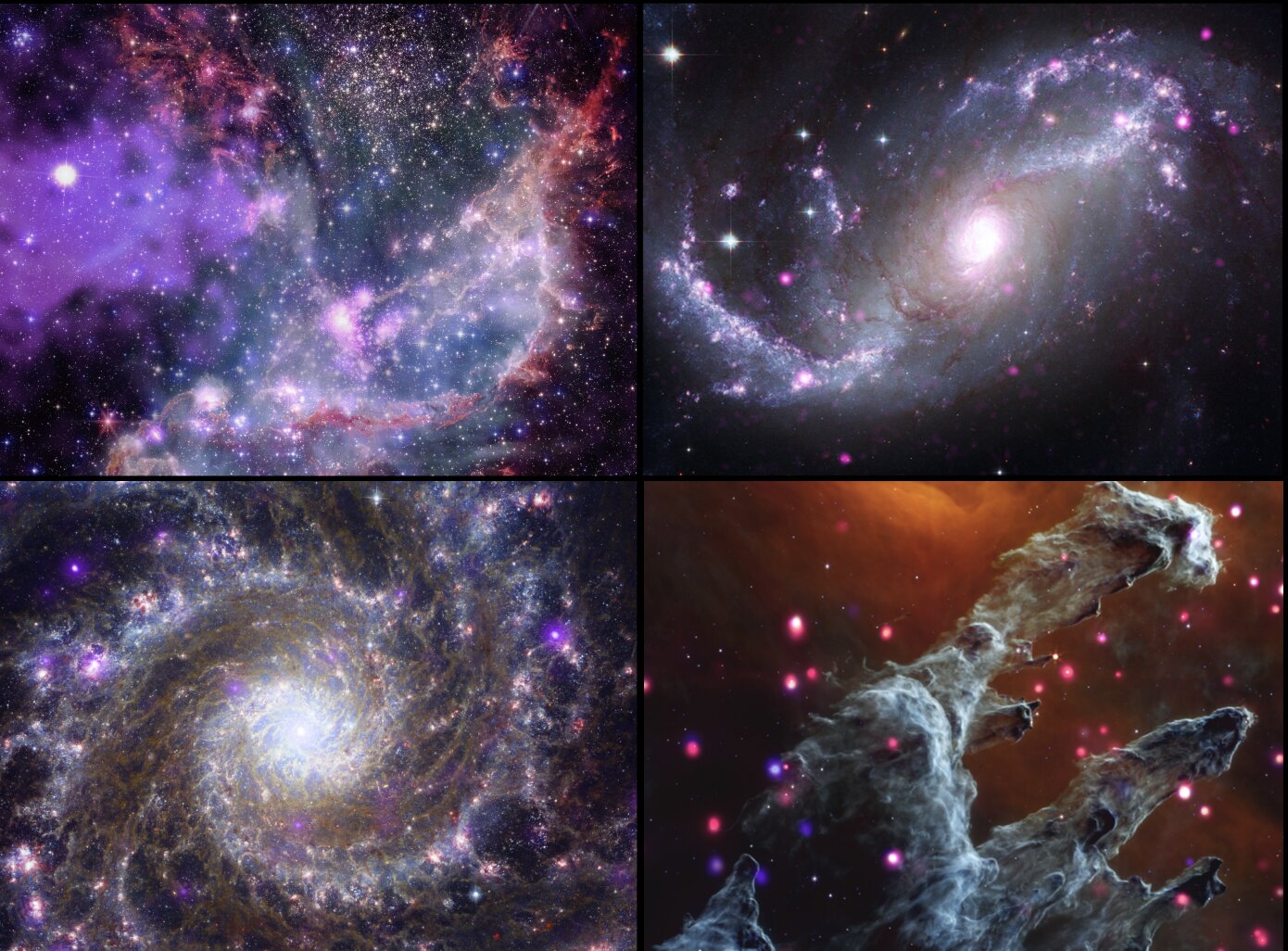
These four images show objects imaged by multiple telescopes including NASA’s Webb, Chandra, Hubble, and Spitzer. Different colors indicate different wavelengths of light, including infrared light and X-rays. Credit: X-ray: Chandra: NASA/CXC/SAO, XMM: ESA/XMM-Newton; IR: JWST: NASA/ESA/CSA/STScI, Spitzer: NASA/JPL-Caltech; Optical: Hubble: NASA/ESA/STScI, ESO. Image Processing: L. Frattare, J. Major, and K. Arcand

When multiple NASA telescopes observe the same cosmic region, the universe’s true colors are revealed.

Four composite images deliver dazzling views from NASA’s Chandra X-ray Observatory and James Webb Space Telescope of two galaxies, a nebula, and a star cluster...

Read More