Category Astronomy/Space

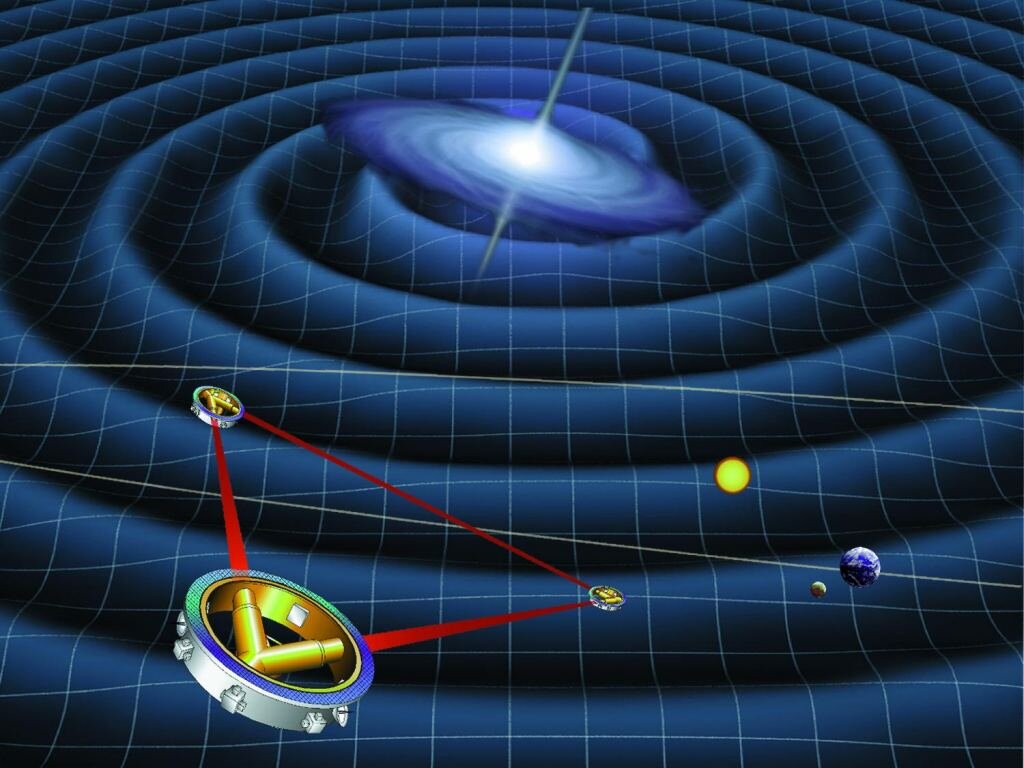
LISA will be a remarkable gravitational-wave observatory, but there’s a way to make it 100 times more powerful

LISA will be a remarkable gravitational-wave observatory—but there's a way to make it 100 times more powerful

The first-time detection of Gravitational Waves (GW) by researchers at the Laser Interferometer Gravitational-wave Observatory (LIGO) in 2015 triggered a revolution in astronomy. This phenomenon consists of ripples in spacetime caused by the merger of massive objects and was predicted a century prior by Einstein’s Theory of General Relativity. In the coming years, this burgeoning field will advance considerably thanks to the introduction of next-generation observatories, like the Laser Interferometer Space Antenna (LISA).

With greater sensitivity, astronomers will be able to trace GW events back to their source and use them to probe the interiors of exotic objects and the laws of physics...

Read More
Galactic Bubbles are more Complex than Imagined, researchers say

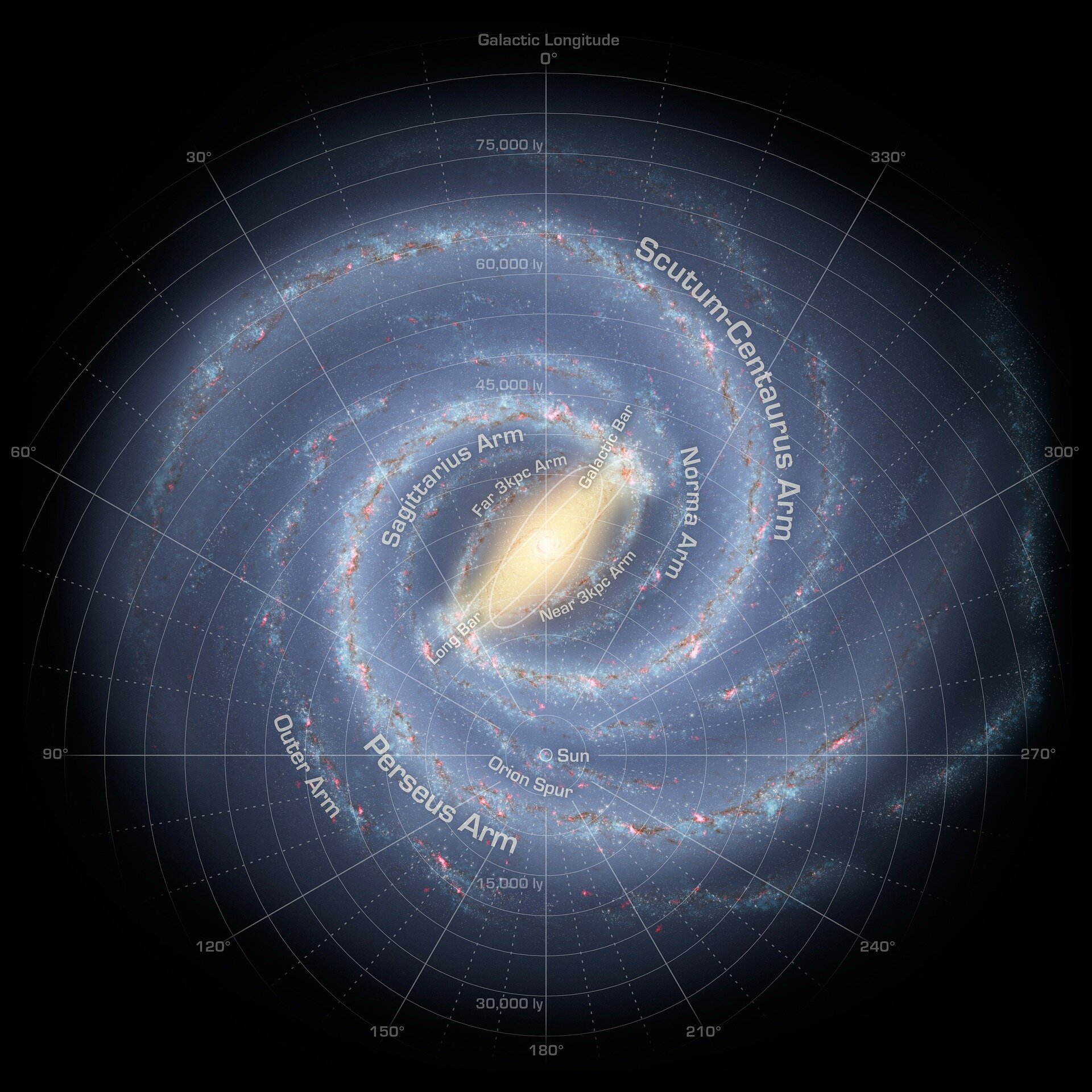
Milky Way
Credit: CC0 Public Domain

Astronomers have revealed new evidence about the properties of the giant bubbles of high-energy gas that extend far above and below the Milky Way galaxy’s center.

In a study recently published in Nature Astronomy, a team led by scientists at The Ohio State University was able to show that the shells of these structures—dubbed “eRosita bubbles” after being found by the eRosita X-ray telescope—are more complex than previously thought.

Although they bear a striking similarity in shape to Fermi bubbles, eRosita bubbles are larger and more energetic than their counterparts...

Read More

Thirsty on the Moon? Just throw some Regolith in the Microwave

A crucible that could be used to extract water from Lunar regolith. Credit: Cole, et al

No matter where we go in the universe, we’re going to need water. Thus far, human missions to Earth orbit and the moon have taken water with them. But while that works for short missions, it isn’t practical in the long term. Water is heavy, and it would take far too much fuel to bring sufficient water to sustain long-term bases on the moon or Mars. So we’ll have to use the water we can extract locally.

Fortunately, water is a common molecule in the universe. Even the moon has plenty of water to sustain a lunar colony. The only real challenge is how to extract it. As a recent study published in Acta Astronautica shows, that might be as easy as popping things into a microwave oven.

Although wate...

Read More

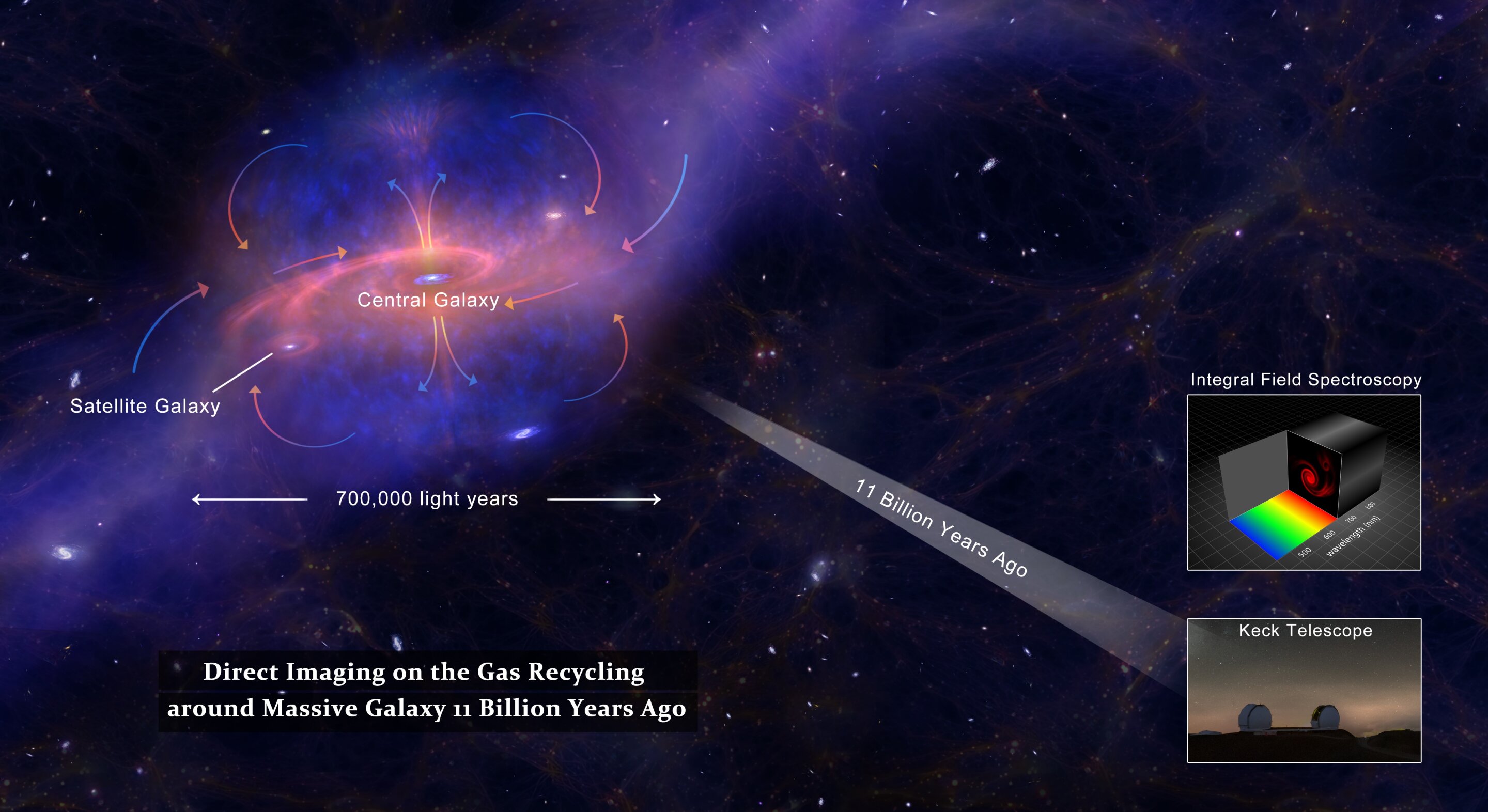
Gas observed Moving into a Massive Galaxy offers Evidence of Material Recycling

Gas observed moving into a massive galaxy offers evidence of material recycling
Direct imaging on the gas recycling around massive galaxy 11 billion years ago. Credit: Department of Astronomy, Tsinghua University

An international team of space scientists has found that observation of a gas cloud stream heading into a massive galaxy may offer evidence of gas material recycling. In their paper published in the journal Science, the group describes their observance and analysis of a gas cloud surrounding a dense galaxy cluster 11 billion light years away, and what they learned from their work.

Space scientists have, for many years, predicted that enriched gases surrounding galaxies could be pulled into such galaxies and wind up as material for making new stars...

Read More