Category Astronomy/Space

Astronomers discover a Key Planetary System for Understanding Formation Mechanism of Mysterious ‘Super-Earths’

Astronomers from the University of Liège and CSIC discover a key planetary system to understand the formation mechanism of the m
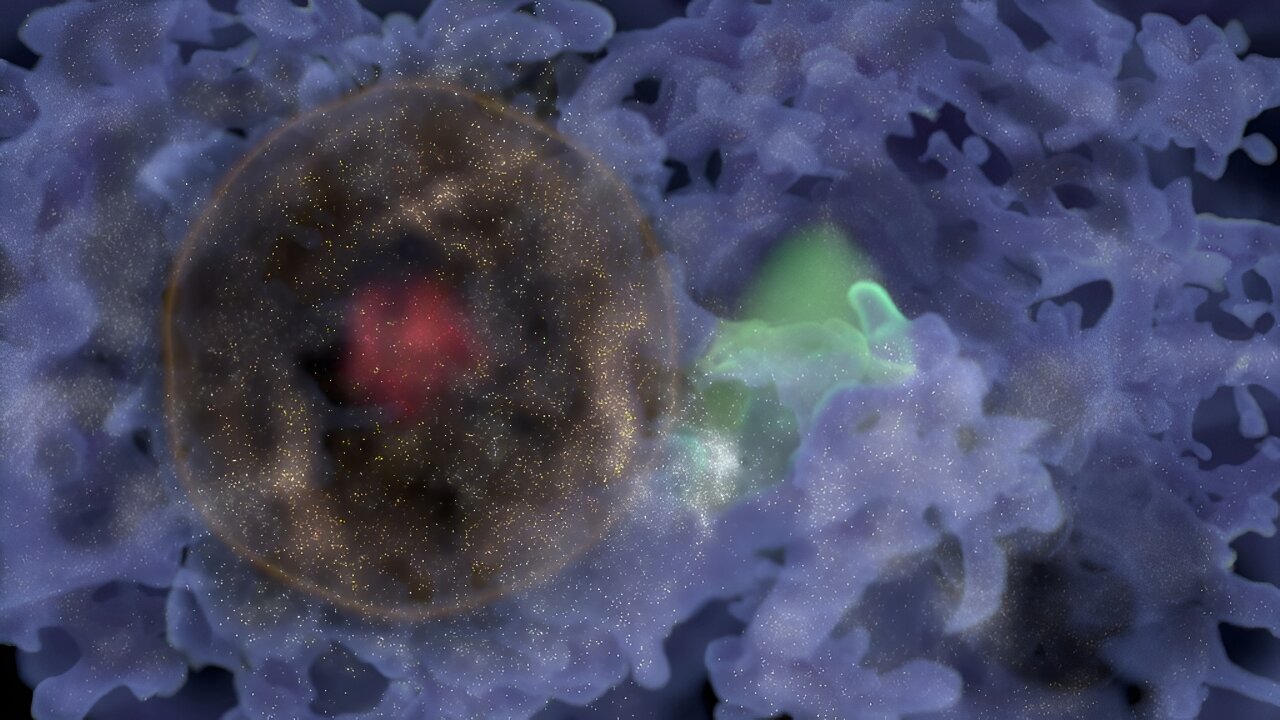
Artist’s view of the TOI-2096 system. Credit: Lionel J. Garcia / ULiège

A study led by researchers of the University of Liège and the CSIC—using observations from NASA’s TESS telescope—presents the detection of a system of two planets slightly larger than Earth orbiting a cold star in a synchronized dance. Named TOI-2096, the system is located 150 light-years from Earth.

The discovery is the result of a close collaboration between European and American universities and was made possible by the US space mission TESS (Transiting Exoplanet Survey Satellite), which aims to find planets orbiting nearby bright stars.

“TESS is conducting an all-sky survey using the transit method, that is, monitoring the stellar brightness of thousands of stars in the search for a slight dimming, ...

Read More

NASA’s Chandra, Webb Telescopes combine for Arresting Views

NASA's Chandra, Webb telescopes combine for arresting views
These four images show objects imaged by multiple telescopes including NASA’s Webb, Chandra, Hubble, and Spitzer. Different colors indicate different wavelengths of light, including infrared light and X-rays. Credit: X-ray: Chandra: NASA/CXC/SAO, XMM: ESA/XMM-Newton; IR: JWST: NASA/ESA/CSA/STScI, Spitzer: NASA/JPL-Caltech; Optical: Hubble: NASA/ESA/STScI, ESO. Image Processing: L. Frattare, J. Major, and K. Arcand

When multiple NASA telescopes observe the same cosmic region, the universe’s true colors are revealed.

Four composite images deliver dazzling views from NASA’s Chandra X-ray Observatory and James Webb Space Telescope of two galaxies, a nebula, and a star cluster...

Read More

The Laws of Physics have Not Always been Symmetric, which may explain why you exist

cosmos
Credit: Pixabay/CC0 Public Domain

For generations, physicists were sure the laws of physics were perfectly symmetric. Until they weren’t.

Symmetry is a tidy and attractive idea that falls apart in our untidy universe. Indeed, since the 1960s, some kind of broken symmetry has been required to explain why there is more matter than antimatter in the universe—why, that is, that any of this exists at all.

But pinning down the source behind this existential symmetry violation, even finding proof of it, has been impossible.

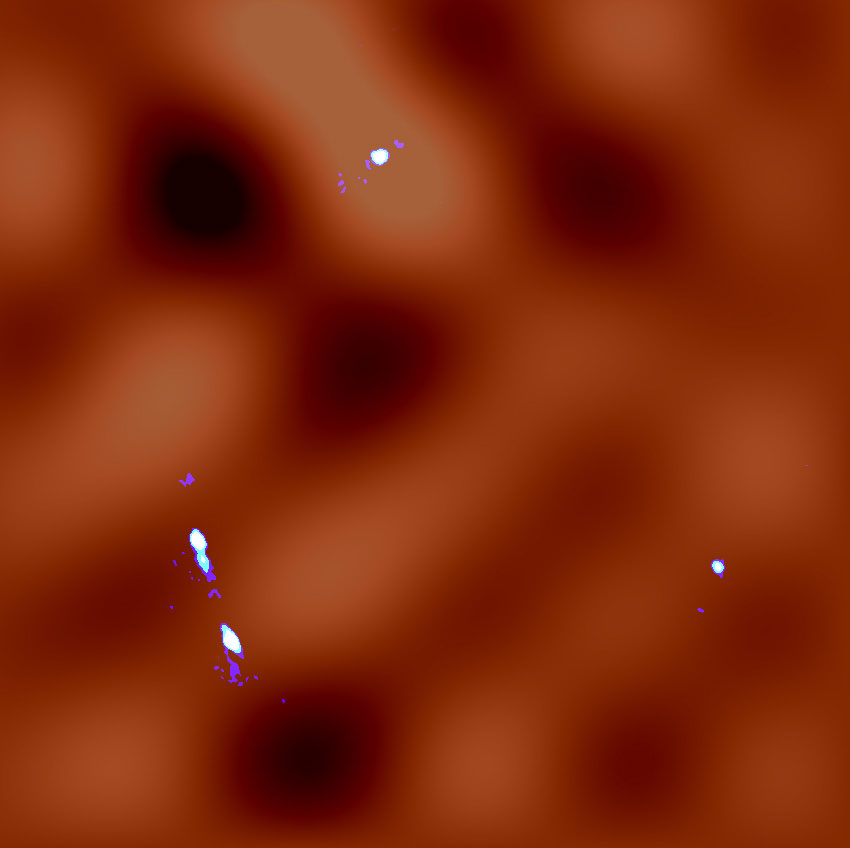
Yet in a new paper published in Monthly Notices of the Royal Astronomical Society, University of Florida astronomers have found the first evidence of this necessary violation of symmetry at the moment of creation...

Read More

Scientists make First Observation of a Polar Cyclone on Uranus

NASA scientists used microwave observations to spot the first polar cyclone on Uranus, seen here as a light-colored dot to the right of center in each image of the planet. The images use wavelength bands K, Ka, and Q, from left. To highlight cyclone features, a different color map was used for each.
Credits: NASA/JPL-Caltech/VLA

Scientists used ground-based telescopes to get unprecedented views, thanks to the giant planet’s position in its long orbit around the sun.

For the first time, NASA scientists have strong evidence of a polar cyclone on Uranus. By examining radio waves emitted from the ice giant, they detected the phenomenon at the planet’s north pole...

Read More