


Category Astronomy/Space
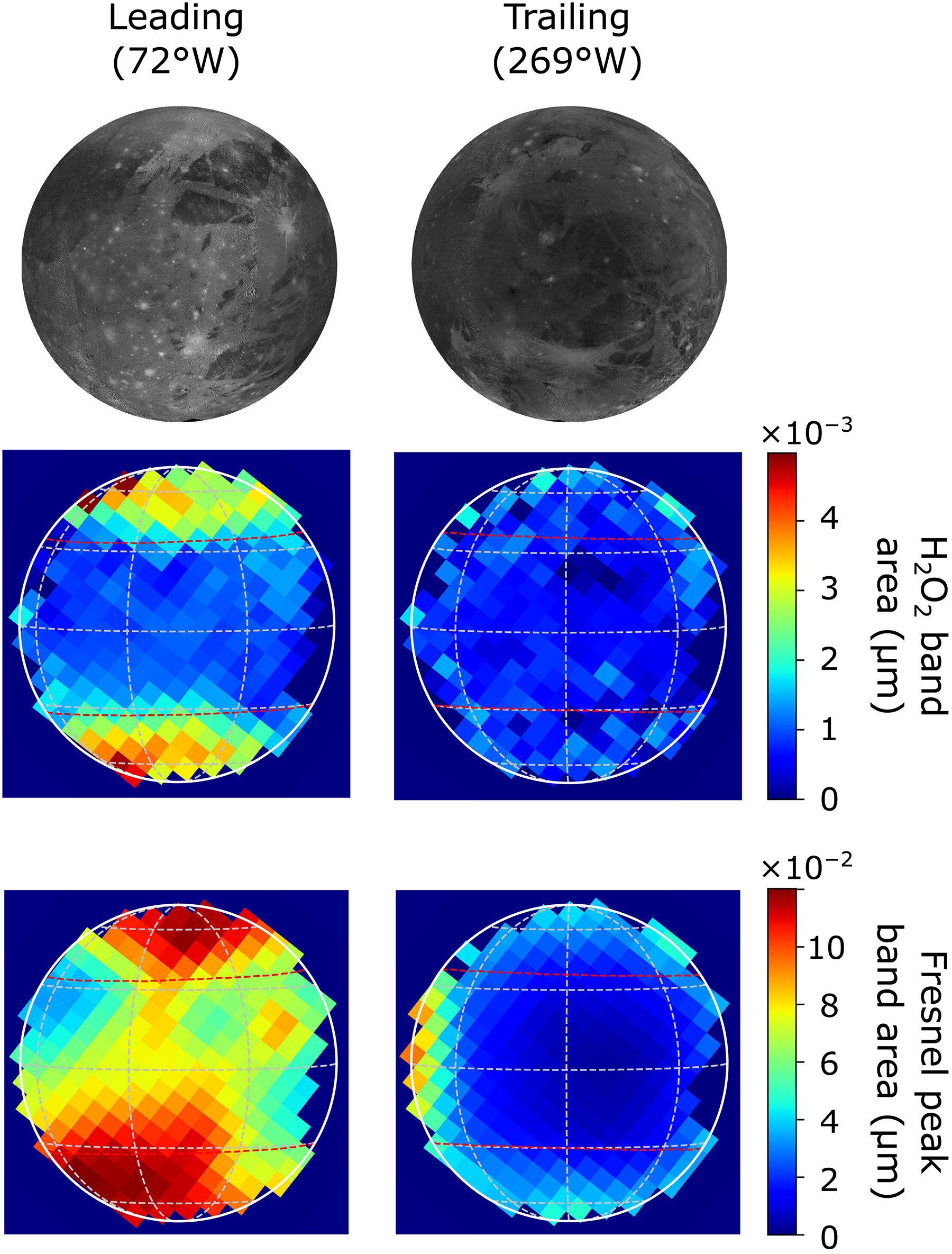
Hydrogen Peroxide found on Jupiter’s Moon Ganymede in Higher Latitudes
July 26, 2023,
 Astronomy/Space
To Stick or to Bounce: Size determines the Stickiness of Cosmic Dust Aggregates
July 25, 2023,
Astronomy/Space
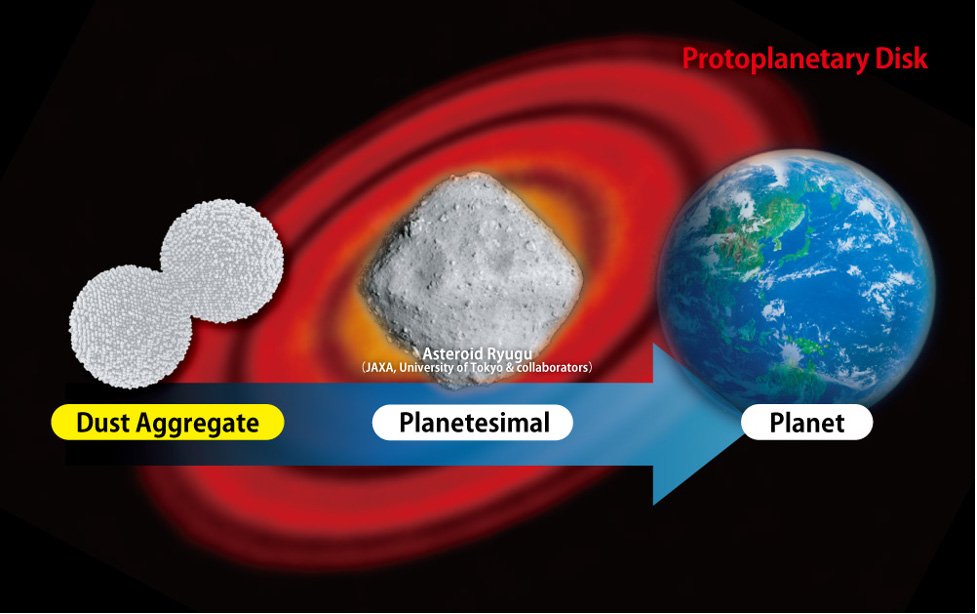
Microparticle dust aggregates, which are thought to play a role in the formation of new planets, are less likely to stick together after a collision when the aggregates are larger.
Current evidence suggests that microparticles of cosmic dust collide and stick together to form larger dust aggregates that may eventually combine and develop into planets...
Read More
Models show Venus’ superheated core could produce extended volcanism, long-lived resurfacing. A Southwest Research Institute-led team has modeled the early impact history of Venus to explain how Earth’s sister planet has maintained a youthful surface despite lacking plate tectonics. The team compared the early collision histories of the two bodies and determined that Venus likely experienced higher-speed, higher-energy impacts creating a superheated core that promoted extended volcanism and resurfaced the planet.
“One of the mysteries of t...
Read MoreUnusual White Dwarf Star is made of Hydrogen on one side and -Helium on the other
July 21, 2023,
Astronomy/Space

In a first for white dwarfs, the burnt-out cores of dead stars, astronomers have discovered that at least one member of this cosmic family is two faced. One side of the white dwarf is composed of hydrogen, while the other is made up of helium.
“The surface of the white dwarf completely changes from one side to the other,” says Ilaria Caiazzo, a postdoctoral scholar at Caltech who leads a new study on the findings in the journal Nature. “When I show the observations to people, they are blown away.”
White dwarfs are the scalding remains of stars that were once like our sun. As the stars age, they puff up into red giants; eventually, their outer fluffy material is blown away and their cores contract into dense, fiery-hot white dwarfs...
Read More
Recent Comments