Category Astronomy/Space

Ultracool Dwarf Binary Stars Break Records

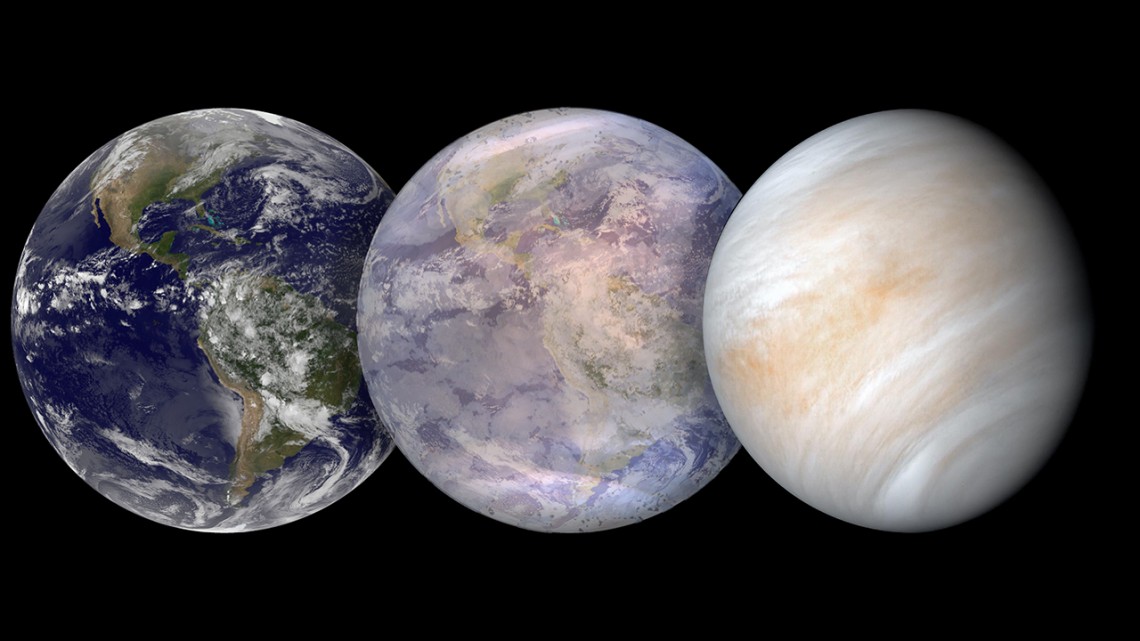
The researchers say that by studying similar star systems, we can learn more about potentially habitable planets beyond Earth. Ultracool dwarfs are much fainter and dimmer than the sun, so any worlds with liquid water on their surfaces — a crucial ingredient to form and sustain life — would need to be much closer to the star. NASA/JPL Caltech image

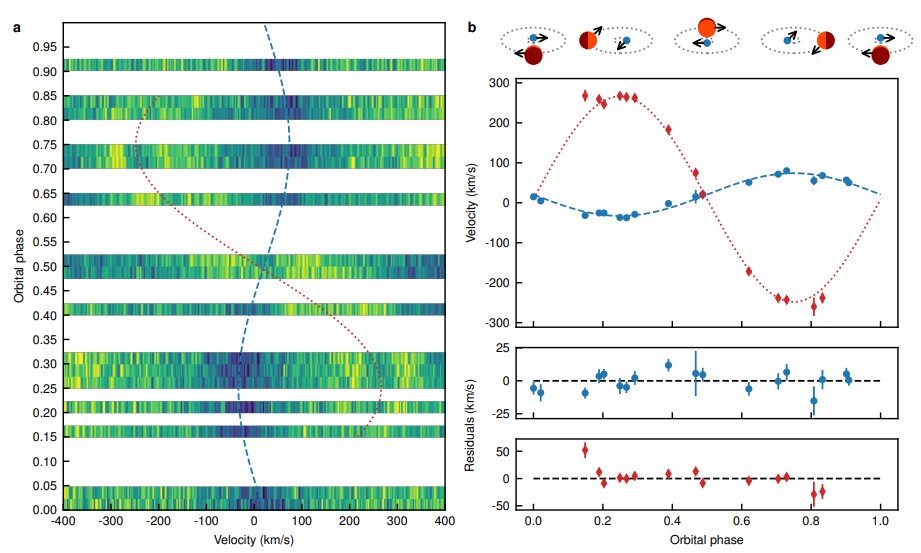
Astrophysicists discover the closest and oldest ultracool dwarf binary ever observed. Northwestern University and the University of California San Diego (UC San Diego) astrophysicists have discovered the tightest ultracool dwarf binary system ever observed.

The two stars are so close that it takes them less than one Earth day to revolve around each other. In other words, each star’s “year” lasts just 17 hours.

The newly discovered ...

Read More

AI Draws Most Accurate Map of Star Birthplaces in the Galaxy

Osaka Metropolitan University scientists identified about 140,000 molecular clouds in the Milky Way Galaxy from large-scale data of carbon monoxide molecules, observed in detail by the Nobeyama 45-m radio telescope. Using AI, the researchers estimated the distance of each of these molecular clouds to determine their size and mass, successfully mapping the distribution of the molecular clouds in the Galaxy in the most detailed manner to date.

Stars are formed by molecular gas and dust coalescing in space. These molecular gases are so dilute and cold that they are invisible to the human eye, but they do emit faint radio waves that can be observed by radio telescopes.

Observing from Earth, a lot of matter lies ahead and behind these molecular clouds and these overlapping features m...

Read More

Baby Star Near the Black Hole in the Middle of our Milky Way: It exists after all

The baby star X3a in its envelope, X3 (shown in blue). The envelope is blown by stellar winds, which is why it forms a cigar-like shape. On timescales of less than 10 years clumps can form which in turn are swallowed by X3a. Copyright: Florian Peißker

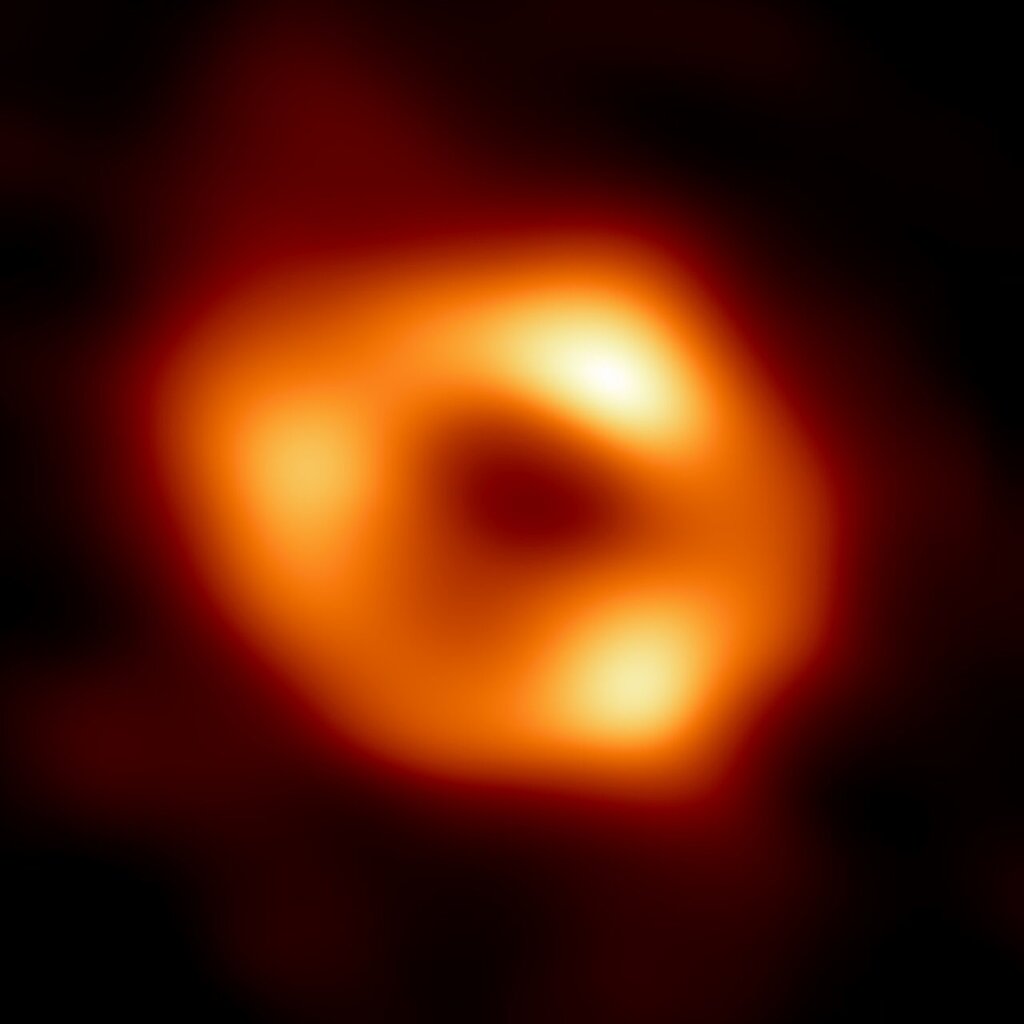
Scientists have detected the heaviest and youngest infant star ever discovered close to the black hole at the center of our Galaxy. They also identified the region where this ‘impossible star’ may have formed.

An international team of researchers under the leadership of Dr Florian Peißker at the University of Cologne’s Institute of Astrophysics has discovered a very young star in its formation phase near the supermassive black hole Sagittarius A* (Sgr A) at the centre of our Milky Way...

Read More

Webb Spots Surprisingly Massive Galaxies in early Universe

Inching towards the Big Bang: The James Webb telescope peers deep into space and time
Inching towards the Big Bang: The James Webb telescope peers deep into space and time.

The James Webb Space Telescope has spotted six massive galaxies that emerged not long after the Big Bang, a study said Wednesday, surprising scientists by forming at a speed that contradicts our current understanding of the universe.

Since becoming operational last July, the Webb telescope has been peering farther than ever before into the universe’s distant reaches—which also means it is looking back in time.

For its latest discovery, the telescope spied galaxies from between 500 to 700 years million years after the Big Bang 13.8 billion years ago, meaning the universe was under five percent of its current age.

Webb’s NIRCam instrument, which operates in the near infrared wavelength invis...

Read More