

The search for extraterrestrial life in our solar system just got more exciting. A team of scientists including Southwest Research Institute’s Dr...
Read More

The search for extraterrestrial life in our solar system just got more exciting. A team of scientists including Southwest Research Institute’s Dr...
Read More
June 14, 2023,
 Astronomy/Space

The discovery of tiny salt grains in a sample from an asteroid provides strong evidence that liquid water may be more common in the solar system than previously thought. Sodium chloride, better known as table salt, isn’t exactly the type of mineral that captures the imagination of scientists. However, a smattering of tiny salt crystals discovered in a sample from an asteroid has researchers at the University of Arizona Lunar and Planetary Laboratory excited, because these crystals can only have formed in the presence of liquid water.
Even more intriguing, according to the research team, is the fact that th...
Read More
June 14, 2023,
Astronomy/Space

An international team of astronomers led by Pierluigi Rinaldi of the University of Groningen has detected for the first time H-alpha emission in individual galaxies during the so-called Epoch of Reionization, or cosmic dawn. To do so, they used the deepest images taken so far by the MIRI instrument on the James Webb Space Telescope. The result has been accepted for publication in The Astrophysical Journal, and is currently published on the arXiv preprint server.
Star-forming galaxies produce a large amount of UV photons, but during the Epoch of Reionization these photons are absorbed by the intergalactic medium. The best tracer to measure the level of star formation is the H-alpha emission line in the optical spectrum...
Read More
June 12, 2023,
Astronomy/Space, Biology/Biotechnology
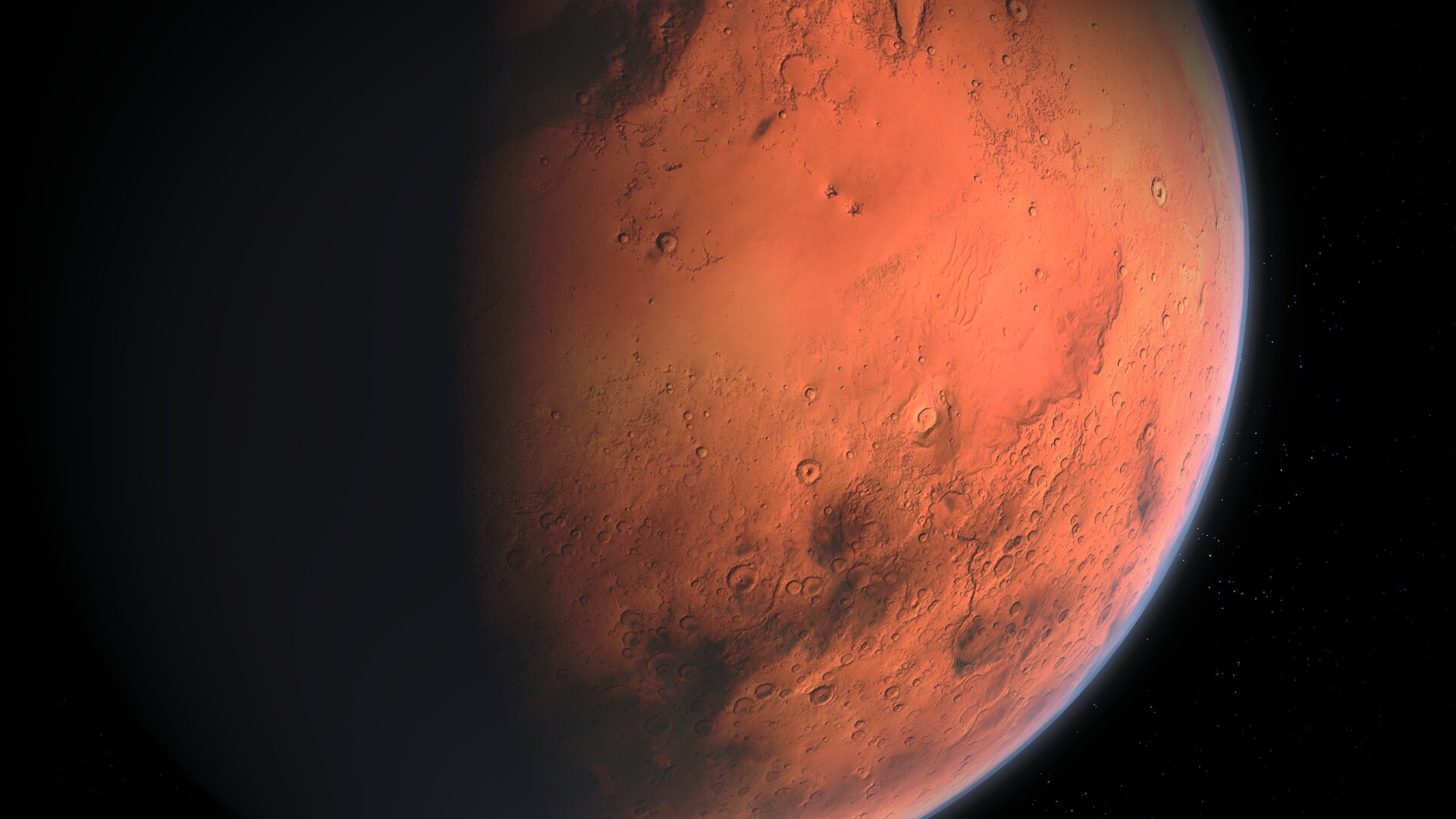
Researchers are working on sustainable technology to harvest solar power in space—which could supplement life support systems on the moon and Mars.
In a study published in Nature Communications, scientists assess a new technique which could convert renewable, green energy from outside the Earth’s atmosphere. They are taking advantage of photosynthesis—the chemical process plants undergo every day to create energy—to help the space industry become more sustainable.
The research led by the University of Warwick evaluates the use of a special device known as semiconductor to absorb sunlight on moon and Mars. It is hoped that the devices could promote Martian life support systems.
These “artificial photosynthesis devices” undergo the same pr...
Read More
Recent Comments