Courtesy of NASA/ESA/CSA/Alyssa Pagan (STScI)/Geronimo Villanueva (NASA-GSFC) SwRI contributed to new Cycle 1 JWST findings that show the plume of water escaping from Saturn’s moon Enceladus extends 6,000 miles or more than 40 times the moon’s size. In light of this discovery, SwRI’s Dr. Christopher Glein was awarded a NASA JWST Cycle 2 allocation to study the plume as well as the icy surface of Enceladus, to better understand the potential habitability of this ocean world.
Two Southwest Research Institute scientists were part of a James Webb Space Telescope (JWST) team that observed a towering plume of water vapor more than 6,000 miles long—roughly the distance from the U.S. to Japan—spewing from the surface of Saturn’s moon, Enceladus...
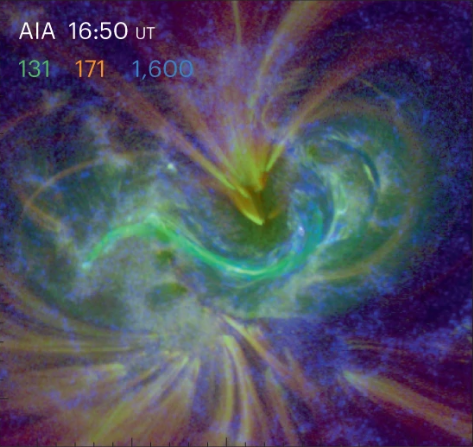
Recently, a research team led by Prof. Gou Yanyu from the University of Science and Technology of China (USTC) of the Chinese Academy of Sciences (CAS) found that the solar outburst structure undergoes a complex reconfiguration evolution during the early outbursts. This is an important advancement in the study of solar outburst activity. This study was published in Nature Astronomy.
In classical images, the core structure of a solar eruption is a magnetic rope consisting of spirally wound magnetic lines. When the eruption begins, the magnetic ropes around the core are transformed by magnetic reconnection into spirally wound magnetic lines, which wrap around the original core, leading to its rapid growth in a “snowball” fashion...
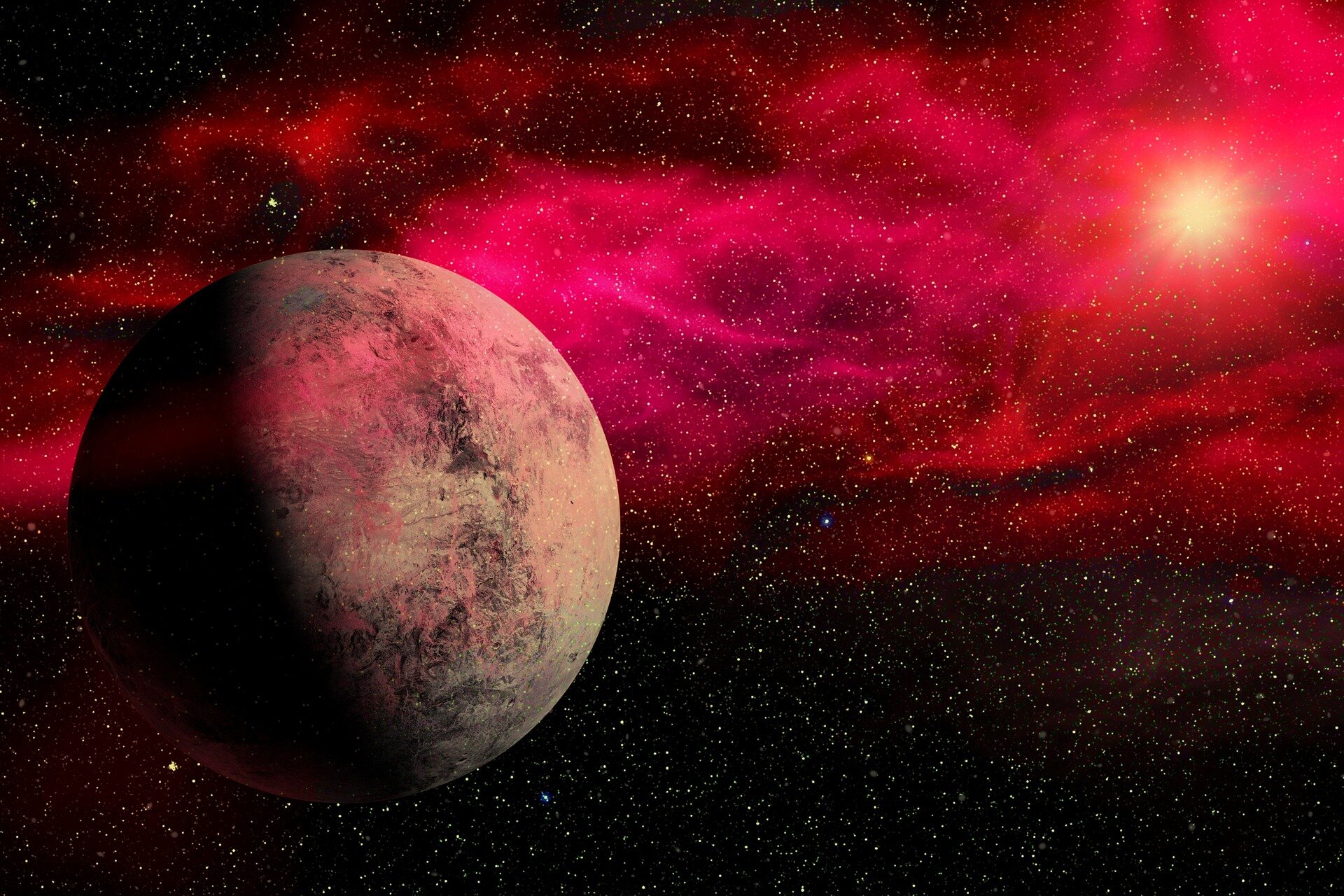
Our familiar, warm, yellow sun is a relative rarity in the Milky Way. By far the most common stars are considerably smaller and cooler, sporting just half the mass of our sun at most. Billions of planets orbit these common dwarf stars in our galaxy. To capture enough warmth to be habitable, these planets would need to huddle very close to their small stars, which leaves them susceptible to extreme tidal forces.
In a new analysis based on the latest telescope data, University of Florida astronomers have discovered that two-thirds of the planets around these ubiquitous small stars could be roasted by these tidal extremes, sterilizing them...
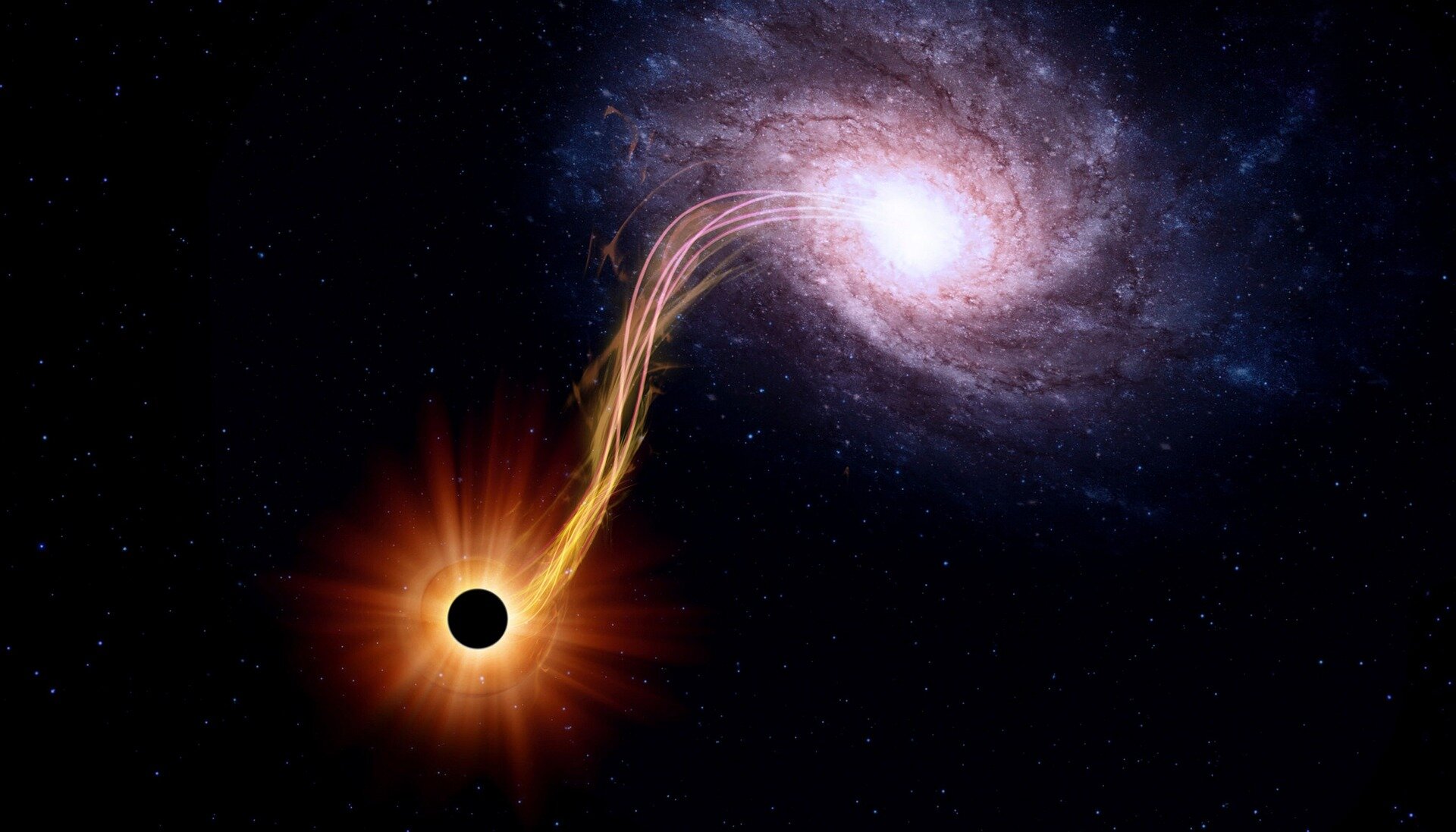
Researchers discovered only relatively recently that black hole jets emit X-rays, and how the jets accelerate particles to this high-energy state is still a mystery. Surprising new findings in Nature Astronomy appear to rule out one leading theory, opening the door to reimagining how particle acceleration works in the jets—and possibly also elsewhere in the universe.
One leading model of how jets generate X-rays expects the jets’ X-ray emissions to remain stable over long time scales (millions of years). However, the new paper found that the X-ray emissions of a statistically significant number of jets varied over just a few years.
“One of the reasons we’re excited about the variability is that there are two main models for how X-rays are produ...





Recent Comments