Category Astronomy/Space

How was the Solar System Formed? The Ryugu Asteroid is helping us learn

Japan Aerospace Exploration Agency (JAXA)

Our solar system is estimated to be about 4.57 billion years old. Previous analyses of ancient meteorites have shown that minerals were created through chemical reactions with water as far back as 4.5 billion years ago. New findings from the Ryugu asteroid samples indicate that carbonates were forming from water-rock reactions several million years earlier, even closer to the solar system’s beginnings.

Mineral samples collected from the Ryugu asteroid by the Japan’s Hayabusa2 spacecraft are helping UCLA space scientists and colleagues better understand the chemical composition of our solar system as it existed in its infancy, more than 4.5 billion years ago.

In research recently published in Nature Astronomy, scientists using isotopic ana...

Read More

Tumultuous Migration on the Edge of the Hot Neptune Desert

Did hot Neptunes ever exist? While astronomers observe gas giants and small rocky planets close to their stars, the SPICE DUNE project is investigating the ‘‘desert’’ of Neptune-sized planets. Â© Elsa Bersier – CFPArts / ESBDi Genève

All kinds of exoplanets orbit very close to their star. Some look like the Earth, others like Jupiter. Very few, however, are similar to Neptune. Why this anomaly in the distribution of exoplanets? Researchers from the University of Geneva (UNIGE) and the National Centre of Competence in Research (NCCR) PlanetS have observed a sample of planets located at the edge of this Hot Neptune Desert to understand its creation...

Read More

The Mechanism of Cosmic Magnetic Fields explored in the Laboratory

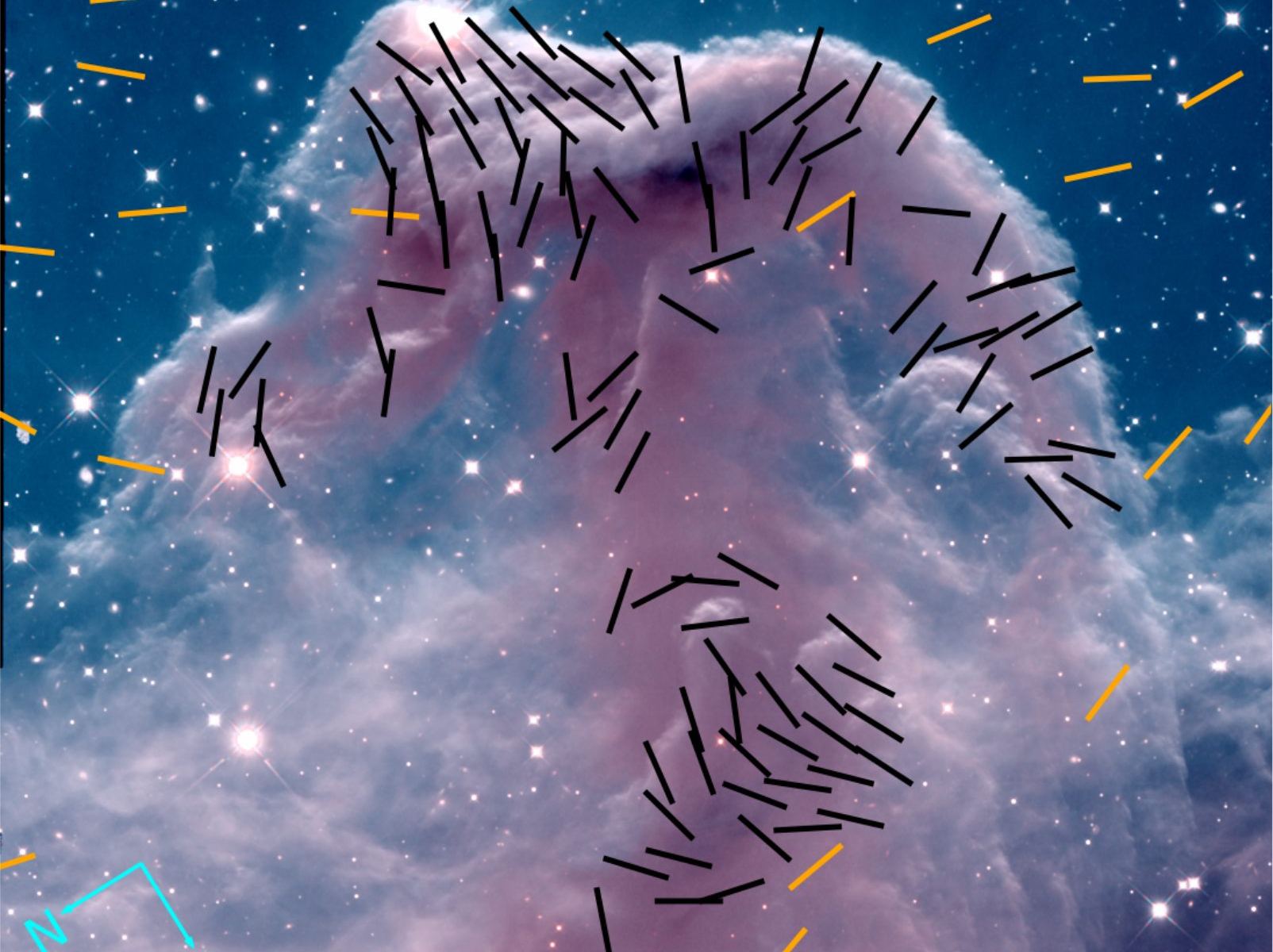
Contours of magnetic fields that emerge a result of self-organization of microscopic currents resulting from the Weibel instability in a carbon dioxide laser-produced plasma probed by an ultrashort relativistic electron beam.
Image courtesy of Chaojie Zhang, University of California Los Angeles

A novel experiment sheds new light on a possible mechanism that may seed magnetic fields for the galactic dynamo. Recent research shows that magnetic fields can spontaneously emerge in a plasma if the plasma has a temperature anisotropy. This mechanism is known as the Weibel instability. This new research is the first to unambiguously observe the Weibel instability in the laboratory...

Read More

New Small Laser Device can help Detect Signs of Life on other Planets

Photo of the Orbitrap mass analyzer from the prototype instrument. Photo courtesy of Lori Willhite and Ricardo Arevalo.

Mini-analyzer may revolutionize how astrobiology discoveries are made on faraway moons and planets. As space missions delve deeper into the outer solar system, the need for more compact, resource-conserving and accurate analytical tools has become increasingly critical — especially as the hunt for extraterrestrial life and habitable planets or moons continues.

A University of Maryland-led team developed a new instrument specifically tailored to the needs of NASA space missions...

Read More