Category Astronomy/Space

Webb reveals Steamy Atmosphere of Distant Planet in Detail

NASA’s James Webb Space Telescope has captured the distinct signature of water, along with evidence for clouds and haze, in the atmosphere surrounding a hot, puffy gas giant planet orbiting a distant Sun-like star.

The observation, which reveals the presence of specific gas molecules based on tiny decreases in the brightness of precise colors of light, is the most detailed of its kind to date, demonstrating Webb’s unprecedented ability to analyze atmospheres hundreds of light-years away.

While the Hubble Space Telescope has analyzed numerous exoplanet atmospheres over the past two decades, capturing the first clear detection of water in 2013, Webb’s immediate and more detailed observation marks a giant leap forward in the quest to characterize potentially habitable planets b...

Read More

The Ultimate Fate of a Star Shredded by a Black Hole

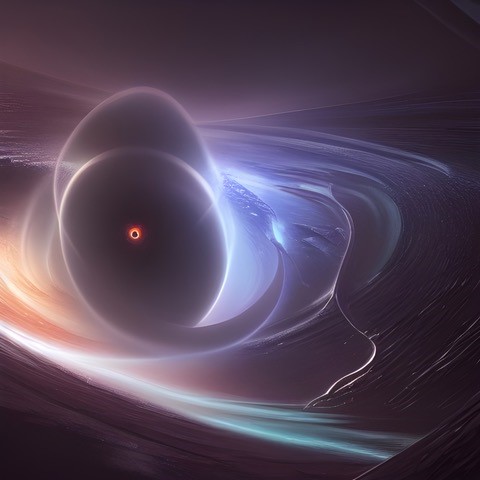
If a star (red trail) wanders too close to a black hole (left), it can be shredded, or spaghettified, by the intense gravity. Some of the star’s matter swirls around the black hole, like water down a drain, emitting copious X-rays (blue). Recent studies of these so-called tidal disruption events suggest that a significant fraction of the star’s gas is also blown outward by intense winds from the black hole, in some cases creating a cloud that obscures the accretion disk and the high-energy events happening within. (Image credit: NASA/CXC/M. Weiss)

In 2019 tidal disruption, much of star’s mass ended up in symmetrical cloud that hid a black hole...

Read More

Citizen scientist leads discovery of 34 Ultracool Dwarf Binaries

How often do stars live alone? For brown dwarfs — objects that straddle the boundary between the most massive planets and the smallest stars — astronomers need to uncover more examples of their companions to find out. Ace citizen scientist Frank Kiwy has done just that by using the Astro Data Lab science platform at NSF’s NOIRLab to discover 34 new ultracool dwarf binary systems in the Sun's neighborhood, nearly doubling the number of such systems known.
llustration of an ultracool dwarf with a companion white dwarf

How often do stars live alone? For brown dwarfs — objects that straddle the boundary between the most massive planets and the smallest stars — astronomers need to uncover more examples of their companions to find out. Ace citizen scientist Frank Kiwy has done just that by using the Astro Data Lab science platform at NSF’s NOIRLab to discover 34 new ultracool dwarf binary systems in the Sun’s neighborhood, nearly doubling the number of such systems known.

A citizen scientist has searched NSF’s NOIRLab’s catalog of 4 billion celestial objects, known as NOIRLab Source Catalog DR2, to reveal brown dwarfs with companions...

Read More

Porosity of the Moon’s Crust reveals Bombardment History

map of lunar south pole
This multi-temporal illumination map of the lunar south pole was created from images taken by NASA’s Lunar Reconnaissance Orbiter.
Credits:Image: NASA/GSFC/Arizona State University

The moon sustained twice as many impacts as can be seen on its surface, scientists find. Researchers find that, early in its history, the moon was highly porous, which was likely a result of early, massive impacts that shattered much of the crust. They reached their conclusions with simulations and data from NASA’s GRAIL mission.

Around 4.4 billion years ago, the early solar system resembled a game of space rock dodgeball, as massive asteroids and comets, and, later, smaller rocks and galactic debris pummeled the moon and other infant terrestrial bodies. This period ended around 3.8 billion years ago...

Read More