Category Astronomy/Space

Hubble reveals Surviving Companion Star in Aftermath of Supernova

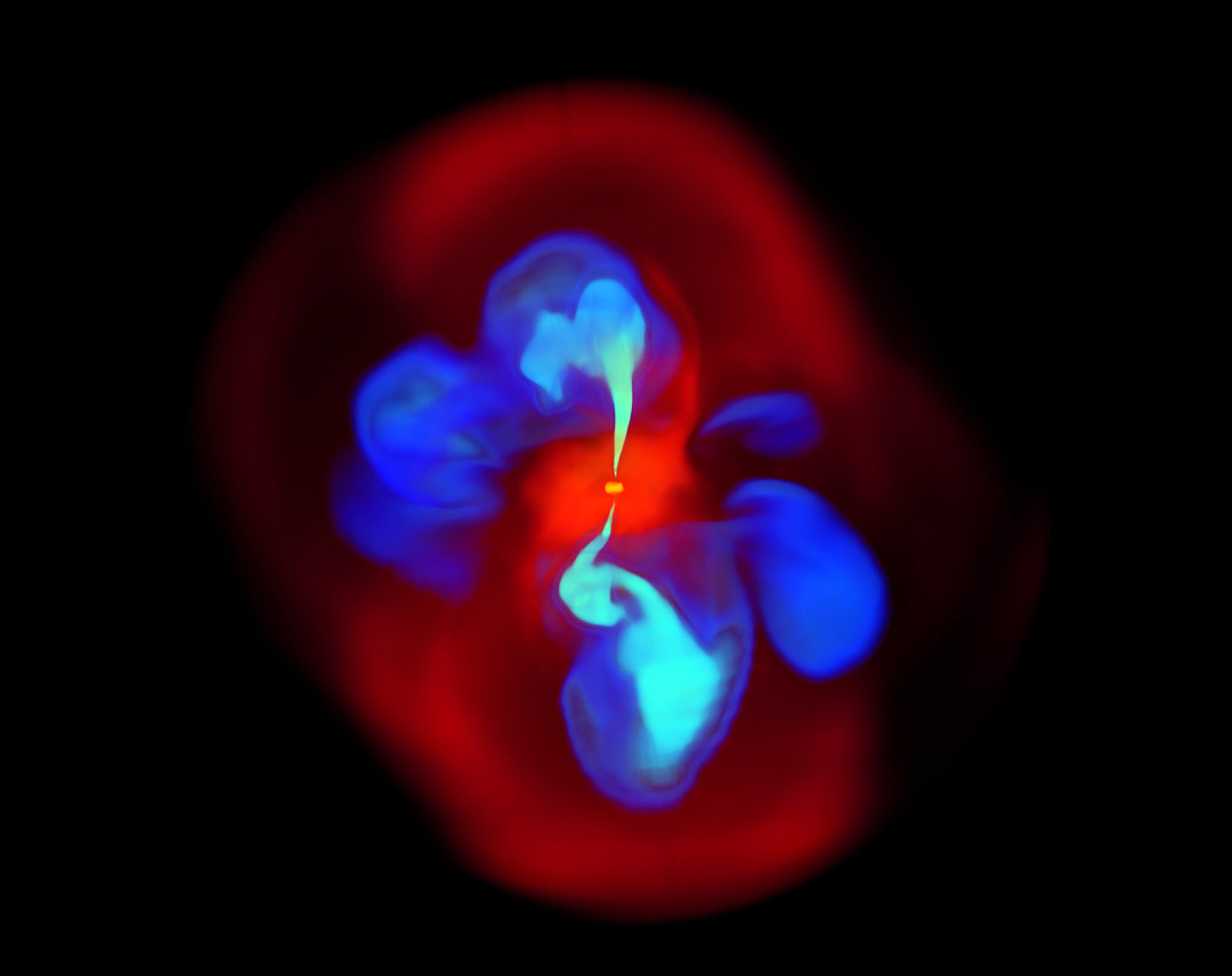
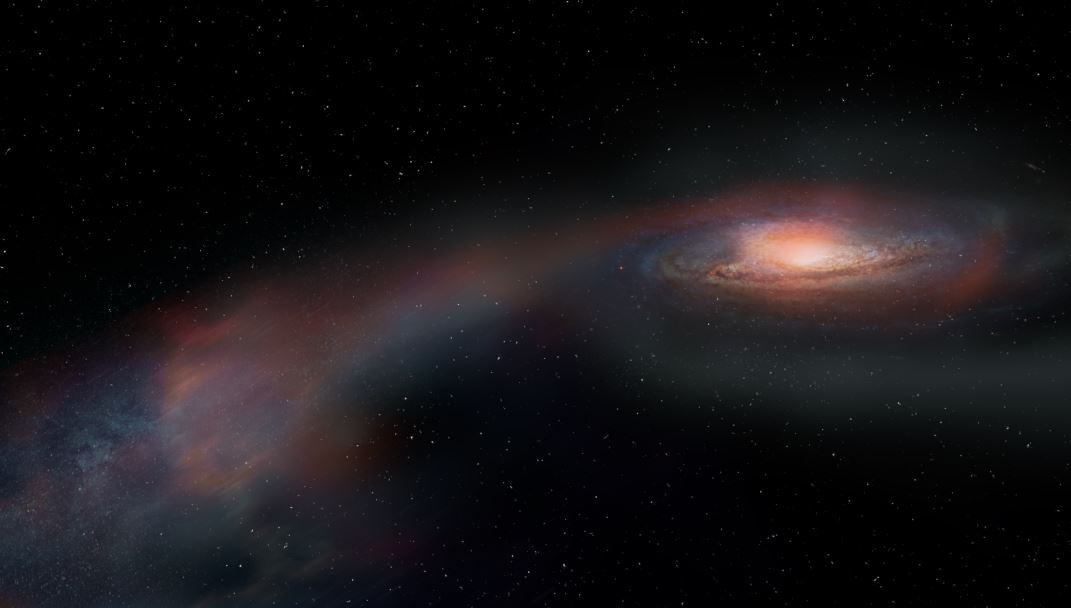
This infographic shows the evolution astronomers propose for supernova (SN) 2013ge. Panels 1-3 show what has already occurred, and panels 4-6 show what may take place in the future. 1) A binary pair of massive stars orbit one another. 2) One star ages into its red giant stage, getting a puffy outer envelope of hydrogen that its companion star siphons off with gravity. Astronomers propose this is why Hubble found no trace of hydrogen in the supernova debris. 3) The stripped-envelope star goes supernova (SN 2013ge), jostling but not destroying its companion star. After the supernova, the dense core of the former massive star remains either as neutron star or black hole...
Read More

Lunar Soil has the potential to Generate Oxygen and Fuel

Extraterrestrial photosynthesis by Chang’E-5 lunar soil

Soil on the moon contains active compounds that can convert carbon dioxide into oxygen and fuels, scientists in China report May 5 in the journal Joule. They are now exploring whether lunar resources can be used to facilitate human exploration on the moon or beyond.

Nanjing University material scientists Yingfang Yao and Zhigang Zou hope to design a system that takes advantage of lunar soil and solar radiation, the two most abundant resources on the moon...

Read More

Astronomers discover a Rare ‘Black Widow’ Binary, with the Shortest Orbit yet

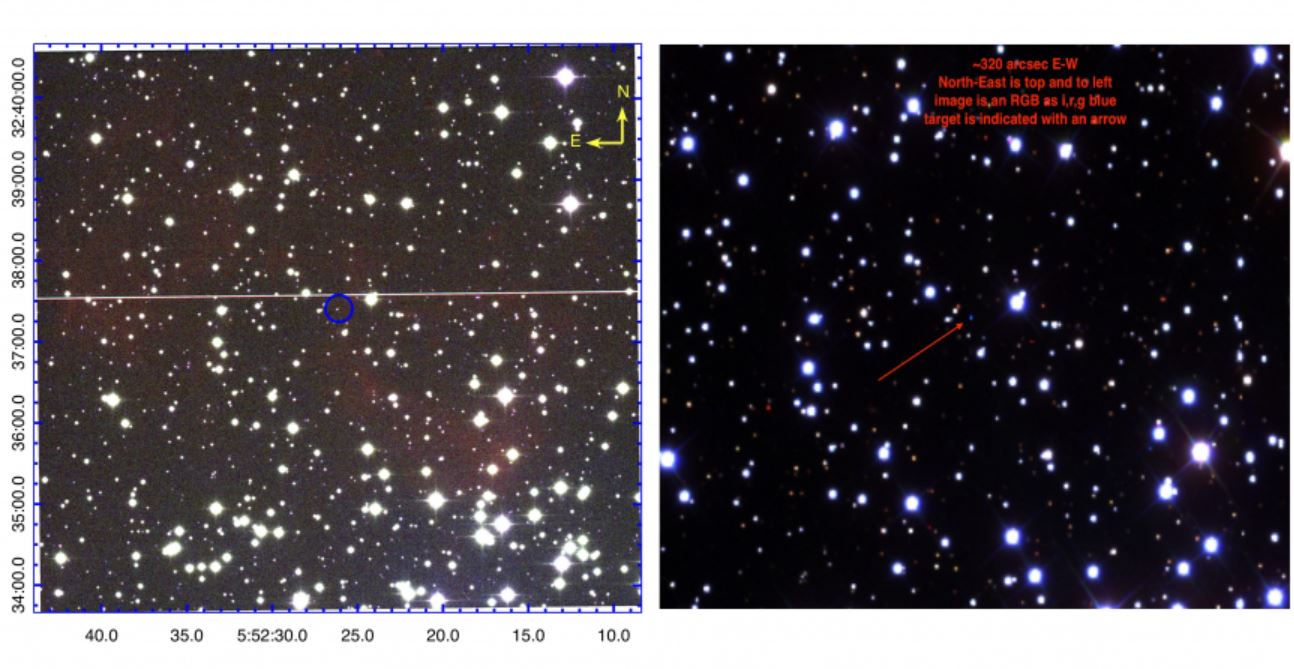
Caption:An illustrated view of a black widow pulsar and its stellar companion. The pulsar’s gamma-ray emissions (magenta) strongly heat the facing side of the star (orange). The pulsar is gradually evaporating its partner.
Credits:Credit: NASA’s Goddard Space Flight Center/Cruz deWilde

The system is orbited by third stellar companion and may have originated near the center of the Milky Way. The flashing of a nearby star has drawn MIT astronomers to a new and mysterious system 3,000 light years from Earth. The stellar oddity appears to be a new “black widow binary” — a rapidly spinning neutron star, or pulsar, that is circling and slowly consuming a smaller companion star, as its arachnid namesake does to its mate.

Astronomers know of about two dozen black widow binaries in the Milk...

Read More

Search reveals Eight new Sources of Black Hole Echoes

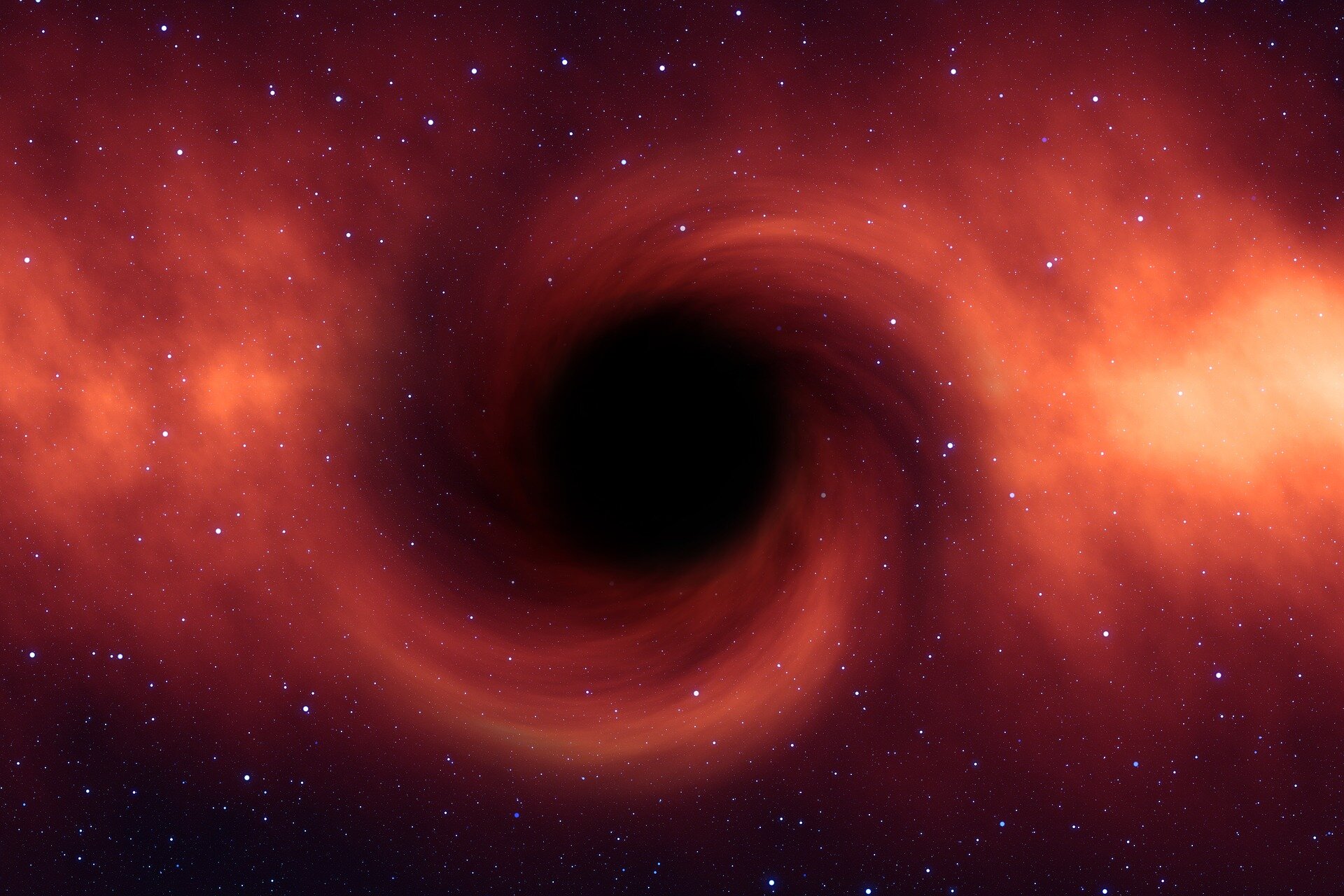
Caption:In this illustration, a black hole pulls material off a neighboring star and into an accretion disk.
Credits:Credit: Aurore Simonnet and NASA’s Goddard Space Flight Center

Astronomers discovered eight new echoing black hole binaries in our galaxy, enabling them to piece together a general picture of how a black hole evolves during an outburst. The findings will help scientists trace a black hole’s evolution as it feeds on stellar material.

Scattered across our Milky Way galaxy are tens of millions of black holes — immensely strong gravitational wells of spacetime, from which infalling matter, and even light, can never escape. Black holes are dark by definition, except on the rare occasions when they feed...

Read More