Category Astronomy/Space

Dying Stars’ Cocoons might explain Fast Blue Optical Transients

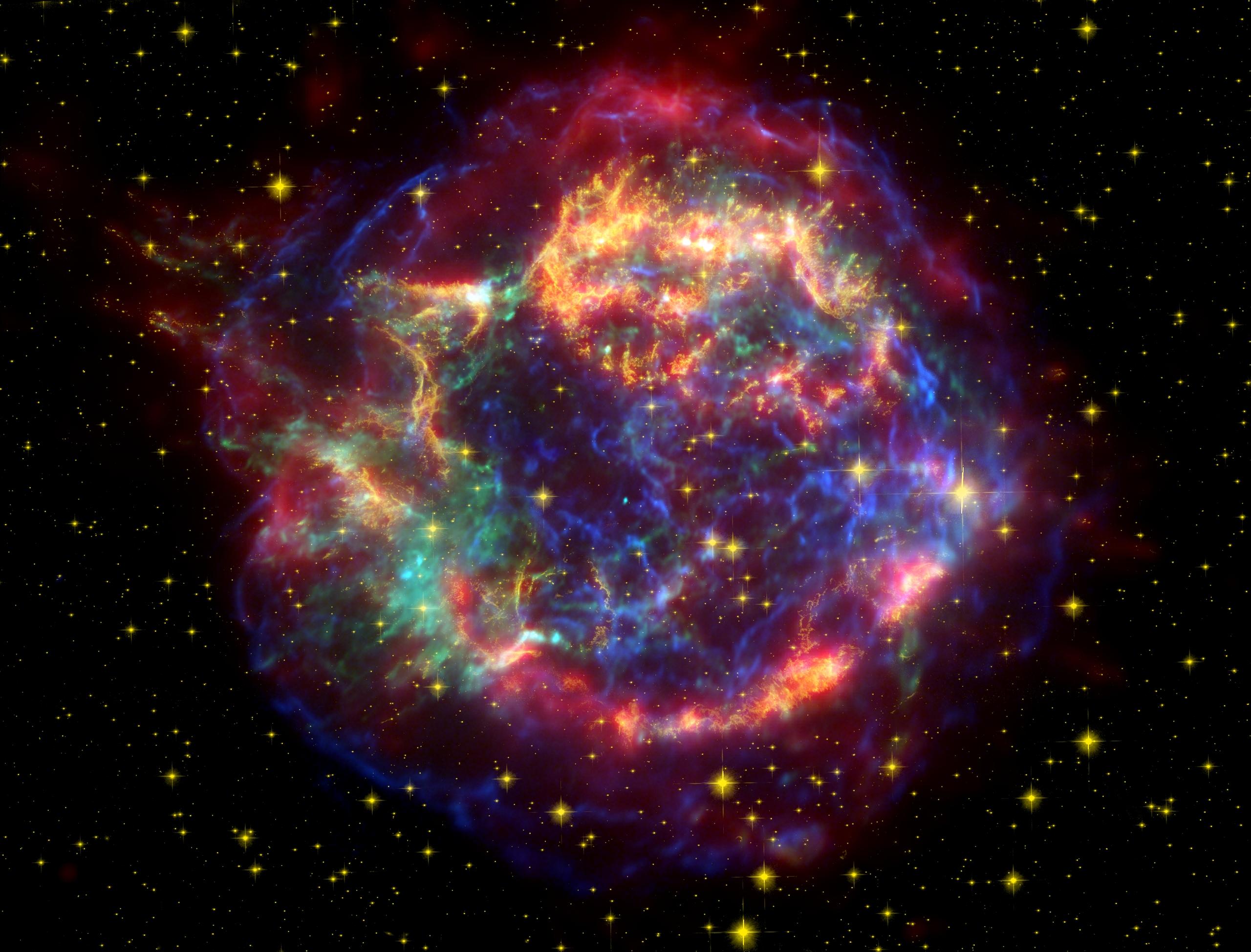
The cocoon (with jet inside) escapes from the collapsing star.

First model that is fully consistent with all FBOT observations. Ever since they were discovered in 2018, fast blue optical transients (FBOTs) have utterly surprised and completely confounded both observational and theoretical astrophysicists.

So hot that they glow blue, these mysterious objects are the brightest known optical phenomenon in the universe. But with only a few discovered so far, FBOTs’ origins have remained elusive.

Now a Northwestern University astrophysics team presents a bold new explanation for the origin of these curious anomalies. Using a new model, the astrophysicists believe FBOTs could result from the actively cooling cocoons that surround jets launched by dying stars...

Read More

Why Venus Rotates, Slowly, despite Sun’s Powerful Grip

NASA’s Mariner 10 spacecraft captured this peaceful view of Venus. But, contrary to its serene appearance, Venus is a world of intense heat, crushing atmospheric pressure and clouds of corrosive acid. (NASA/JPL-Caltech)

Planet’s atmosphere explains the gravity of the situation. If not for the soupy, fast-moving atmosphere on Venus, Earth’s sister planet would likely not rotate. Instead, Venus would be locked in place, always facing the sun the way the same side of the moon always faces Earth.

The gravity of a large object in space can keep a smaller object from spinning, a phenomenon called tidal locking. Because it prevents this locking, a UC Riverside scientist argues the atmosphere needs to be a more prominent factor in studies of Venus as well as other planets.

These argument...

Read More

Astronomers discover Micronovae, a new kind of Stellar Explosion

This artist’s impression shows a two-star system where micronovae may occur. The blue disc swirling around the bright white dwarf in the centre of the image is made up of material, mostly hydrogen, stolen from its companion star. Towards the centre of the disc, the white dwarf uses its strong magnetic fields to funnel the hydrogen towards its poles. As the material falls on the hot surface of the star, it triggers a micronova explosion, contained by the magnetic fields at one of the white dwarf’s poles.

A team of astronomers, with the help of the European Southern Observatory’s Very Large Telescope (ESO’s VLT), have observed a new type of stellar explosion — a micronova. These outbursts happen on the surface of certain stars, and can each burn through around 3...

Read More

Jupiter’s Moon has Splendid Dunes

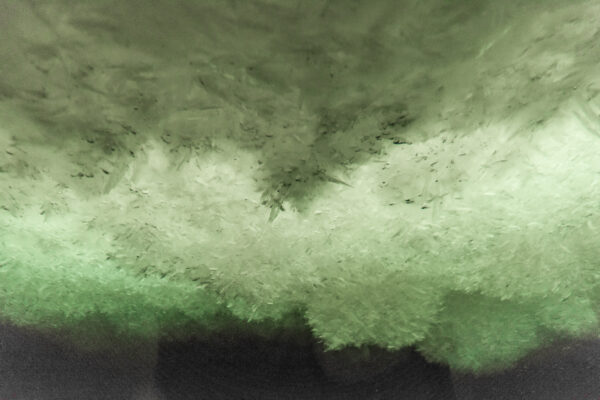
Potential dunes on Jupiter’s moon Io. An analysis indicates that the dark material (lower left) is recently emplaced lava flows, while the repeated, line-like features dominating the image are potential dunes. The bright, white areas may be newly emplaced grains as the lava flows vaporize adjacent frost. Credit: NASA/JPL-Caltech/Rutgers

New way dunes can form on varied celestial surfaces. Scientists have long wondered how Jupiter’s innermost moon, Io, has meandering ridges as grand as any that can be seen in movies like “Dune.” Now, a Rutgers research study has provided a new explanation of how dunes can form even on a surface as icy and roiling as Io’s.

The study, published in the journal Nature Communications, is based on a study of the physical processes controlling grain motion ...

Read More