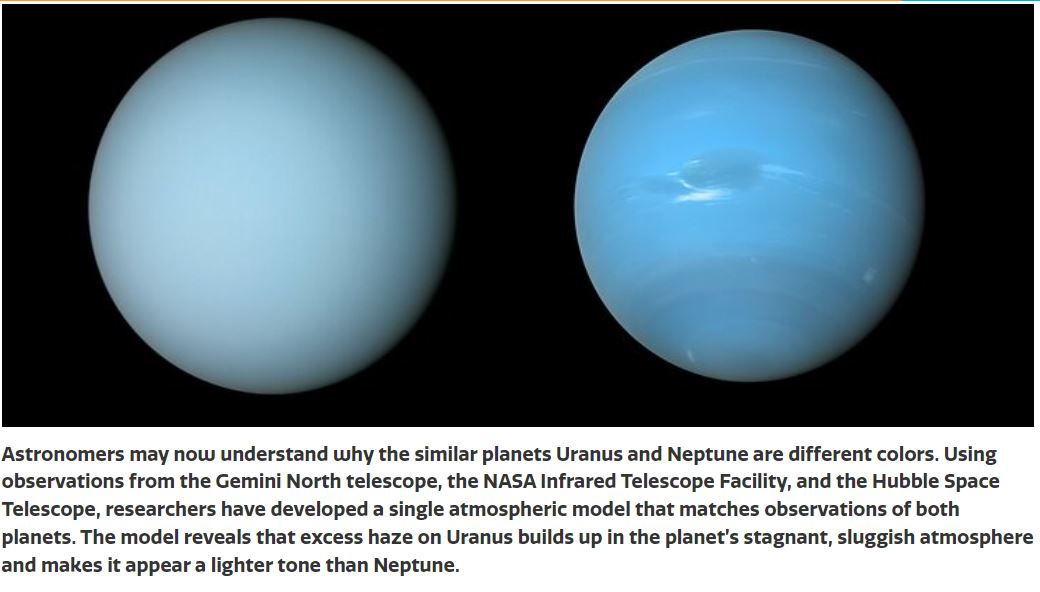
An international team of re...
Read More

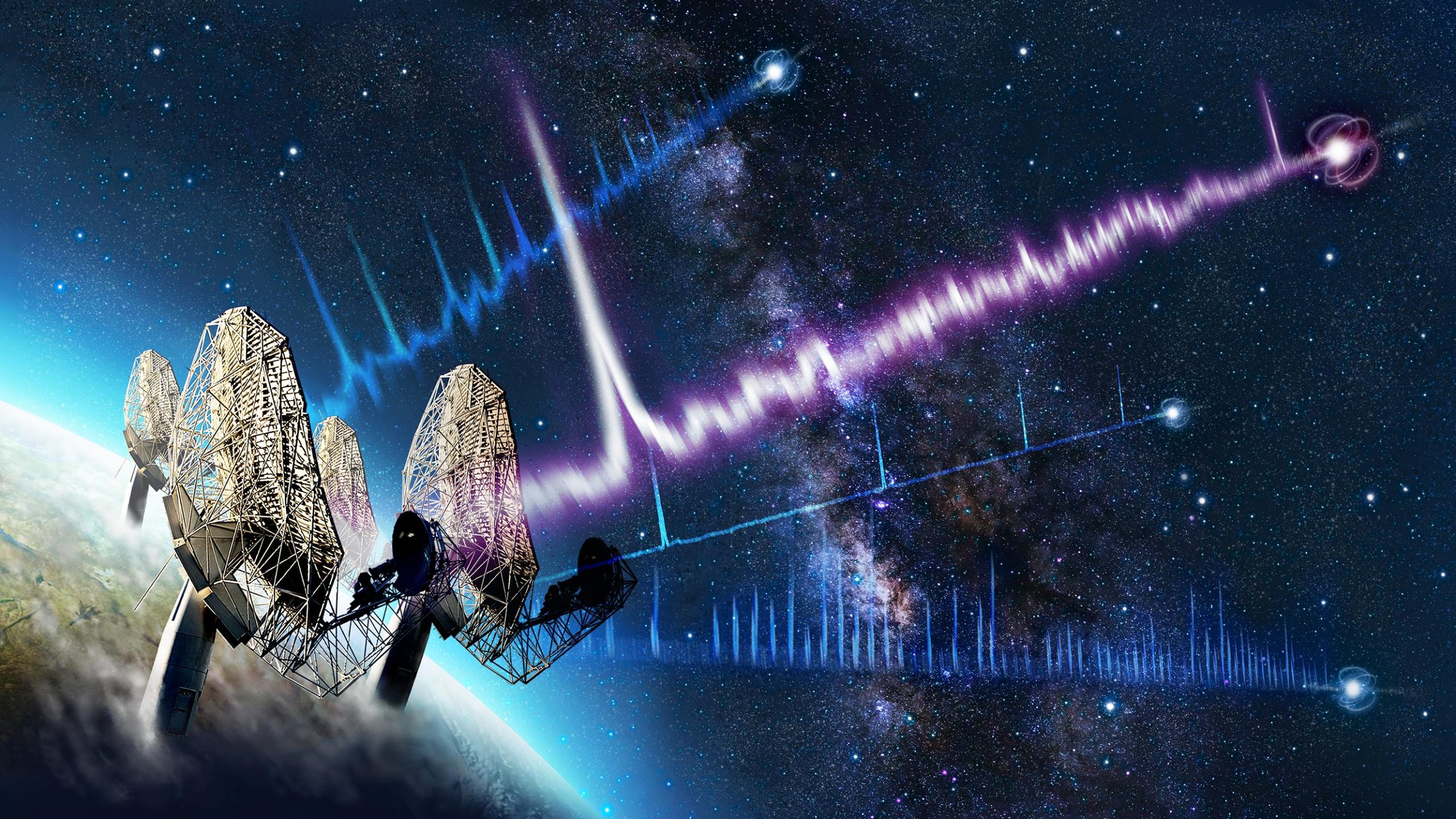
An international team of re...
Read More
Finding Represents First Detections of Atmospheric Loss in “Mini-Neptunes.
Astronomers have identified two different cases of “mini-Neptune” planets that are losing their puffy atmospheres and likely transforming into super-Earths. Radiation from the planets’ stars is stripping away their atmospheres, driving hot gas to escape like steam from a pot of boiling water.
“Most astronomers suspected that young, small mini-Neptunes must have evaporating atmospheres,” says Michael Zhang, lead author of bot...
Read More
Black holes aren’t always in the dark. Astronomers have spotted intense light shows shining from just outside the event horizon of supermassive black holes, including the one at our galaxy’s core...
Read More
New Leicester space research has revealed, for the first time, a complex ‘tug-of-war’ lights up aurorae in Jupiter’s upper atmosphere, using a combination of data from NASA’s Juno probe and the Hubble Space Telescope.
The study, published in the Journal of Geophysical Research: Space Physics, describes the delicate current cycle driven by Jupiter’s rapid rotation and the release of sulphur and oxygen from volcanoes on its moon, Io.
Researchers from the University of Leicester’s School of Physics and Astronomy used data from Juno’s Magnetic Field Investigation (MAG), which measures Jupiter’s magnetic field from orbit around the gas giant, and observations from the Space Telescope Imaging Spectrograph carried by the Hubble Space Telescope.
Their research provides the strongest ...
Read More
Recent Comments