Category Astronomy/Space

Cosmic Physics Mimicked on Table-Top as Graphene enables Schwinger Effect

Science_final_4k_compositeMatteo

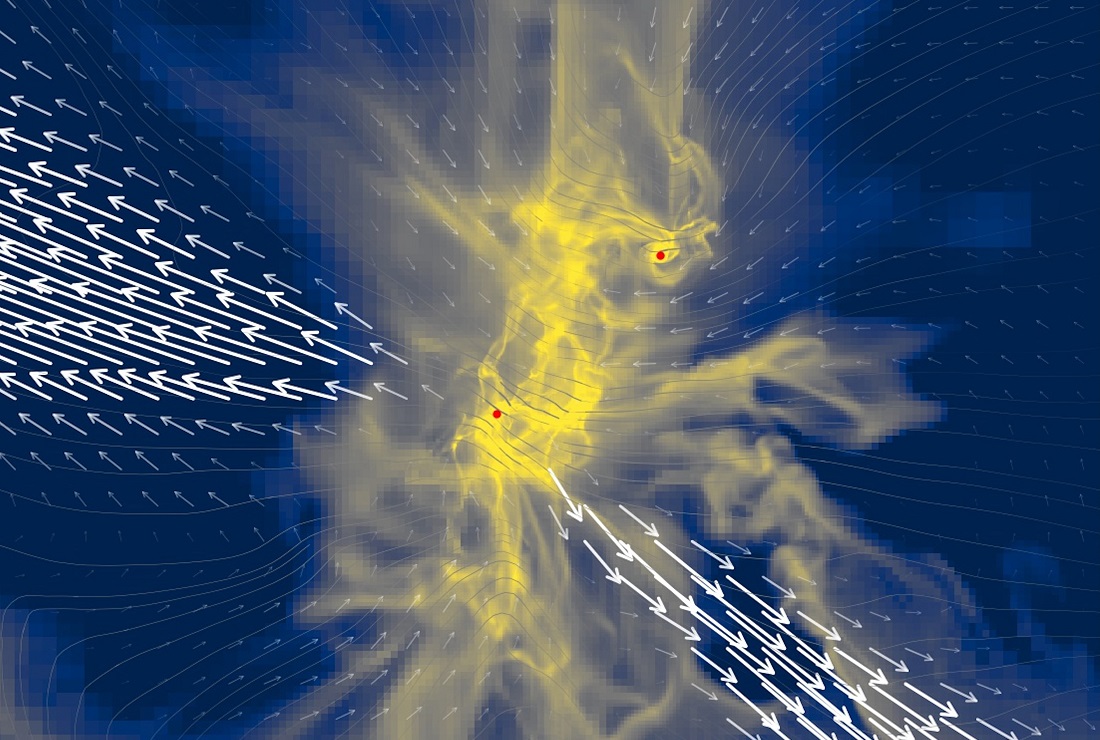
Researchers at The University of Manchester have succeeded in observing the so-called Schwinger effect, an elusive process that normally occurs only in cosmic events. By applying high currents through specially designed graphene-based devices, the team — based at the National Graphene Institute — succeeded in producing particle-antiparticle pairs from a vacuum.

A vacuum is assumed to be completely empty space, without any matter or elementary particles. However, it was predicted by Nobel laureate Julian Schwinger 70 years ago that intense electric or magnetic fields can break down the vacuum and spontaneously create elementary particles.

This requires truly cosmic-strength fields such as those around magnetars or created transitorily during high-e...

Read More

Mysterious Energy Source unlike anything Astronomers have seen before

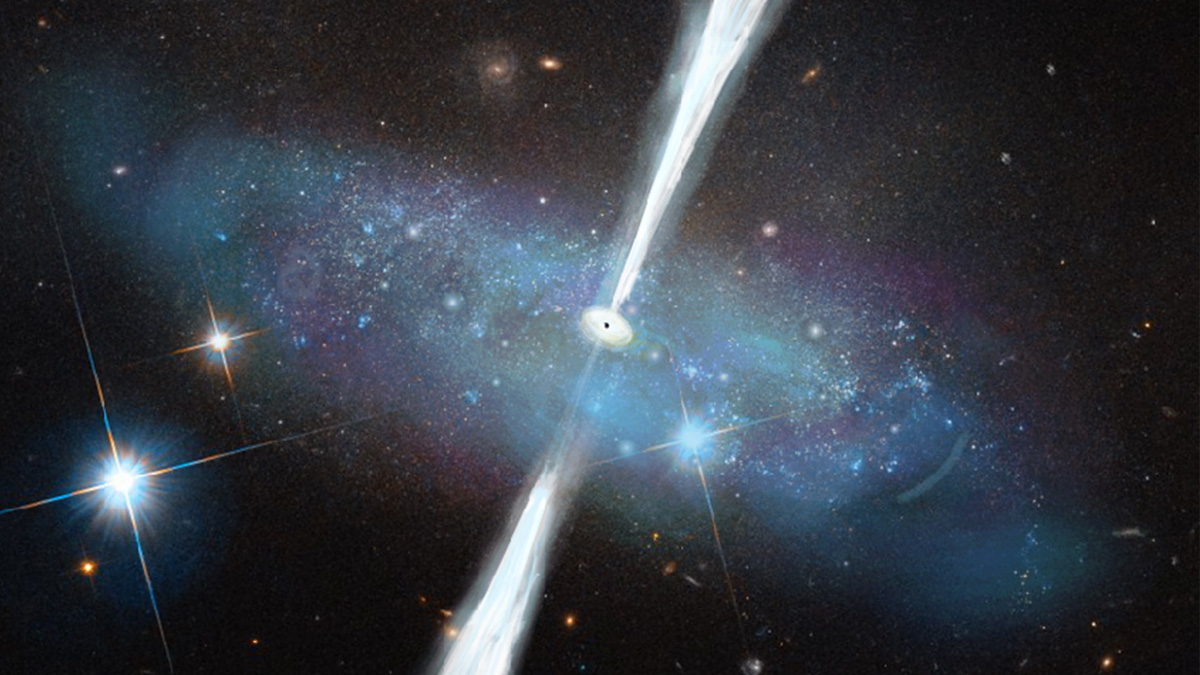
An artist’s impression of what the object might look like if it’s a magnetar. Magnetars are incredibly magnetic neutron stars, some of which sometimes produce radio emission. Known magnetars rotate every few seconds, but theoretically, “ultra-long period magnetars” could rotate much more slowly. Credit: ICRAR.

A team mapping radio waves in the universe has discovered something unusual that releases a giant burst of energy three times an hour, and it’s unlike anything astronomers have seen before.

The team that discovered it think it could be a neutron star or a white dwarf—collapsed cores of stars—with an ultra-powerful magnetic field...

Read More

Liquid Water Beneath Martian South Polar Cap?

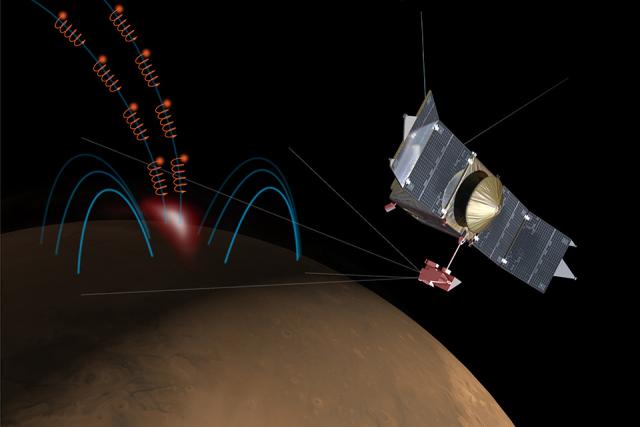
NASA/JPL-Caltech/USGS/SwRI An SwRI scientist studied the antifreeze properties of exotic salts that exist on Mars, which could allow brines to remain liquid down to -103 degrees Fahrenheit. The studies show how a mile below the Martian south polar cap, brines between the grains of ice or sediments could produce the strong reflections detected by the radar instrument aboard ESA’s Mars Express orbiter.

Geophysical radar reflections, laboratory experiments point to slushy brines. A Southwest Research Institute scientist measured the properties of ice-brine mixtures as cold as -145 degrees Fahrenheit to help confirm that salty water likely exists between grains of ice or sediment under the ice cap at Mars’ south pole. Laboratory measurements conducted by SwRI geophysicist Dr...

Read More

Consistent Asteroid Showers rock previous Thinking on Mars Craters

New Curtin University research has confirmed the frequency of asteroid collisions that formed impact craters on Mars has been consistent over the past 600 million years.

The study, published in Earth and Planetary Science Letters, analysed the formation of more than 500 large Martian craters using a crater detection algorithm previously developed at Curtin, which automatically counts the visible impact craters from a high-resolution image.

Despite previous studies suggesting spikes in the frequency of asteroid collisions, lead researcher Dr Anthony Lagain, from Curtin’s School of Earth and Planetary Sciences, said his research had found they did not vary much at all for many millions of years.

Dr Lagain said counting impact craters on a planetary surface was the only way to a...

Read More