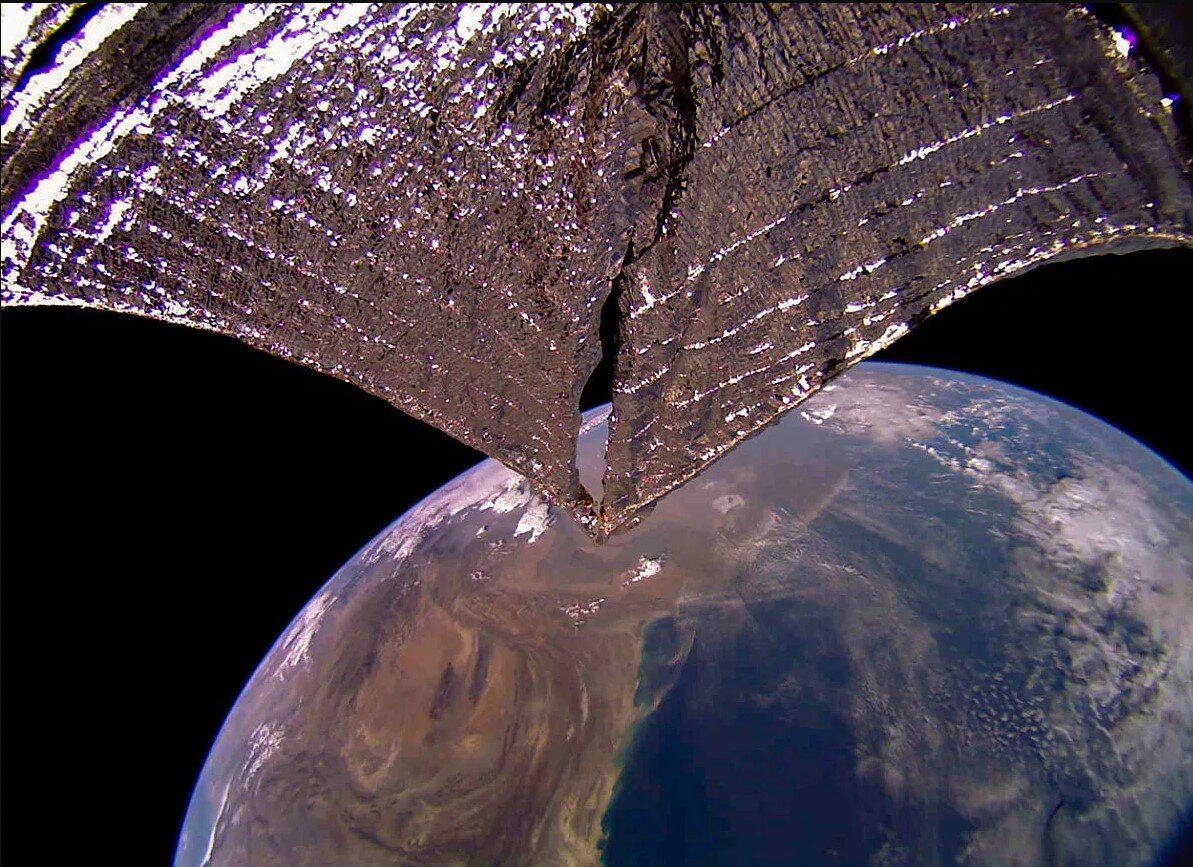
This image taken by The Planetary Society’s LightSail 2 spacecraft on May 31, 2021 shows Afghanistan, Pakistan, and the Arabian Sea. The Caspian Sea is at lower left. The shadows of the spacecraft’s solar panels can be seen on the sail. North is approximately at the top left. This image has been color-adjusted and some distortion from the camera’s 180-degree fisheye lens has been removed. Credit: The Planetary Society
Even after 30 months in space, The Planetary Society’s LightSail 2 mission continues to successfully “sail on sunbeams,” demonstrating solar sail technology in Earth orbit. The mission is providing hard data for future missions that hope to employ solar sails to explore the cosmos.
LightSail 2, a small cubesat, launched in June 2019 on a SpaceX Falcon Heavy, as ...
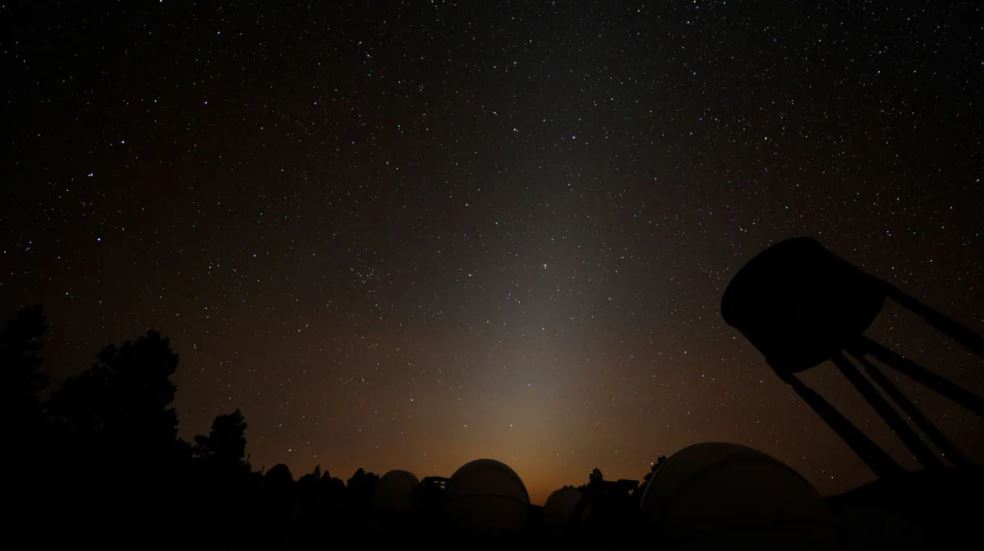
Sunlight reflects off tiny, interplanetary dust particles, creating the faint column of glowing light seen against the stars in this image. New research suggests that cosmic dust might be an important source of phosphorus for life on Earth. Credit: Malcol, CC BY 3.0 Source: Journal of Geophysical Research: Space Physics
When Earth formed 4.5 billion years ago, any phosphorus that was present likely sank into the molten core because of the element’s distinct chemical properties. However, phosphorus is essential for life; it is found in DNA, RNA, and other important biological molecules. So it is probable that the phosphorus that made life possible was delivered to Earth’s surface from extraterrestrial origins, and previous studies have suggested meteorites as potential sources.
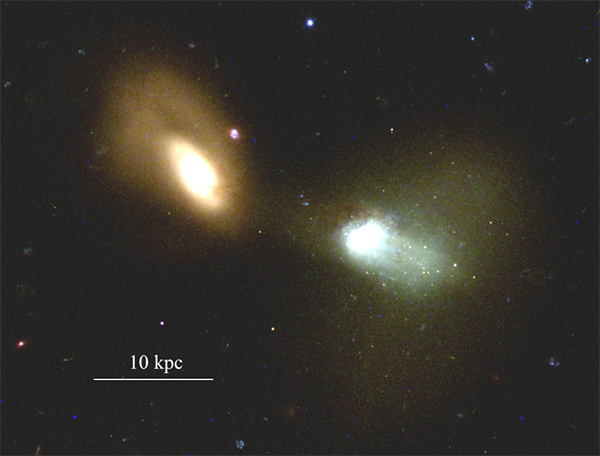
S12, a post-starburst galaxy located nearly 500 million light-years away, is on the right. It looks like a jellyfish with a host of stars streaming out of the galaxy on one side.
A husband-and-wife team of astronomers established the star formation history of a post-starburst galaxy using its cluster population. A husband-and-wife team of astronomers at The University of Toledo joined forces for the first time in their scientific careers during the pandemic to develop a new method to look back in time and change the way we understand the history of galaxies.
Until now forging parallel but separate careers while juggling home life and carpooling to cross country meets, Dr. Rupali Chandar, professor of astronomy, and Dr. J.D...
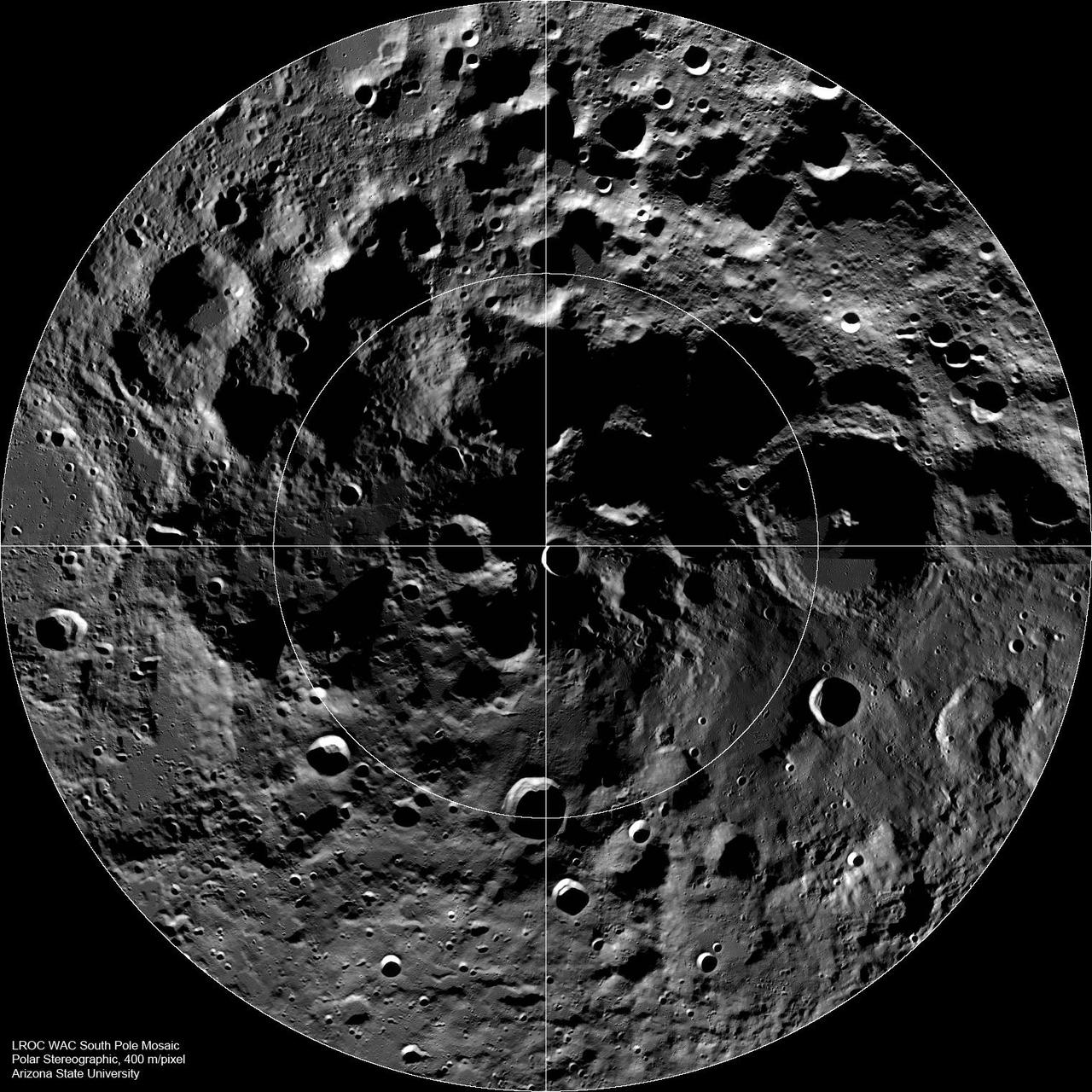
A view of the lunar south pole, where newly confirmed carbon dioxide cold traps are located, according to new research in Geophysical Research Letters. Future missions on the Moon may target this region to find out more about the resources that may exist there. Credit: NASA/GSFC/Arizona State University
The traps likely contain solid carbon dioxide that could be used to sustain robot or human presence on the moon. After decades of uncertainty, researchers have confirmed the existence of lunar carbon dioxide cold traps that could potentially contain solid carbon dioxide. The discovery will likely have a major influence in shaping future lunar missions and could impact the feasibility of a sustained robot or human presence on the moon.
In the permanently shadowed regions at the poles o...





Recent Comments