Category Astronomy/Space

Observation, Simulation, and AI join forces to reveal a Clear Universe

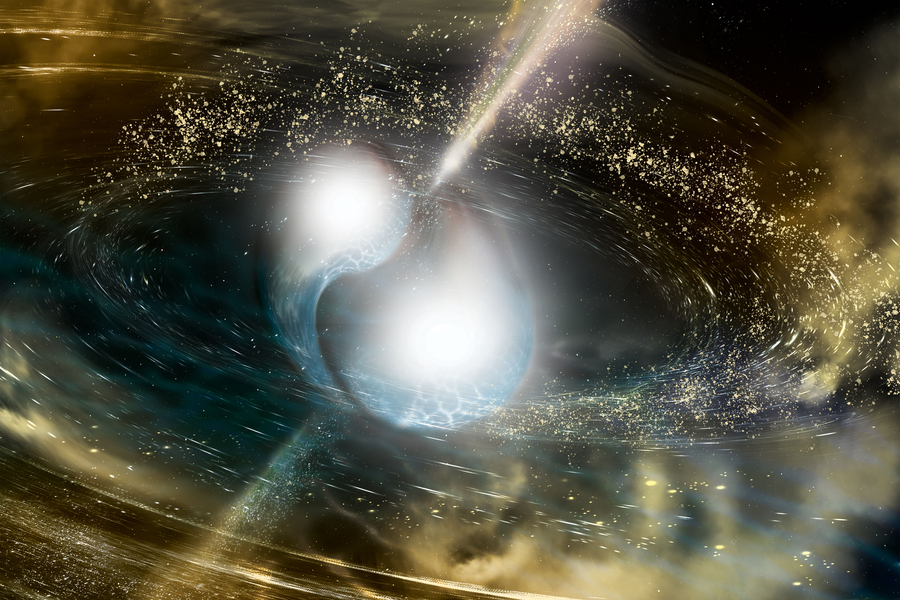
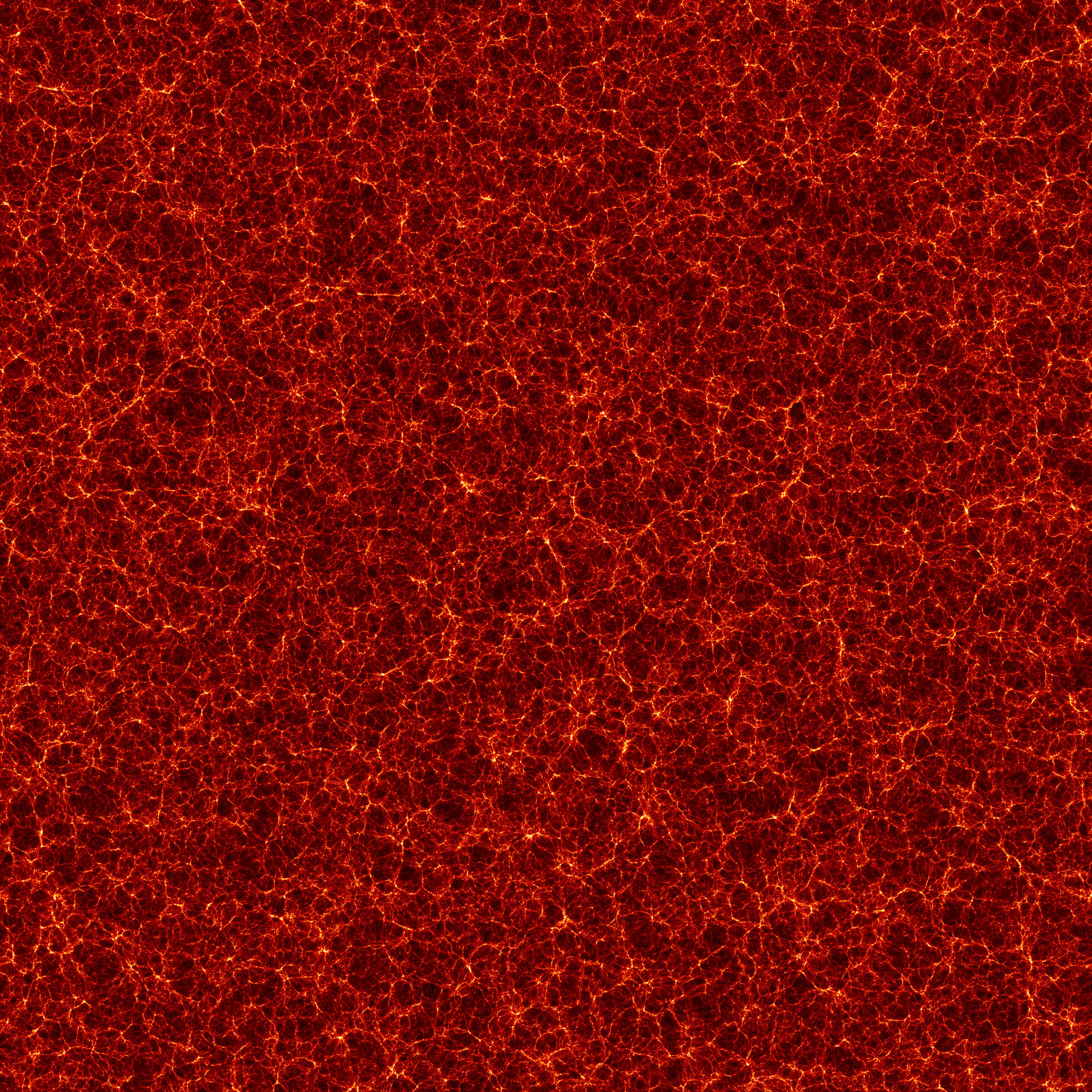
Artist’s visualization of this research. Using AI driven data analysis to peel back the noise and find the actual shape of the Universe. (Credit: The Institute of Statistical Mathematics)

Japanese astronomers have developed a new artificial intelligence (AI) technique to remove noise in astronomical data due to random variations in galaxy shapes. After extensive training and testing on large mock data created by supercomputer simulations, they then applied this new tool to actual data from Japan’s Subaru Telescope and found that the mass distribution derived from using this method is consistent with the currently accepted models of the Universe. This is a powerful new tool for analyzing big data from current and planned astronomy surveys.

Wide area survey data can be used to study...

Read More

Physicists observationally confirm Hawking’s Black Hole Theorem for the first time

black hole simulation
Physicists at MIT and elsewhere have used gravitational waves to observationally confirm Hawking’s black hole area theorem for the first time. This computer simulation shows the collision of two black holes that produced the gravitational wave signal, GW150914.
Credits:Credit: Simulating eXtreme Spacetimes (SXS) project. Courtesy of LIGO

Physicists have used gravitational waves to observationally confirm Hawking’s black hole theorem. There are certain rules that even the most extreme objects in the universe must obey. A central law for black holes predicts that the area of their event horizons — the boundary beyond which nothing can ever escape — should never shrink. This law is Hawking’s area theorem, named after physicist Stephen Hawking, who derived the theorem in 1971.

Fifty ye...

Read More

Astronomers have identified a White Dwarf so Massive that it might Collapse

This illustration highlights a newfound small white dwarf that is somewhat larger than earth’s moon. the two bodies are shown next to each other for size comparison. the hotyoung white dwarf is the most massive white dwarf knownweighing 1.35 times as much as our sun. Credit: Giuseppe Parisi

Astronomers have identified an extremely magnetized and rapidly rotating ultra-massive white dwarf. Several telescopes characterized the dead star. Maunakea and Haleakala, Hawai’i — Astronomers have discovered the smallest and most massive white dwarf ever seen...

Read More

Astrophysicists detect First Black Hole-Neutron Star Mergers

A long time ago, in two galaxies about 900 million light-years away, two black holes each gobbled up their neutron star companions, triggering gravitational waves that finally hit Earth in January 2020.

Discovered by an international team of astrophysicists including Northwestern University researchers, two events—detected just 10 days apart—mark the first-ever detection of a black hole merging with a neutron star. The findings will enable researchers to draw the first conclusions about the origins of these rare binary systems and how often they merge.

“Gravitational waves have allowed us to detect collisions of pairs of black holes and pairs of neutron stars, but the mixed collision of a black hole with a neutron star has been the elusive missing piece of the family picture...

Read More